The Jakarta Post
Please Update your browser
Your browser is out of date, and may not be compatible with our website. A list of the most popular web browsers can be found below.
Just click on the icons to get to the download page.


Popular Reads
Top Results
No results found. Please check your search term and try again
Can't find what you're looking for?
View all search results
Popular Reads
Top Results
No results found. Please check your search term and try again
Can't find what you're looking for?
View all search resultsMiddle powers standing together in a patchy world
Bound by deep cultural roots and shared vulnerabilities, the Netherlands and Indonesia prove that middle powers hold the key to defending a fragmented global order.
Change text size
Gift Premium Articles
to Anyone
Share the best of The Jakarta Post with friends, family, or colleagues. As a subscriber, you can gift 3 to 5 articles each month that anyone can read—no subscription needed!
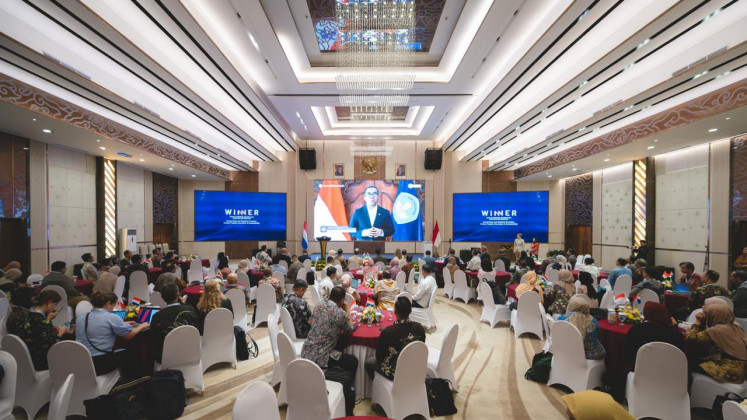
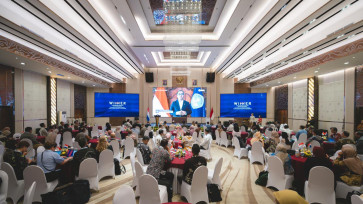
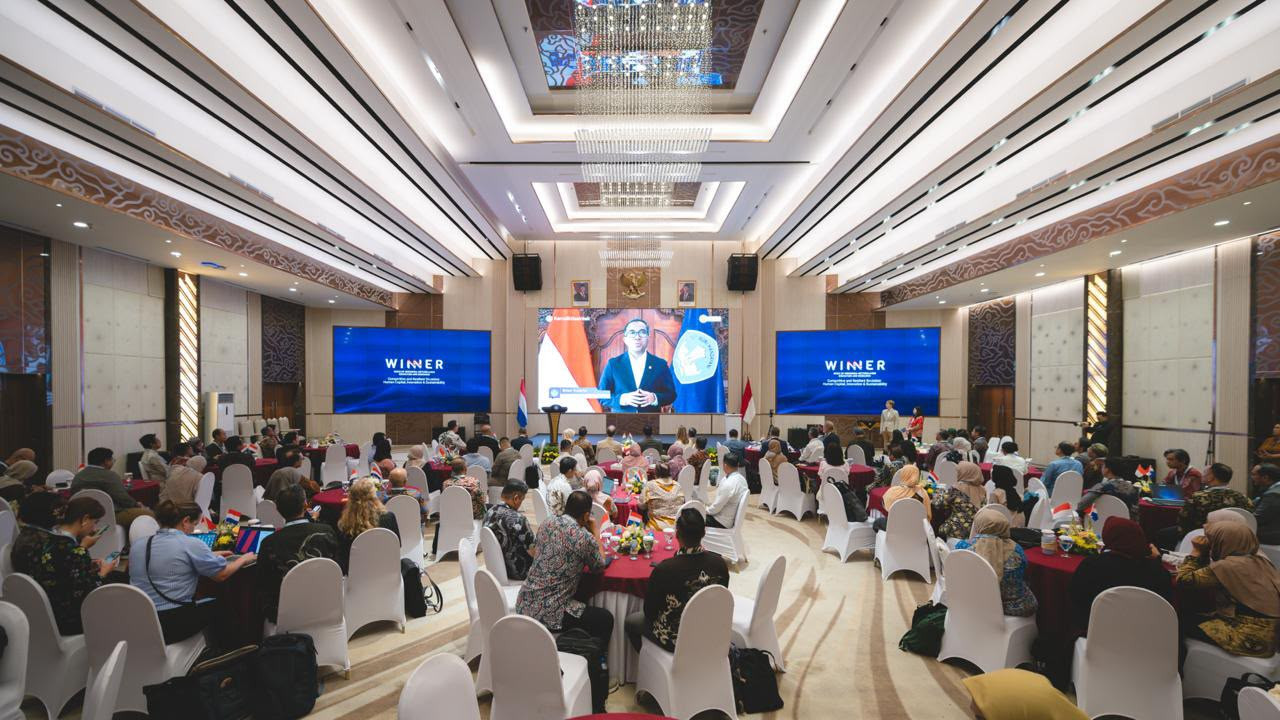 Indonesian Higher Education, Science, and Technology Minister Brian Yuliarto is seen on the screen delivering the speech during the opening ceremony of the 2026 Week of Indonesia–Netherlands Education and Research (WINNER) 2026 conference in Jakarta on Oct. 6, 2026. (Courtesy of WINNER 2026/-)
O
ver the course of my career, I have had the pleasure of visiting Indonesia several times. And every trip I notice how quickly the country is changing.
Recently, when I drove from Soekarno-Hatta International Airport into Jakarta, I saw countless new towers on the city’s skyline, and could feel the positive energy of the Big Durian. Describing Indonesia, it is hard to avoid superlatives. It is the world’s largest archipelagic state, the largest Muslim-majority country, the third-largest democracy, home to thousands of languages and ethnicities, and to vast economic potential.
My own country, the Netherlands, is of course a few sizes smaller, but for two countries so different, we have a remarkable number of things in common. There’s the longstanding history, of course, but also strong family and cultural ties: roughly 2 million Dutch people have Indonesian roots, and The Hague possibly has the most warung (casual food stall) of any city outside of Indonesia.
In many ways, we are natural partners. We are both middle powers operating in a great-power-world, we both profit from an open trade and investment system, and we both strive for a peaceful and stable world. This shared agenda is at the heart of the Dutch relation with Indonesia, and it is what brought me to Jakarta.
Because we face similar challenges in an increasingly fragmented, climate-stressed and contested international order. As coastal states, the threats of rising sea levels and extreme weather conditions affect us directly. To face this, we have to adapt coastlines, cities and the way we grow food.
The Netherlands has decades of experience with this, and is already working with Indonesia on this topic, for instance on climate-resilient seed technology. Not too long from now, chili peppers used in kitchens across Indonesia, could be made more climate resilient with the help of Dutch technology.

Maritime security is another important agenda item. Almost a quarter of all global seaborne trade passes through the Strait of Malacca, making it the world’s most valuable chokepoint. The international community governs maritime agreements and disputes through the United Nations Convention on the Law of the Sea (UNCLOS), which is only growing more important. Now that some great powers are stepping back from international law, it falls to the middle powers to defend what we have built.