The Jakarta Post
Please Update your browser
Your browser is out of date, and may not be compatible with our website. A list of the most popular web browsers can be found below.
Just click on the icons to get to the download page.


Popular Reads
Top Results
No results found. Please check your search term and try again
Can't find what you're looking for?
View all search results
Popular Reads
Top Results
No results found. Please check your search term and try again
Can't find what you're looking for?
View all search resultsWhen politicians claim success, statisticians take the blame
A low unemployment rate does not prove policy success when the burden of survival has simply been outsourced to struggling families.
Change text size
Gift Premium Articles
to Anyone
Share the best of The Jakarta Post with friends, family, or colleagues. As a subscriber, you can gift 3 to 5 articles each month that anyone can read—no subscription needed!
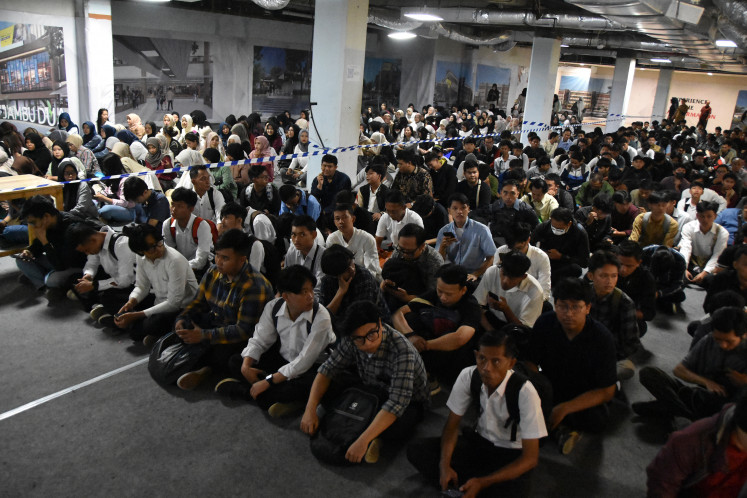
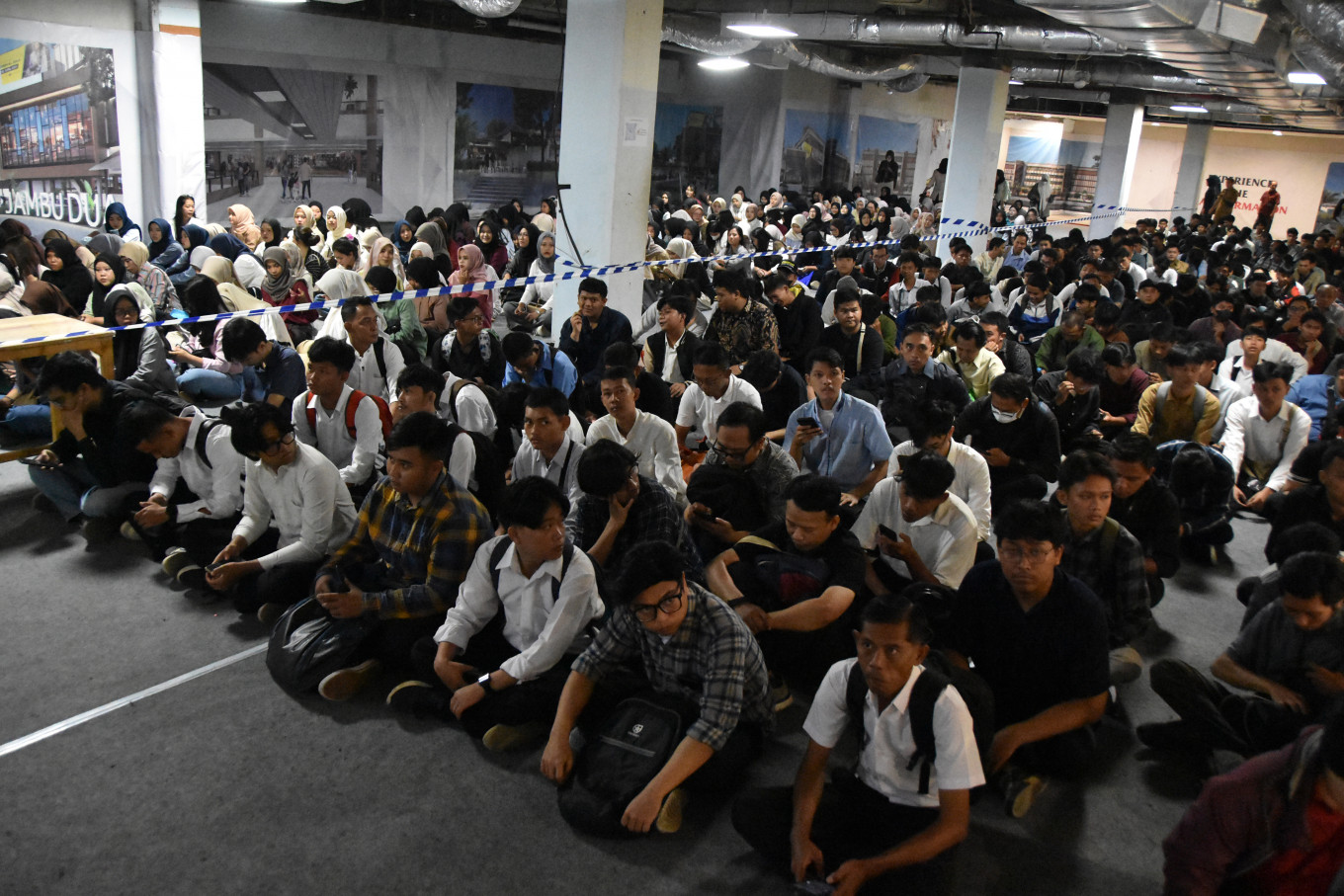 Job seekers sit on the floor on June 8 as they wait for the Bogor Job Fair 2026 to open at Plaza Jambu Dua in Bogor, West Java. (Antara/Arif Firmansyah)
I
n Indonesia, losing a job creates an immediate obligation to secure another income. Rent remains due, children still need to eat. A motorcycle becomes a parcel delivery vehicle, a kitchen transforms into a catering venture and a personal social media account turns into a storefront. These adjustments reflect people’s determination to keep their households afloat; whether they also demonstrate successful economic policy is an entirely separate question.
That distinction deserves greater attention in the ongoing debate over national unemployment figures. Much of the recent public controversy has fixated on the definition of employment, specifically whether working one hour in a single week should qualify an individual as employed.
While this debate has forced Statistics Indonesia (BPS) to defend its methodology, a far more consequential question has escaped scrutiny: What evidence justifies the government’s claim of responsibility for the economic adjustments citizens make on their own?
Citing an unemployment rate of 4.65 percent, heralded as the lowest level since 1994, the government has presented the figure as proof of policy success. On Oct. 27, the Office of the Coordinating Economy Minister linked the milestone directly to programs for the real sector and investment incentives. This interpretation goes beyond reporting a positive labor market trend: It attributes that change directly to state intervention.
Attribution matters because individuals can remain economically active while assuming vastly greater personal risk. A worker who loses a formal salary and turns to preparing meals at home remains classified as employed. Yet that household now finances its own capital, absorbs volatile demand swings and manages illness without paid leave or a safety net. Economic activity persists, but the burden of maintaining it shifts entirely onto the family.
This dynamic distorts how government performance is evaluated. The very resourcefulness that shields a family from total destitution also renders its precarity invisible in headline indicators. When officials point to these numbers to celebrate policy triumphs, citizens’ capacity to absorb hardship is effectively co-opted as an administrative achievement. Counting an individual as employed establishes neither who created the opportunity, who paid for it, nor who shoulders the cost of failure.

BPS has demanding methodological reasons to record irregular, small-scale economic activities. The one-hour criterion aligns with International Labour Organization standards adopted in 2013, designed to capture any productive participation during a reference period. Other complementary indicators exist to evaluate the broader quality and security of work.