The Jakarta Post
Please Update your browser
Your browser is out of date, and may not be compatible with our website. A list of the most popular web browsers can be found below.
Just click on the icons to get to the download page.


Popular Reads
Top Results
No results found. Please check your search term and try again
Can't find what you're looking for?
View all search results
Popular Reads
Top Results
No results found. Please check your search term and try again
Can't find what you're looking for?
View all search resultsBiodiesel: Don’t move too fast, build the ecosystem first
Indonesia has ramped up its biodiesel blend to B50 from B30 just in four years, but feedstock, engines, forests and infrastructure have not kept pace. Brazil and Malaysia remind us why sequencing matters.
Change text size
Gift Premium Articles
to Anyone
Share the best of The Jakarta Post with friends, family, or colleagues. As a subscriber, you can gift 3 to 5 articles each month that anyone can read—no subscription needed!
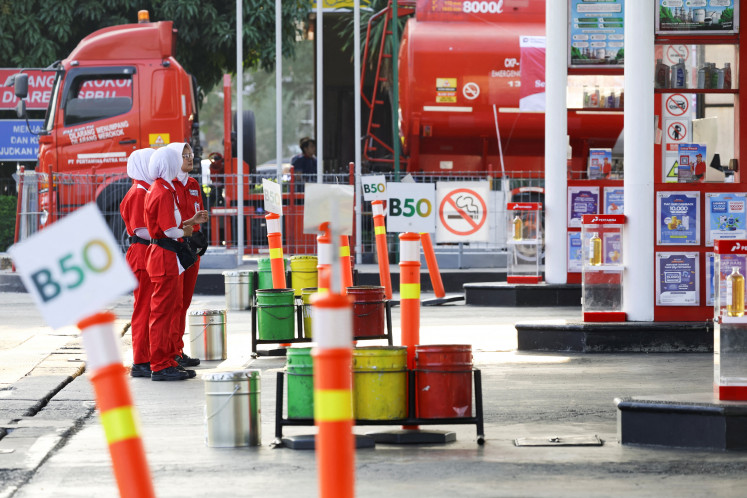
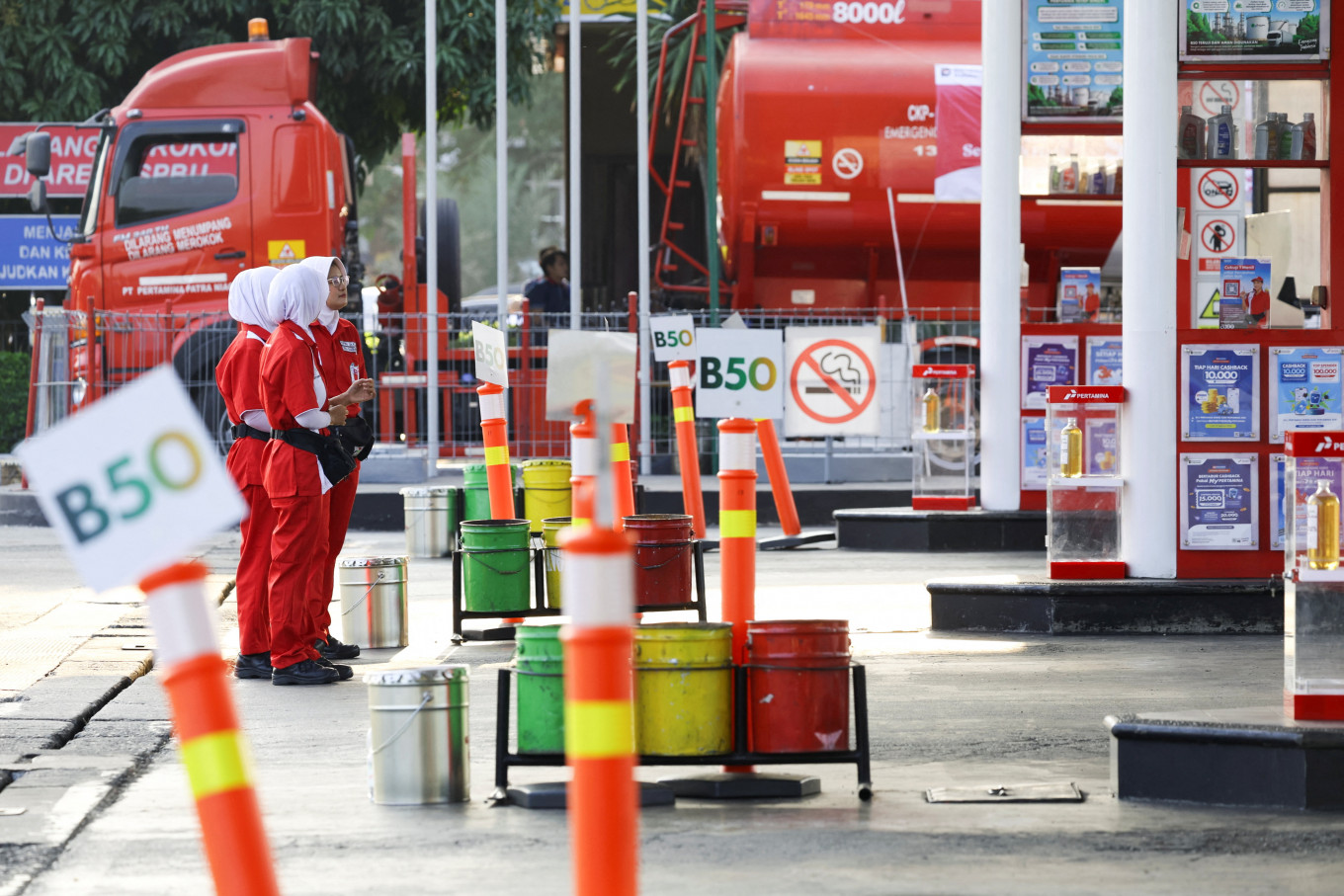 Workers stand at a petrol station for biodiesel containing 50 percent diesel fuel made of palm oil in Karawang, West Java, on July 9, 2026. (Reuters/Ajeng Dinar Ulfiana)
S
ince July 2026, Indonesia has officially begun phasing in B50, a mandate requiring half of every liter of diesel at the pump to be palm oil-based biodiesel. This aggressive escalation marks a massive leap from the nation’s modest B2.5 start in 2008, following rapid successive steps through B30, B35 and B40. Policymakers are already setting their sights on B100.
The drive toward energy self-sufficiency is undeniably ambitious, but it raises an urgent question: Is the broader industrial ecosystem ready to absorb it?
Consider the plantations, the core source of feedstock, where the underlying arithmetic is rapidly tightening. The Indonesian Palm Oil Association (GAPKI) projects that B50 will consume roughly 17.4 million tonnes of crude palm oil (CPO) in 2027, up from 14.69 million tonnes in 2026. At the same time, domestic CPO output could slip from 53.73 million to 51.73 million tonnes as adverse weather patterns like El Niño depress yields. Under this scenario, exports of palm oil products could drop by around 4.6 million tonnes.
This exposure highlights the fundamental tension in national biofuel strategy: How far can a blending mandate go before its trade-offs become unsustainable?
While B50 is a clear win for domestic energy security, the rest of the palm-oil economy may not fare as well. The mandate effectively locks in a massive domestic market for biodiesel, driving up baseline demand for CPO.
Yet that very same raw material feeds essential downstream sectors: cooking oil, oleochemicals, soaps and cosmetics. As fuel absorbs a swelling share of harvest yields, these downstream processors face higher input costs, tighter margins and eroding competitiveness in both domestic and export markets.

Then comes the question of financing. Indonesia largely funds its biodiesel subsidies through export levies, which bridge the price gap between biodiesel and conventional fossil diesel. Pushing mandate targets higher risks straining this mechanism precisely when feedstock costs surge.