The Jakarta Post
Please Update your browser
Your browser is out of date, and may not be compatible with our website. A list of the most popular web browsers can be found below.
Just click on the icons to get to the download page.


Popular Reads
Top Results
No results found. Please check your search term and try again
Can't find what you're looking for?
View all search results
Popular Reads
Top Results
No results found. Please check your search term and try again
Can't find what you're looking for?
View all search resultsASEAN Summit: Between promises and elusive progress
Behind Manila’s polished communiqués and ribbon-cutting ceremonies lies an institutional facade that can no longer mask ASEAN's failure to govern a region in crisis.
Change text size
Gift Premium Articles
to Anyone
Share the best of The Jakarta Post with friends, family, or colleagues. As a subscriber, you can gift 3 to 5 articles each month that anyone can read—no subscription needed!
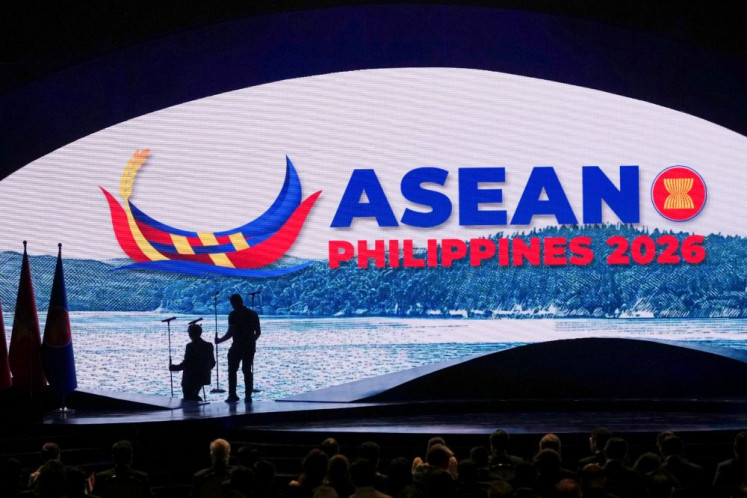
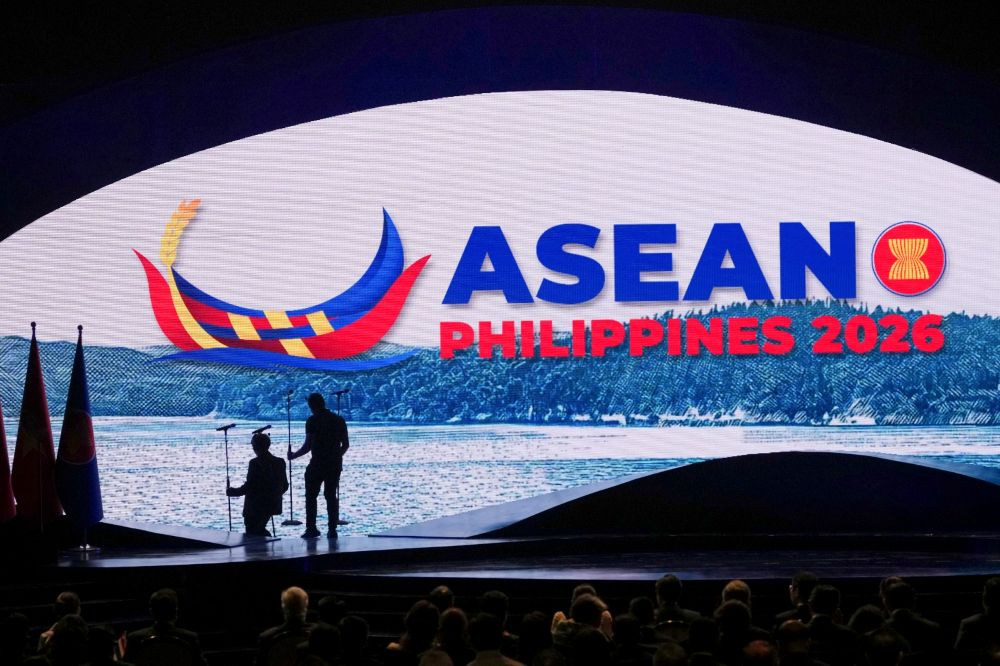 Workers arrange microphones on the stage before the start of the opening ceremony during the 48th ASEAN Summit in Cebu, central Philippines, on May 8, 2026. (AFP/Pool/Aaron Favila)
T
here is a very high probability that the upcoming ASEAN Summit in Manila will be remembered as a diplomatic success story. Southeast Asian leaders will finally operationalize a long-delayed transnational mechanism to combat seasonal haze. Delegations will likely announce incremental steps forward, perhaps even formal milestones, toward actualizing the ASEAN Power Grid.
In diplomatic communiqués, these achievements will be heralded as decisive proof of ASEAN’s capacity to take action, tangible evidence that the regional bloc can still deliver. Under ordinary circumstances, such bureaucratic and technical progress would deserve an unreserved welcome.
Yet these are decidedly not ordinary times, and the era of business-as-usual in Southeast Asia has run its course. Are we genuinely confident that this new center will play a meaningful role in regional governance?
The ASEAN Coordinating Centre for Transboundary Haze Pollution Control carries a mouthful of an acronym that is characteristically ASEAN, but whether it can clean the skies remains doubtful. What truly matters is whether the mechanism drastically curbs toxic haze and visibly improves daily life across member nations.
Those placing high hopes on this Manila rollout will almost certainly face bitter disappointment. By institutional design, ASEAN remains incapable of enforcing compliance, structurally constrained by sovereign sensitivities, and consistently unable to honor its sweeping public commitments.
This institutional paralysis is not an unfortunate accident or an unintended historical anomaly. It reflects the founding philosophy of ASEAN itself: noninterference and consensus-driven diplomacy. Consequently, the sacred concept of “ASEAN centrality” often resembles a rehearsed geopolitical performance, a decades-long pageant staged to convince global powers that the bloc commands its own neighborhood.

The region certainly matters in macroeconomic terms; its booming markets and dynamic demographic expansion make it one of the most vibrant economic arenas on earth. Yet when evaluating ASEAN strictly as an institution of governance, concluding that it has failed is difficult to avoid.