The Jakarta Post
Please Update your browser
Your browser is out of date, and may not be compatible with our website. A list of the most popular web browsers can be found below.
Just click on the icons to get to the download page.


Popular Reads
Top Results
No results found. Please check your search term and try again
Can't find what you're looking for?
View all search results
Popular Reads
Top Results
No results found. Please check your search term and try again
Can't find what you're looking for?
View all search resultsBuild the bridge for peatland restoration
Greater international cooperation is essential to mobilize financial resources, technical expertise and institutional support to ensure that burned landscapes are restored effectively.
Change text size
Gift Premium Articles
to Anyone
Share the best of The Jakarta Post with friends, family, or colleagues. As a subscriber, you can gift 3 to 5 articles each month that anyone can read—no subscription needed!
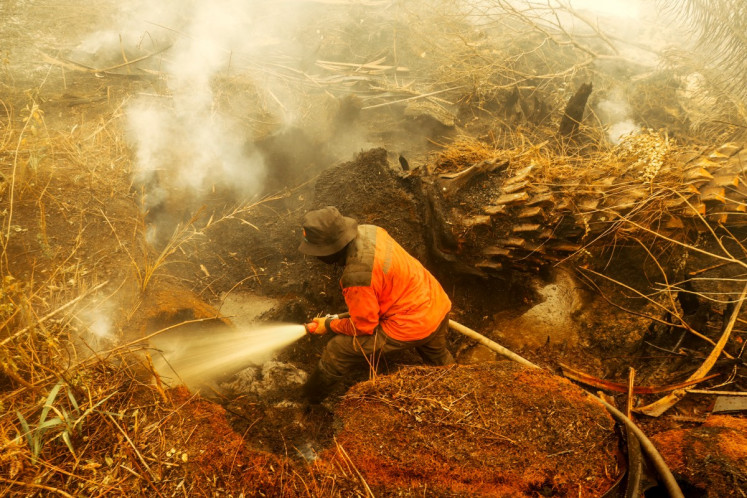
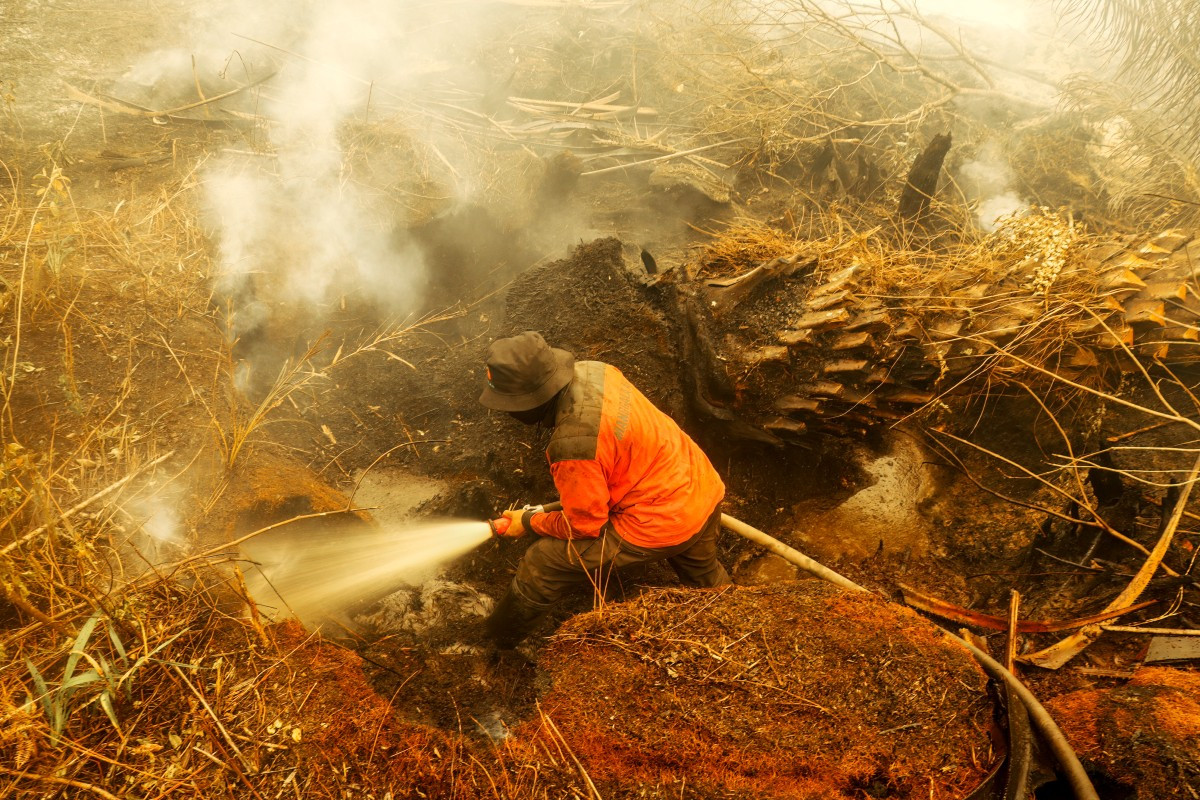 A firefighter sprays water to extinguish a wildfire on Oct. 4, in Pulang Pisau regency, Central Kalimantan. Burnin peatland smolders underground and releases dense smoke. (AFP/Reina)
E
very dry season, smoke from Indonesia's burning peatlands covers its own cities and drifts across the border. This year is one of the worst. A monitoring system called Nusantara Atlas detected more than 827,000 hot spots by Oct. 1, compared with about 616,000 in the same period of 2019.
Peat is deep, wet soil made from old plant matter. When it is drained for plantations or farms, it dries out and can burn underground for weeks. One expert warned that once a fire has started, it is very difficult to put out. The best defense is to keep water in the soil before the fire starts.
The government is now trying to rebuild its capacity. In September, President Prabowo Subianto met with 22 experts, and the forestry minister then announced a new National Peatland and Mangrove Management Agency, known as BPGMN. It replaces BRGM, the restoration agency set up under Joko “Jokowi” Widodo, whose mandate ended on 31 December 2024.
However, financing remains a major obstacle to large-scale peatland restoration in Indonesia. CELIOS estimated that forest and peatland fires had caused economic losses of approximately Rp 565 trillion (US$31.2 billion) by October 2026, a sharp increase from Rp 123.1 trillion in August. The scale of these losses demonstrates that Indonesia cannot rely solely on its national budget to finance recovery.
Greater international cooperation is essential to mobilize financial resources, technical expertise and institutional support to ensure that burned landscapes are restored effectively. One promising avenue is the Climate Implementation Bridge (BRIDGE), an initiative launched by the COP31 Presidency in partnership with the United Nations Development Programme (UNDP). Indonesia has been named among the first five pilot countries, creating an opportunity to strengthen international collaboration and accelerate climate action.
Through BRIDGE, Indonesia should seek to mobilize support for peatland restoration, strengthen implementation capacity and ensure that climate finance reaches affected landscapes and local communities. International partnerships must translate climate commitments into tangible restoration outcomes on the ground, including rewetting works.

A 2026 study in the journal iScience looked at peat fires in West and Central Kalimantan between 2017 and 2022. It found that canal blocks, which are small dams that hold water in drained canals, worked best where the rewetted areas overlapped. If all canal blocks worked as intended, rewetting could avoid up to 6.4 percent of the burned area. That is a modest figure, and the authors say the effects varied from place to place. Still, it is a real cut in the fires that start in drained peat.