The Jakarta Post
Please Update your browser
Your browser is out of date, and may not be compatible with our website. A list of the most popular web browsers can be found below.
Just click on the icons to get to the download page.


Popular Reads
Top Results
No results found. Please check your search term and try again
Can't find what you're looking for?
View all search results
Popular Reads
Top Results
No results found. Please check your search term and try again
Can't find what you're looking for?
View all search resultsAnalysis: When burning forests become a cost of doing business
Change text size
Gift Premium Articles
to Anyone
Share the best of The Jakarta Post with friends, family, or colleagues. As a subscriber, you can gift 3 to 5 articles each month that anyone can read—no subscription needed!
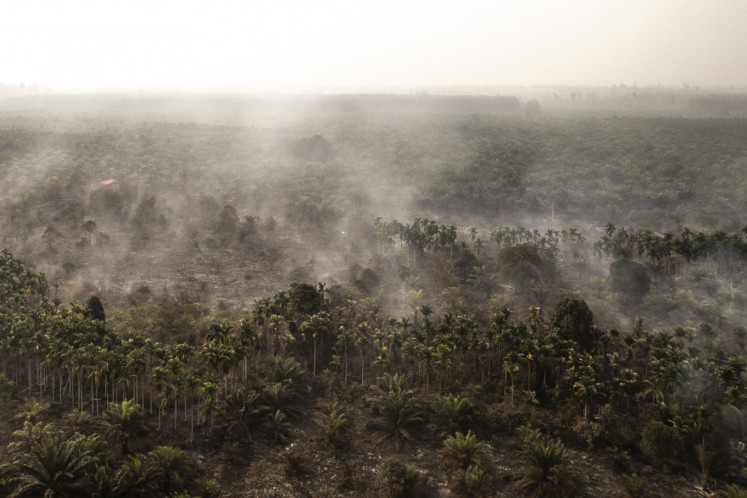
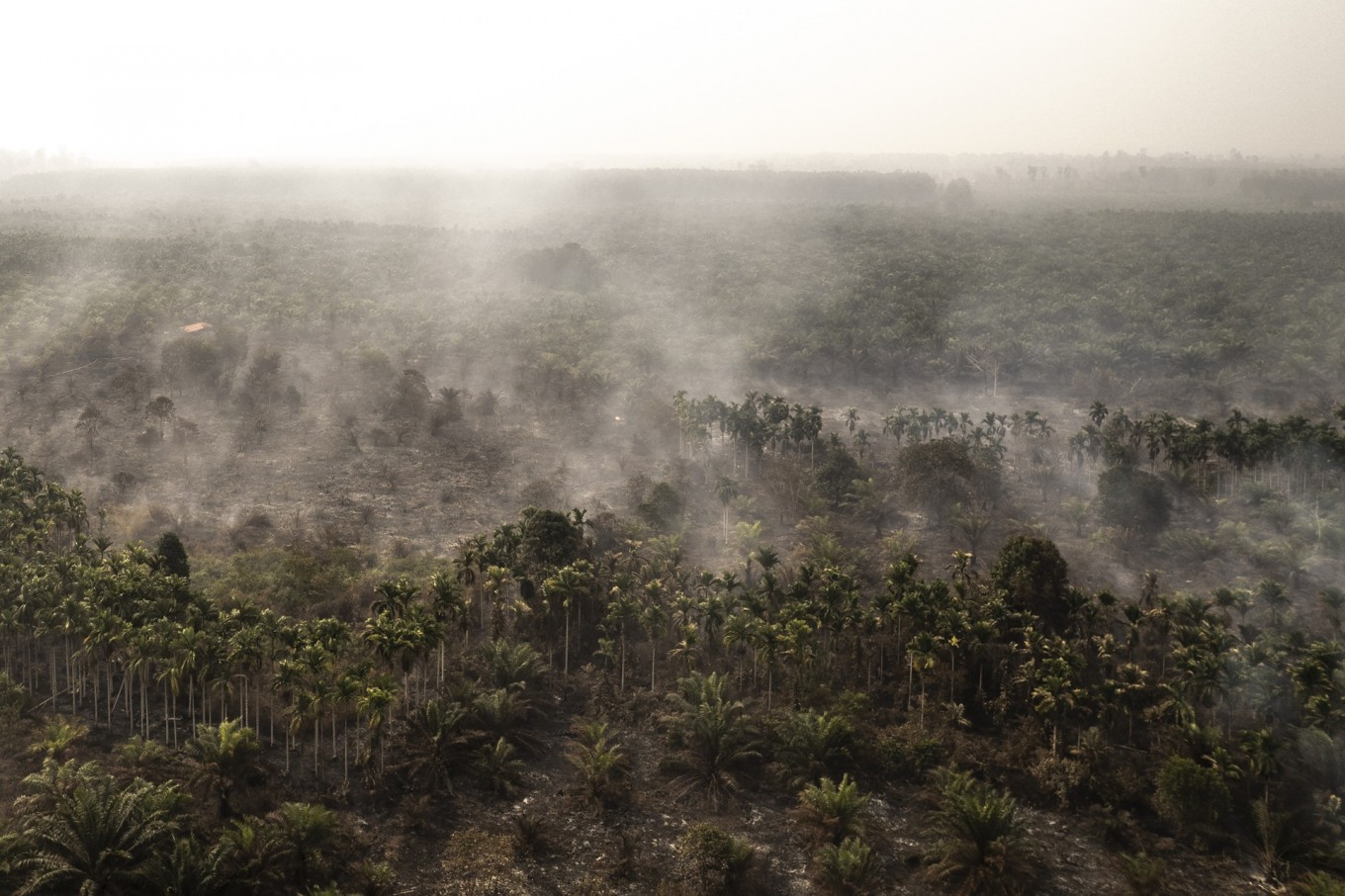 Smoke billows from burning oil palm and areca palm plantations on Aug. 25 in East Tanjung Jabung regency, Jambi. ( Antara/Wahdi Septiawan)
I
ndonesia is facing mounting economic and diplomatic costs from forest and peatland fires this year as a prolonged dry season coincides with a strong El Niño and a positive Indian Ocean Dipole (IOD). The fires have caused widespread damage, placed a substantial burden on public health and economic activity and sent haze across national borders. The combined economic and health costs are estimated to have reached as much as Rp 123.1 trillion (US$6.79 billion), while the resulting pollution has strained relations with neighboring countries.
According to a study by CELIOS, economic losses from the fires in January-August 2026 are estimated to range between Rp 39.29 trillion and Rp 123.1 trillion. The upper-end figure is equivalent to 49.1 percent of the projected gross regional domestic product (GRDP) of Central Kalimantan this year, illustrating the scale of the potential damage and the economic stakes of avoiding seasonal fires from becoming an annual crisis.
The lower-end estimate comprises Rp 29.54 trillion in damage to physical assets and disruption to economic activities as well as Rp 9.75 trillion in healthcare costs. The final figure could be much higher if the fires continue to the year-end. Meanwhile, potential losses in local tax revenue are estimated at Rp 269.86 billion.
The government has allocated approximately Rp 1.2 trillion in emergency assistance to manage the fires and address related impacts, which has been distributed in two phases to affected provinces and districts. The first funding phase, worth Rp 760 billion, was disbursed on Sept. 7, followed by a second disbursement of around Rp 475 billion on Oct. 22.
The assistance is intended to support firefighting operations, evacuations, medical treatment for smoke-related illnesses, logistical supplies and postfire peatland restoration.
Industrial land clearing is a central cause of this year's fires, with environmental researchers pointing to deliberate burning for agriculture and plantations alongside decades of deforestation and peatland conversion.

Between January and July, 285,914 hectares of land burned nationwide, according to independent forest monitoring platform Nusantara Atlas. Around 23.9 percent of that area, or approximately 68,324 ha, fell within industrial concessions and includes 15,146 ha in oil palm concessions, 12,120 ha in mining concessions and 10,485 ha in pulpwood concessions.