The Jakarta Post
Please Update your browser
Your browser is out of date, and may not be compatible with our website. A list of the most popular web browsers can be found below.
Just click on the icons to get to the download page.


Popular Reads
Top Results
No results found. Please check your search term and try again
Can't find what you're looking for?
View all search results
Popular Reads
Top Results
No results found. Please check your search term and try again
Can't find what you're looking for?
View all search resultsCapital market trust is fundamental economic infrastructure
Indonesia needs a trusted capital market not just to reassure foreign investors, but to finance businesses, safeguard long-term savings, and help households build wealth.
Change text size
Gift Premium Articles
to Anyone
Share the best of The Jakarta Post with friends, family, or colleagues. As a subscriber, you can gift 3 to 5 articles each month that anyone can read—no subscription needed!
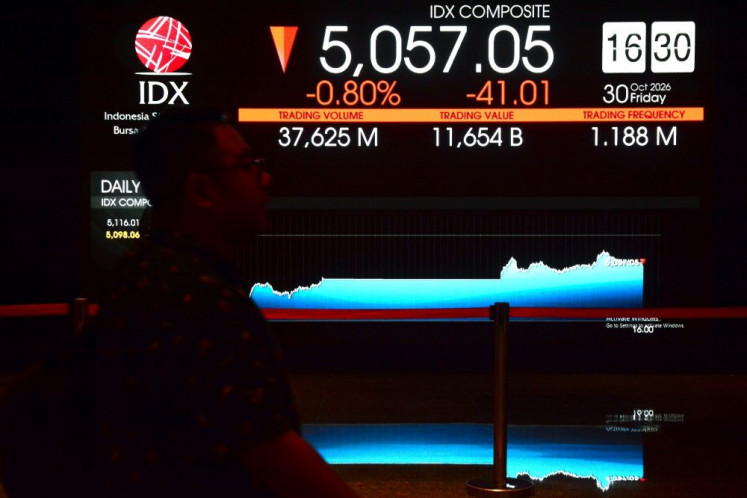
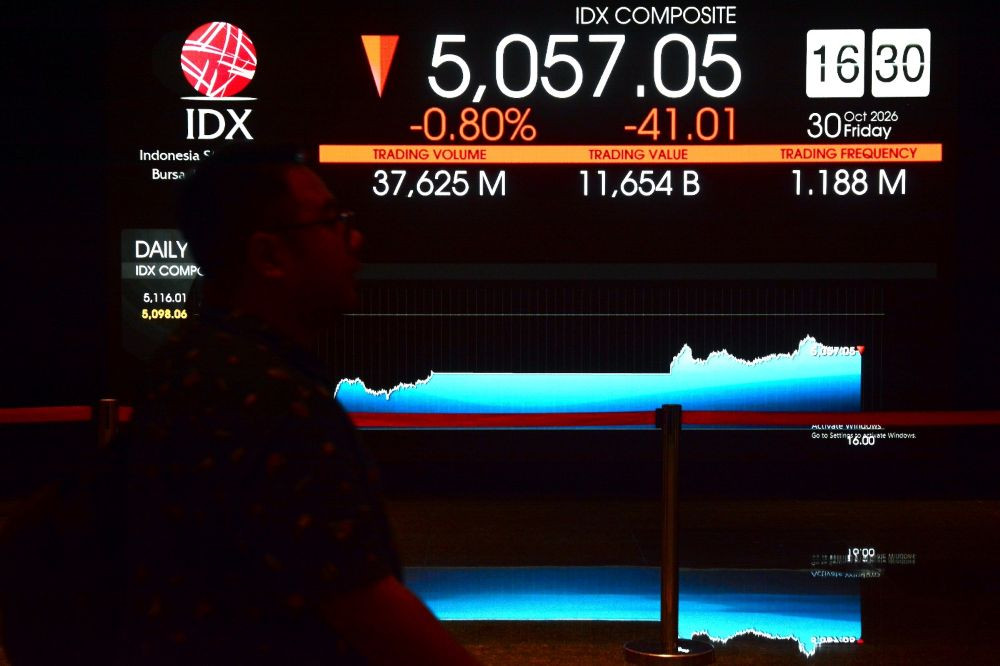 Trading session: A man walks past an electronic screen displaying the composite index on Oct. 30, 2026 at the Indonesia Stock Exchange (IDX) building in South Jakarta. (JP/Iqro Rinaldi)
F
or households saving for retirement and businesses planning their next investment, trust in the country's capital market carries practical consequences. That trust now faces renewed scrutiny.
On Oct. 15, global index provider MSCI announced a formal consultation on a proposal to reclassify Indonesia from emerging market to standalone market status. While no final decision has been reached, MSCI expects to conclude its review by late June 2027, the underlying concerns warrant attention. Issues surrounding opaque shareholding structures, suspected coordinated trading, and the consistency of regulatory enforcement demand systemic reform.
The debate extends far beyond Indonesia's standing in an international benchmark. A credible capital market connects enterprises seeking growth capital with investors seeking viable returns. It enables domestic financial institutions to manage long-term savings prudently and equips ordinary households with avenues to build generational wealth.
Foreign investor sentiment matters, but it does not represent the sole national interest. Capital market integrity is fundamental economic infrastructure.
Foreign capital deepens liquidity, broadens the investor base, and ensures market prices reflect available information. When confidence falters, global asset managers inevitably trim holdings, defer allocations, or demand higher risk premiums. The fallout extends well beyond immediate portfolio outflows.
Depressed equity prices compress corporate valuations and escalate the cost of capital. A business pursuing an initial public offering or rights issue must either accept punitive dilution or issue substantially more shares to raise equivalent proceeds.

Consequently, enterprises lean more heavily on bank loans or corporate bonds. If credit markets similarly demand higher spreads to compensate for perceived governance vulnerabilities, productive investment grows increasingly expensive. Critical capital expenditures, industrial upgrades, and expansion initiatives risk deferral or outright cancellation. While foreign equity outflows do not automatically trigger policy rate hikes by Bank Indonesia (BI), risk premiums can decouple upward, restricting access to affordable funding.