The Jakarta Post
Please Update your browser
Your browser is out of date, and may not be compatible with our website. A list of the most popular web browsers can be found below.
Just click on the icons to get to the download page.


Popular Reads
Top Results
No results found. Please check your search term and try again
Can't find what you're looking for?
View all search results
Popular Reads
Top Results
No results found. Please check your search term and try again
Can't find what you're looking for?
View all search resultsHaze and the quest for a new growth model
Fighting the fires and finding new, sustainable engines of growth are not separate battles.
Change text size
Gift Premium Articles
to Anyone
Share the best of The Jakarta Post with friends, family, or colleagues. As a subscriber, you can gift 3 to 5 articles each month that anyone can read—no subscription needed!
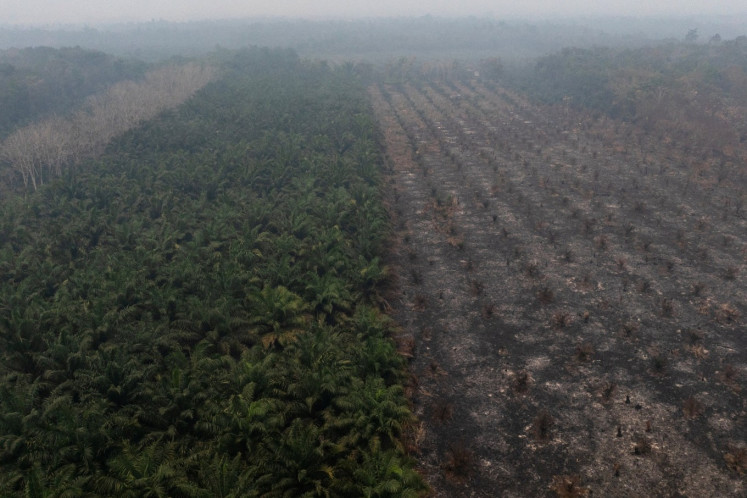
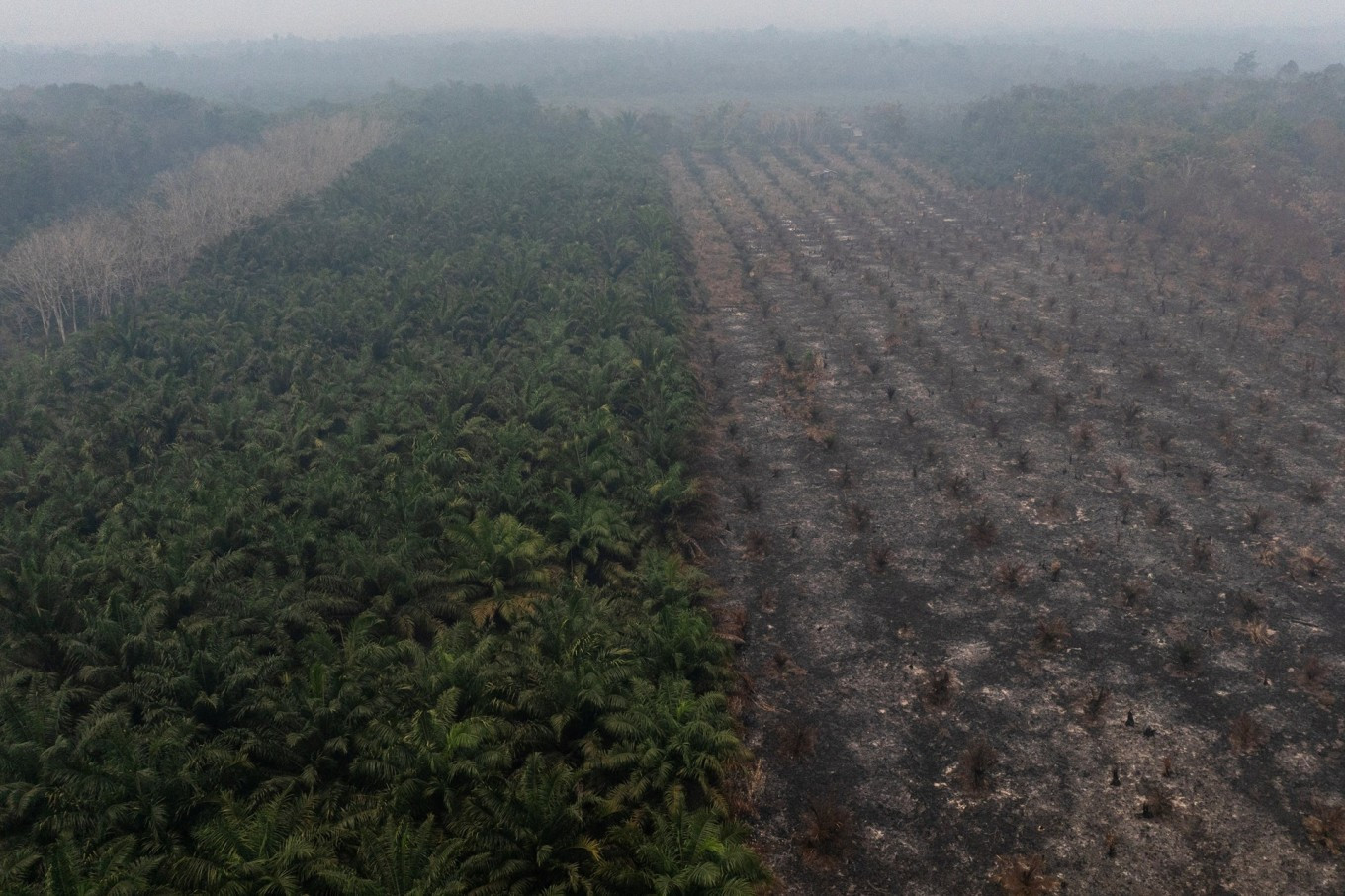 A partially burned oil palm plantation is blanketed by haze on Aug. 30 in Kuala Satong village, Ketapang regency, West Kalimantan. (Reuters/Willy Kurniawan)
F
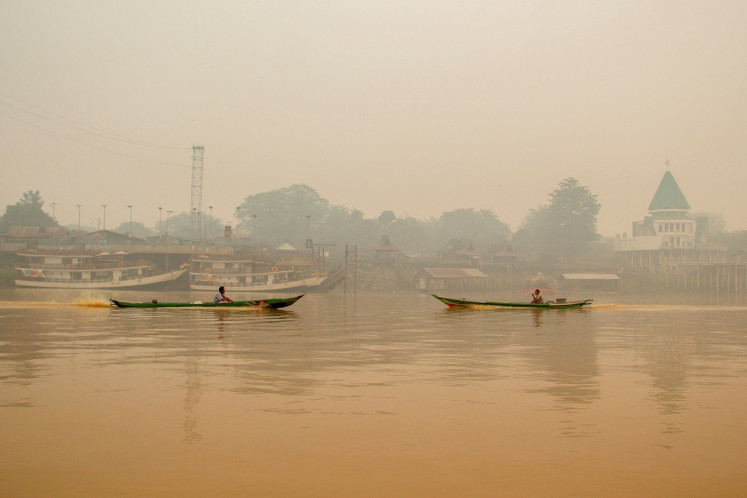
or Supendi, the smoke is only half the story. Like many parts of Kalimantan, his hometown of Sanggau has been shrouded in haze as forest fires rage across the island. But Supendi, a smallholder oil palm farmer, faces another disaster. El Niño has shrunk the Kapuas River, a major artery for oil palm product transportation, the disruption of which has left his palm fruit unsold. As the fruit rots, so does his livelihood. Supendi is not alone. He is one of millions of Indonesian farmers whose survival hangs on the very crop many blame for the fires.
Indonesian authorities have named 20 corporations as suspects in this year’s fires. Slash-and-burn clearing is illegal in Indonesia, yet it is still the cheapest way to strip land for planting. By turbocharging El Niño, climate change has poured fuel on the flame, giving Indonesia its worst fires in over a decade.
Blaming palm oil is the easy part, what is harder is recognizing that the crop accused of feeding the flames also feeds millions of families. We cannot clear the air without also clearing a path to another way of making a living. Fighting the fires and finding new, sustainable engines of growth are not separate battles. They are the same fight.
It is a fight we have been losing for too long. Indonesia’s economy remains structurally tethered to commodities such as palm oil and coal. According to UNCTAD, more than half of our exports are commodities. That makes us an outlier among our neighbors whose prosperity has been catalyzed by manufacturing; in Vietnam, commodities make up less than 15 percent of exports.
The case against this resource-dependence is both an environmental and an economic one. A large body of research finds that what a country produces matters. For instance, in their flagship study on economic complexity, Ricardo Hausmann and César Hidalgo found that the complexity of a country’s export baskets estimates its income per capita more than three times better than education indicators, and four times better than measures of government quality.
Commodities such as palm oil tend to sit near the bottom of the complexity ladder. Countries relying more on these low complexity commodities lag behind those that make more sophisticated products. One does not need to meticulously read the study to see the pattern. Japan, South Korea, China and, increasingly, Vietnam, all rose with their capability of producing more complex things.

Aside from its impact on economic output, manufacturing can also be a powerful engine for decent jobs creation. The World Bank’s 2021 report documented that manufacturing was once the biggest contributor to the creation of middle-class jobs in Indonesia. As manufacturing’s share of the economy collapsed from over 30 percent in 2002 to under 20 percent last year, the country’s job creation propeller sputtered.