The Jakarta Post
Please Update your browser
Your browser is out of date, and may not be compatible with our website. A list of the most popular web browsers can be found below.
Just click on the icons to get to the download page.


Popular Reads
Top Results
No results found. Please check your search term and try again
Can't find what you're looking for?
View all search results
Popular Reads
Top Results
No results found. Please check your search term and try again
Can't find what you're looking for?
View all search resultsEnding impunity, for good
By ordering an end to military tribunals for crimes, the Constitutional Court just dealt a decisive blow to decades of impunity and challenged parliament to prove no soldier is above the law.
Change text size
Gift Premium Articles
to Anyone
Share the best of The Jakarta Post with friends, family, or colleagues. As a subscriber, you can gift 3 to 5 articles each month that anyone can read—no subscription needed!
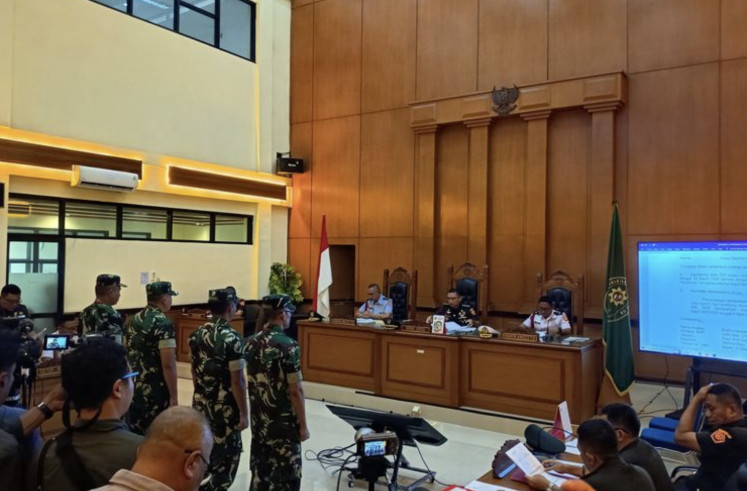
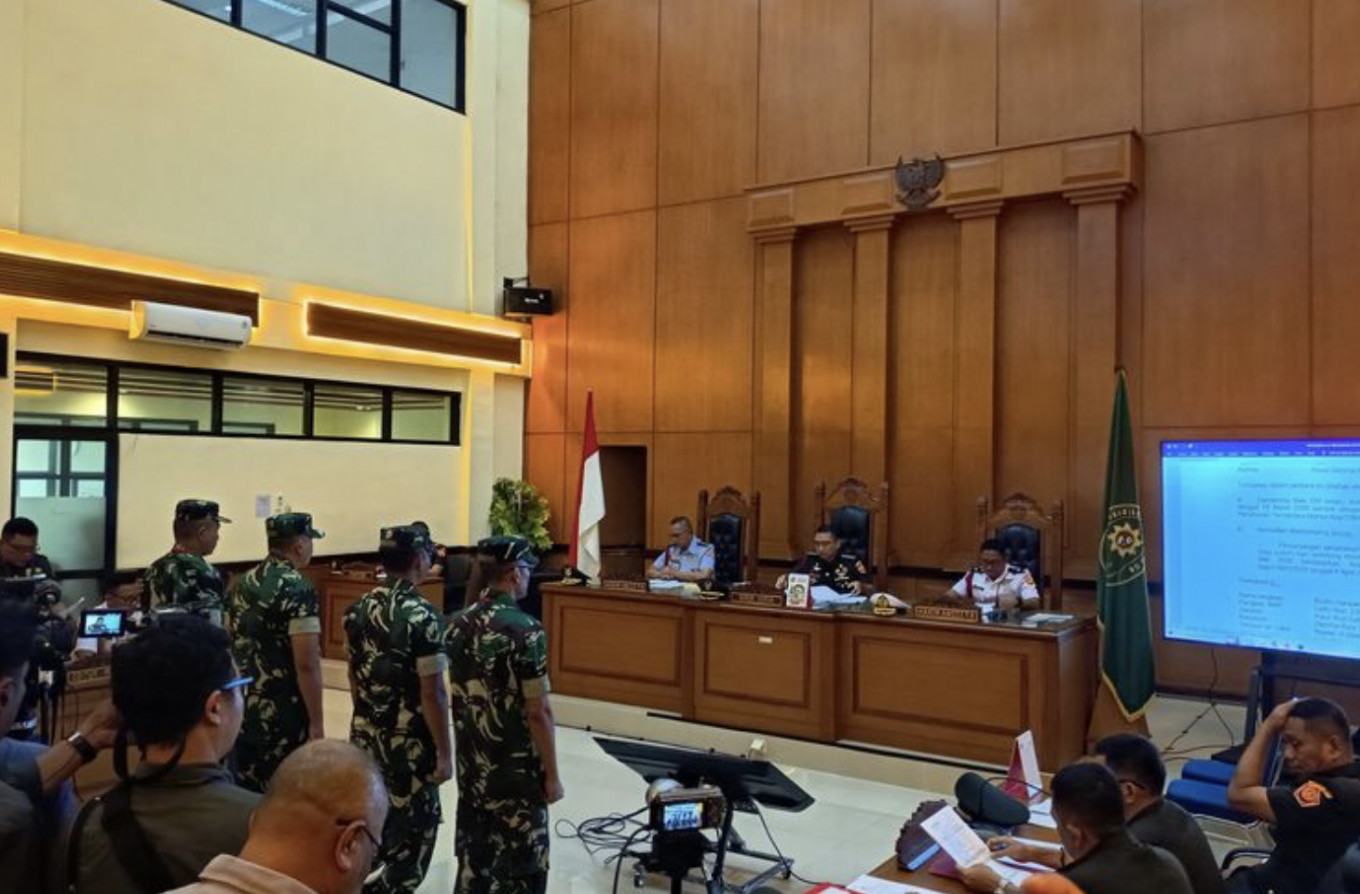 Military prosecutors charged four Indonesian Military (TNI) officers on April 29, 2025, for their alleged involvement in an acid attack on rights activist Andrie Yunus. (Kompas.com/Febryan Kevin)
B
orn out of the 1998 reform movement, the Constitutional Court has a knack for pulling off surprises just when public faith in Indonesian democracy is waning. At a time when both the executive and legislative branches seem intent on hollowing out checks and balances, the Court has once again stepped in as the system’s unlikely savior.
Reaffirming its mandate as a guardian of the Constitution, the Court recently handed down a landmark ruling that could finally dismantle decades of military impunity for crimes against civilians. Its Oct. 15 decision stands as a badly needed reminder that no institution, no matter how entrenched or powerful, is above the law.
The timing could not be more critical. The country has been watching a quiet, creeping remilitarization take root — one reminiscent of the New Order era, when the armed forces operated as the regime's political enforcers. Over recent years, militaristic rhetoric has marched back into everyday governance, active and retired personnel have slipped into civilian posts and top-down command tactics have silently become the default playbook for signature policies like free nutritious meals and rural cooperatives.

The very core of reform was supposed to push the Indonesian Military (TNI) back into the barracks, refocusing its mission strictly on external defense. Yet while past reforms succeeded in barring soldiers from practical politics, they never managed to remove the mechanism that has shielded the military from accountability — both for historical atrocities and everyday crimes.
In a unanimous decision, the bench ordered lawmakers to overhaul the 1997 Military Court Law. At issue is the law's outdated jurisdictional loophole: judging crimes based solely on whether the suspect wears a uniform, rather than the nature of the offense itself. The House of Representatives now has a two-year deadline to finish revisions that should have been hammered out two decades ago, right after the passage of the 2004 TNI Law.
The breakthrough was not a state initiative. It was driven by two women from North Sumatra demanding justice for the loved ones who lost their lives in separate incidents involving soldiers. In one case, a military tribunal handed down a meager 10-month sentence for the killing. In the other, an officer managed to evade justice on claims of "insufficient evidence", even after being named in court by a defendant.

Allowing military tribunals to retain jurisdiction over ordinary crimes committed by active-duty personnel has long undermined genuine security sector reform. From the tragedies in North Sumatra to the acid attack against rights activist Andrie Yunus, the military justice system has proven time and again that it rarely delivers genuine justice for victims.