The Jakarta Post
Please Update your browser
Your browser is out of date, and may not be compatible with our website. A list of the most popular web browsers can be found below.
Just click on the icons to get to the download page.


Popular Reads
Top Results
No results found. Please check your search term and try again
Can't find what you're looking for?
View all search results
Popular Reads
Top Results
No results found. Please check your search term and try again
Can't find what you're looking for?
View all search resultsIndonesia has a mountain of rice, but not food security
A record rice surplus is filling Bulog warehouses rather than lowering market prices, exposing a costly food policy that prioritizes managing inventory over feeding the poor.
Change text size
Gift Premium Articles
to Anyone
Share the best of The Jakarta Post with friends, family, or colleagues. As a subscriber, you can gift 3 to 5 articles each month that anyone can read—no subscription needed!
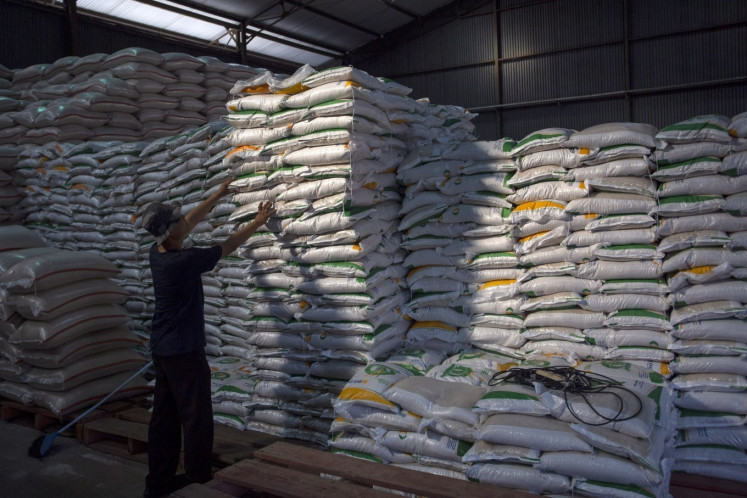
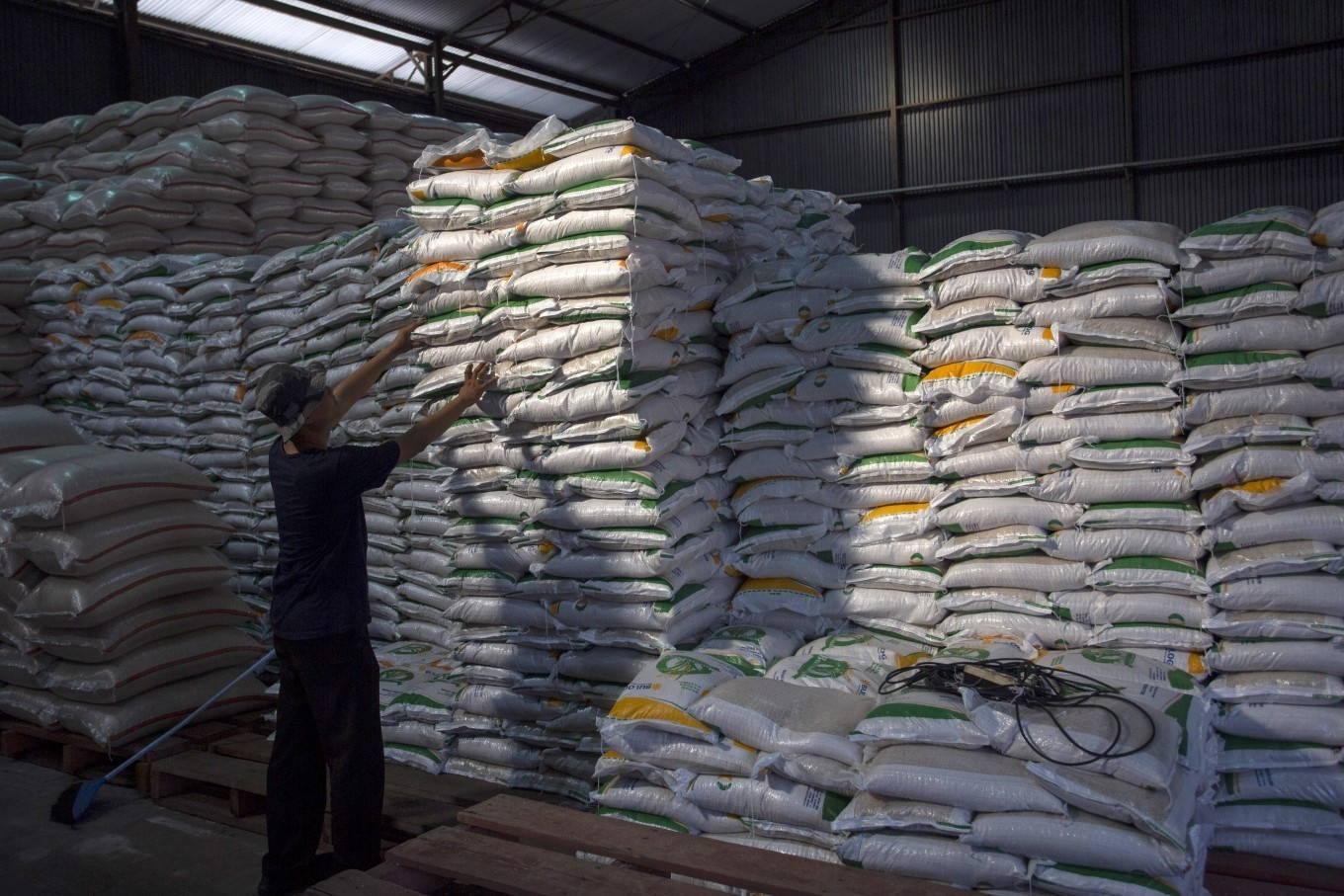 A worker checks sacks of locally produced rice on May 30, 2024, at a of warehouse state food company Perum Bulog in Indramayu, West Java. (Antara/Dedhez Anggara)
T
his quarter, 33.2 million citizens in the four lowest income deciles will each receive 30 kilograms of rice in a single allocation instead of regular monthly instalments. Coordinating Food Minister Zulkifli Hasan has framed this operation as urgent social relief for vulnerable households.
Yet a rigorous strategic analysis of the State Logistics Agency’s (Bulog’s) inventory management suggests this distribution serves an ulterior operational purpose: rotating aging stockpiles before grain quality deteriorates beyond salvage. The 1 million tonnes currently leaving state warehouses are as much about clearing physical shelves as filling empty bowls.
The scale of this logistical accumulation is unprecedented. National Food Agency (Bapanas) data show government rice reserves stand at 4.55 million tonnes, nearly triple the 1.51 million tonnes logged in October 2023. Bulog reported that inventories hit an all-time peak of 5.4 million tonnes earlier this year.
This buildup stemmed from aggressive state procurement that absorbed roughly 4.1 million tonnes of rice equivalent, approximately one out of every 7 tonnes of projected national production, at a fixed floor price of Rp 6,500 (36 US cents) per kilogram of unhusked grain, irrespective of quality.
The domestic storage infrastructure could not absorb the influx. Academic estimates from IPB University place Bulog’s functional capacity at approximately 3 million tonnes, whereas the agency’s internal assessments claim closer to 4 million tonnes. To close the shortfall, Bulog leased commercial facilities, managing roughly 2 million tonnes of private warehouse space by May.
The government has since allocated Rp 5 trillion to build 100 state-of-the-art warehouses, adding 900,000 tonnes of capacity. Concurrently, special presidential envoy Hashim Djojohadikusumo proposed exporting up to 500,000 tonnes to neighboring Malaysia, arguing that cross-border sales would prove cheaper than leasing additional private facilities.

Herein lies the core policy contradiction. Despite bursting state warehouses, urban and rural consumers paid approximately Rp 16,400/kg for medium-grade rice in mid-October, roughly 21 percent above the official retail ceiling of Rp 13,500, according to Bank Indonesia monitoring.