The Jakarta Post
Please Update your browser
Your browser is out of date, and may not be compatible with our website. A list of the most popular web browsers can be found below.
Just click on the icons to get to the download page.


Popular Reads
Top Results
No results found. Please check your search term and try again
Can't find what you're looking for?
View all search results
Popular Reads
Top Results
No results found. Please check your search term and try again
Can't find what you're looking for?
View all search resultsThe frequent-flier president: High-stakes global tour
Trading traditional consensus building for high-stakes presidential dealmaking, Prabowo has transformed Indonesian diplomacy into a high-wire act of transactional multi-alignment where soaring global ambition collides with mounting geopolitical risks.
Change text size
Gift Premium Articles
to Anyone
Share the best of The Jakarta Post with friends, family, or colleagues. As a subscriber, you can gift 3 to 5 articles each month that anyone can read—no subscription needed!
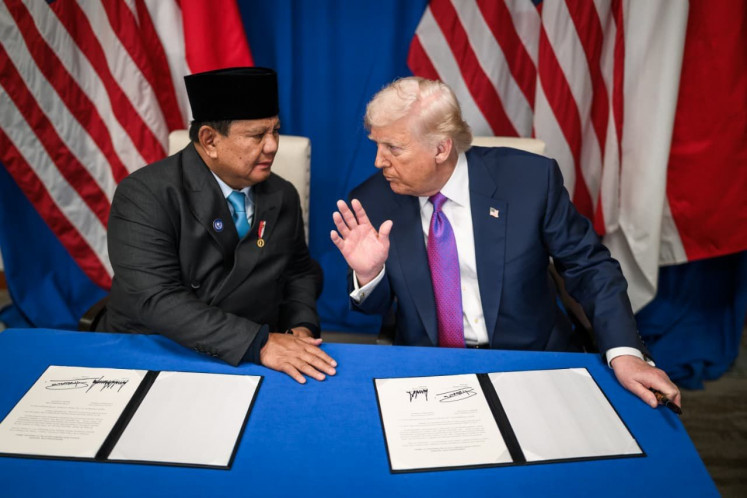
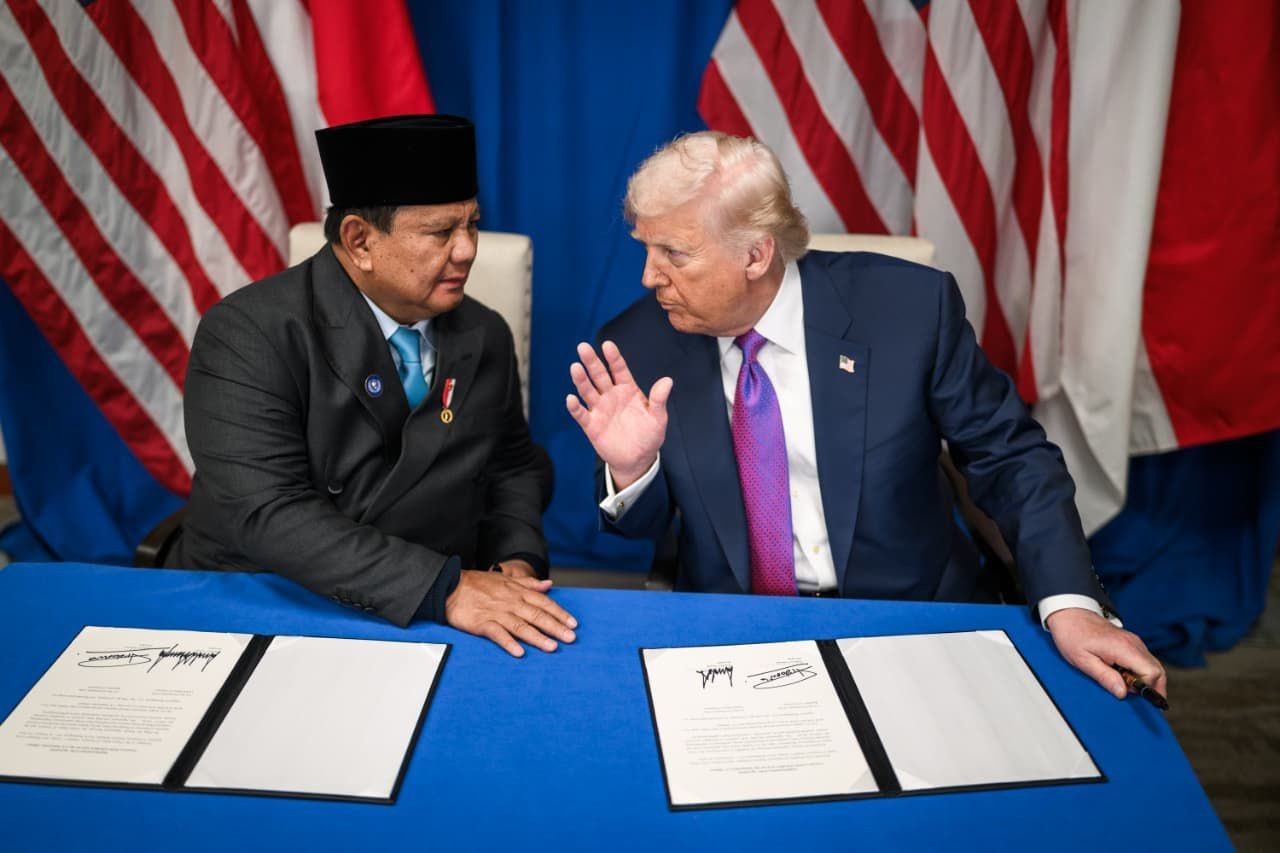 President Prabowo Subianto (left) listens to United States President Donald Trump on Feb. 19, 2026, during the signing ceremony for the US-Indonesia Agreement on Reciprocal Trade (ART) in Washington, DC. (Courtesy of Presidential Secretariat/White House)
U
nder President Prabowo Subianto, Indonesia’s foreign policy has taken the form of a personalized, highly assertive strategy of transactional multi-alignment. What was once traditional, bebas aktif (free and active) nonalignment has been redefined as an ambitious campaign to maximize strategic autonomy, accelerate military modernization and advance domestic economic interests through leader-to-leader diplomacy.
Over the past two years, Jakarta’s international engagement has been fundamentally shifted. The quiet institutionalism and consensus-oriented multilateralism that long defined Indonesian statecraft have given way to an executive-heavy, high-velocity style driven directly from the palace.
While this top-down activism has raised Indonesia’s global visibility, it has also introduced unprecedented strategic risks, institutional friction and a series of foreign policy shocks that challenge the nation’s foundational diplomatic tenets.
The most striking change is the near-total centralization of foreign policy in the presidency. Functioning as his own chief diplomat, Prabowo has shown a clear preference for direct, leader-to-leader dealmaking over established diplomatic channels.
His appetite for international travel — more than 50 foreign trips covering over 30 countries in two years — underscores a personal style that treats international relations as a succession of presidential summits rather than institutional processes.
This approach has come at a cost to the Foreign Ministry. Displaying an apparent lack of trust in the institutional bureaucracy, Prabowo, a retired Army general, entrusted the ministry to Sugiono, a loyal political aide with virtually no prior diplomatic experience.

That mistrust predates his presidency; it surfaced during his tenure as defense minister under his predecessor Joko “Jokowi” Widodo, when Prabowo frequently clashed with the foreign minister of the day. For nearly two years, institutional advice has been regularly ignored or bypassed, leaving career diplomats to mount damage control or craft retrospective justifications for presidential statements made abroad.