The Jakarta Post
Please Update your browser
Your browser is out of date, and may not be compatible with our website. A list of the most popular web browsers can be found below.
Just click on the icons to get to the download page.


Popular Reads
Top Results
No results found. Please check your search term and try again
Can't find what you're looking for?
View all search results
Popular Reads
Top Results
No results found. Please check your search term and try again
Can't find what you're looking for?
View all search resultsThe rich world’s climate distraction
Development must focus on the best ways to help the poor, who are more vulnerable to everything, not just climate change.
Change text size
Gift Premium Articles
to Anyone
Share the best of The Jakarta Post with friends, family, or colleagues. As a subscriber, you can gift 3 to 5 articles each month that anyone can read—no subscription needed!
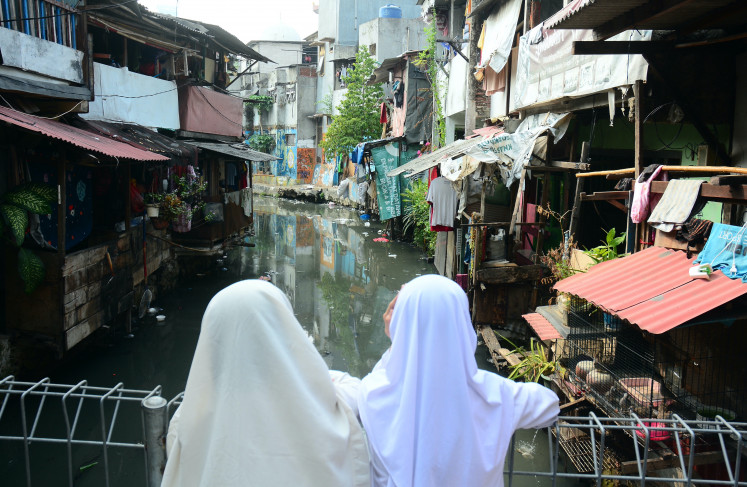
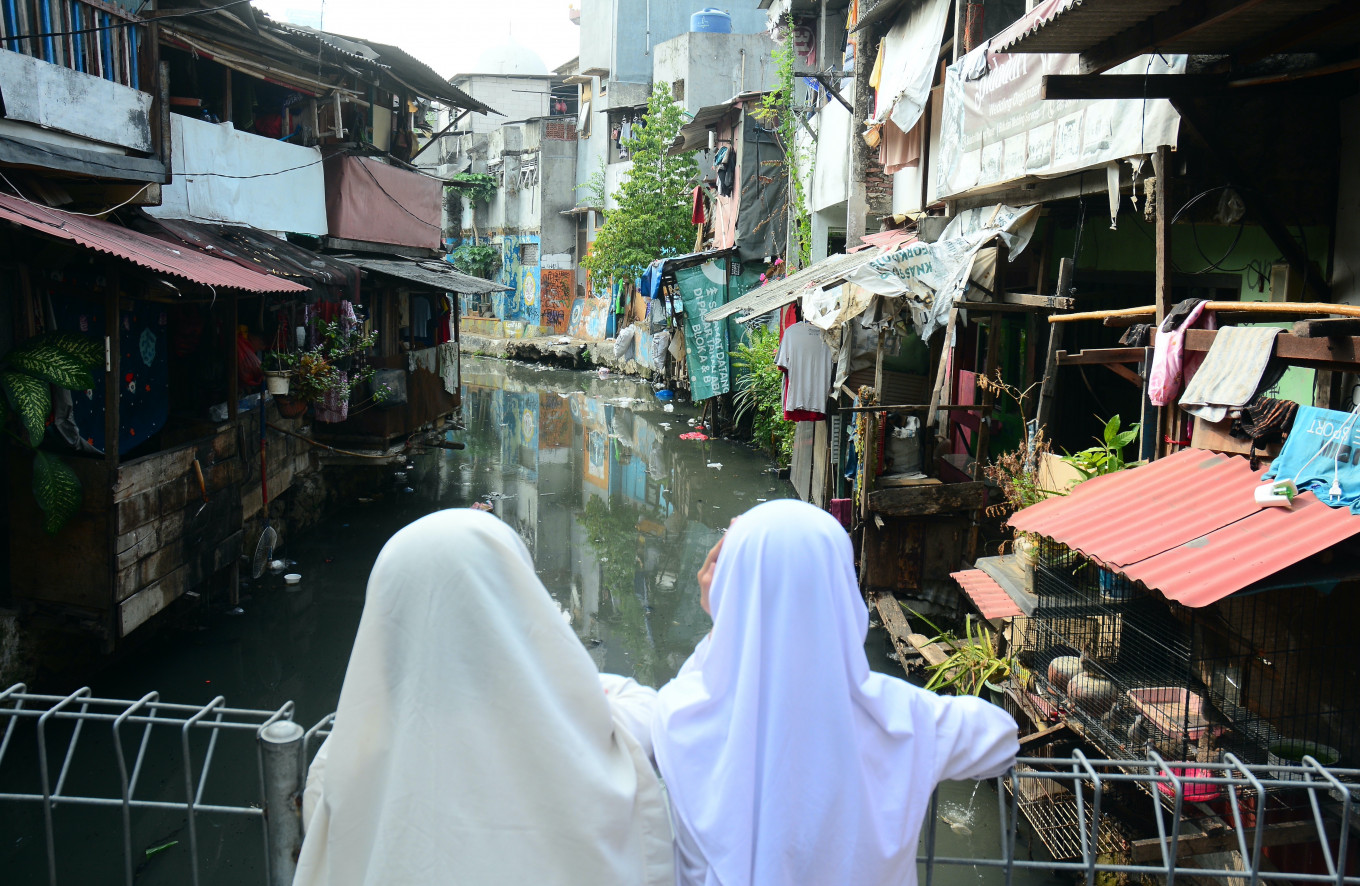 Two schoolgirls look at an informal riverbank settlement on Aug. 7, 2026, from a bridge in Kebon Melati village, Tanah Abang, Central Jakarta. (JP/Iqro Rinaldi)
T
he last 75 years have brought the greatest improvement of human welfare in history. But over the past decade, much of that progress has stalled. This happened at the same time that the rich world shifted its attention to climate change. This is not a coincidence, and it has to change.
Consider extreme poverty, long defined as living on less than US$1 a day. In 1950, more than half of humanity was that poor. Today, the share is 7.6 percent, the lowest ever recorded.
Average schooling has almost tripled from 3.2 years to nearly 9; electricity access has soared. Problems remain, but the gains have been spectacular.
Now development has slowed to a crawl. After almost two centuries of declining poverty, the number of poor people hasn’t budged since 2016. Global progress is at its slowest pace since 1950, according to the World Bank.
There are many causes, but one stands out. In 2016, the world retired its Millennium Development Goals, a short list of mostly efficient, targeted aims: Cut poverty, disease and maternal and child deaths, and get every child into school. In their place came the Sustainable Development Goals; climate change became the rich world’s obsession.
Nowhere is this obsession clearer than in the rich world’s development aid. Its core purpose is to help development, yet money is instead spent increasingly on climate. Across the rich world, $49 billion, or nearly a quarter of all development commitments, is climate. Global development banks now spend half their development money on climate, at around $103 billion for low- and middle-income countries.

Both development agencies and banks seem to have convinced themselves that because poor people are more vulnerable to climate change, climate policy is crucial for development. The logic is seductive but wrong.