The Jakarta Post
Please Update your browser
Your browser is out of date, and may not be compatible with our website. A list of the most popular web browsers can be found below.
Just click on the icons to get to the download page.


Popular Reads
Top Results
No results found. Please check your search term and try again
Can't find what you're looking for?
View all search results
Popular Reads
Top Results
No results found. Please check your search term and try again
Can't find what you're looking for?
View all search resultsWhy pharmaceutical sovereignty must become a national priority
Indonesia covers nearly its entire population under national health insurance, yet relying on imports for 90 percent of its active medicine ingredients leaves the country dangerously exposed to the next global shock.
Change text size
Gift Premium Articles
to Anyone
Share the best of The Jakarta Post with friends, family, or colleagues. As a subscriber, you can gift 3 to 5 articles each month that anyone can read—no subscription needed!
 Set as preferred source
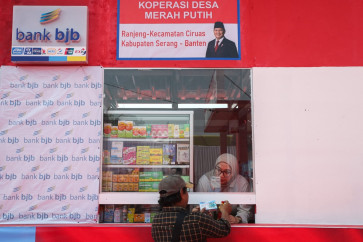
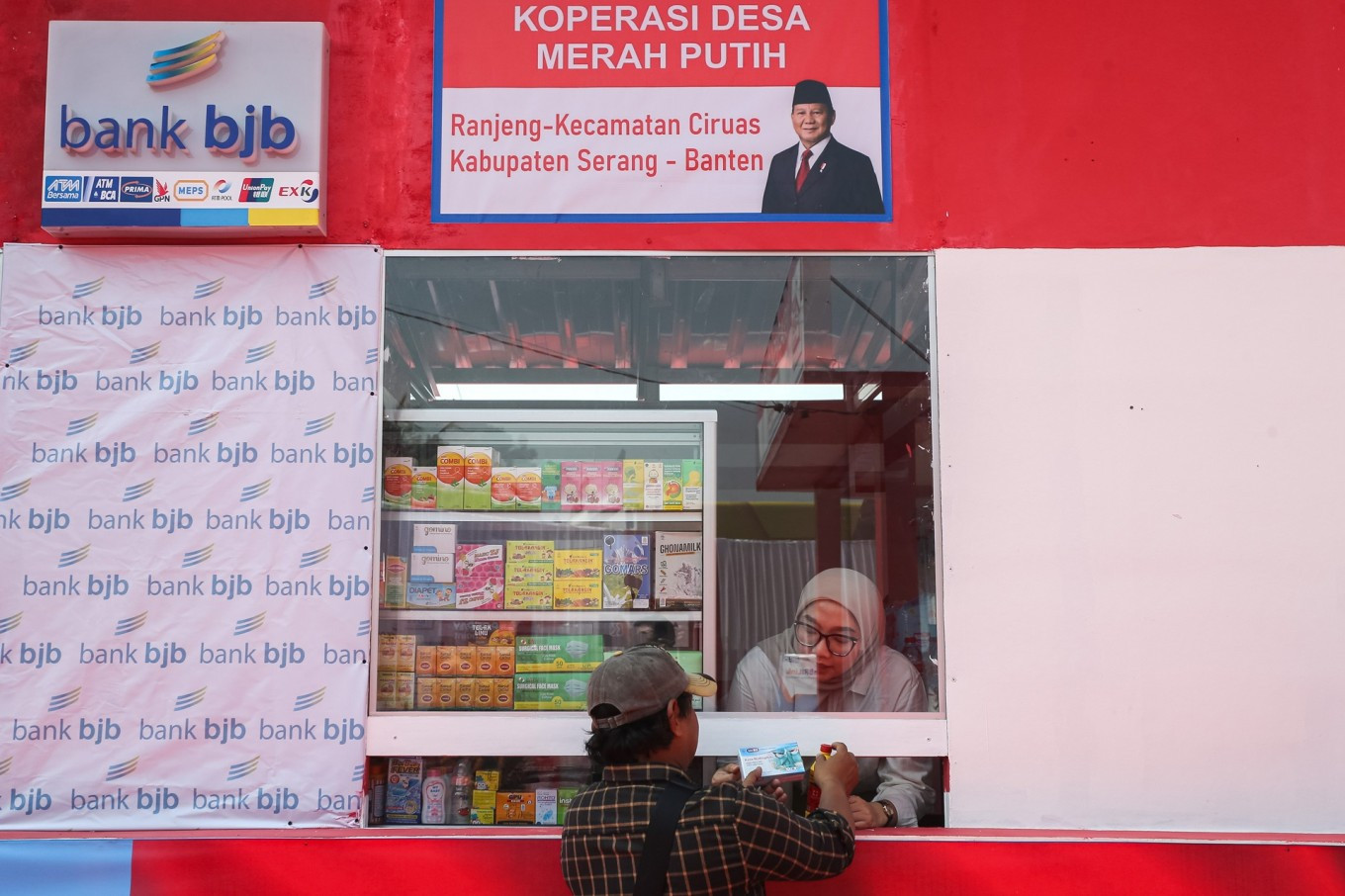 A seller serves a customer on July 21 at a pharmacy during the launch ceremony for a cooperative under the government's Red and White Cooperatives program, in Serang regency, Banten, West Java. (Antara/Angga Budhiyanto)
I
ndonesia deserves credit for the remarkable expansion of its National Health Insurance program, with BPJS Kesehatan now covering approximately 98.6 percent of the population. Yet broad access to health care does not automatically translate into health sovereignty. Beneath this achievement lies a systemic vulnerability that remains largely unresolved: Indonesia’s heavy dependence on imported pharmaceutical ingredients.
In global supply chain analysis, this is a classic case of asymmetric dependence. When a country relies on foreign suppliers for essential goods, its domestic security becomes vulnerable to external shocks. Even a relatively minor supply chain bottleneck can suddenly jeopardize the availability of life-saving medicines across the national market.
The figures are striking. Indonesia still imports around 90 percent of its active pharmaceutical ingredients (APIs). China and India together supply 53 percent of the country’s antibiotic ingredients, while European suppliers account for roughly half of its hormone and insulin inputs. Such concentration leaves Indonesia acutely exposed to geopolitical tensions, export restrictions and international shipping disruptions.
These risks are compounded as major economies increasingly embrace pharmaceutical nationalism. The United States has moved to curb its biotechnology dependencies on China, while the European Union has implemented measures to secure its own essential medicines supply.
As governments prioritize strategic autonomy, global competition for pharmaceutical manufacturing capacity is intensifying. Developing nations that remain passive risk finding themselves at the back of the queue when the next crisis hits, where even modest shipping bottlenecks can threaten essential medicine supplies within weeks.
Meanwhile, Indonesia faces mounting domestic healthcare needs. Diabetes is projected to account for 5.6 percent of monthly healthcare cases nationwide, while acute respiratory infections represent an average of 8.9 percent. Yet the national healthcare financing framework has struggled to keep pace with global pharmaceutical innovation, only around 2 percent of innovative medicines worldwide have made it into Indonesia’s National Formulary. The result is a double burden: constrained healthcare financing on one hand, and persistent import dependence on the other.

Domestic industrial policy inadvertently reinforces the problem. While the INA-CBGs payment system under BPJS Kesehatan has successfully contained hospital operating costs, this rigid cost-control mechanism frequently squeezes pharmaceutical manufacturers’ margins. Consequently, cheaper imported ingredients remain commercially more viable than capital-intensive domestic chemical synthesis. Without sustained domestic demand and viable margins, the country’s fine chemical sector has struggled to take root.