The Jakarta Post
Please Update your browser
Your browser is out of date, and may not be compatible with our website. A list of the most popular web browsers can be found below.
Just click on the icons to get to the download page.


Popular Reads
Top Results
No results found. Please check your search term and try again
Can't find what you're looking for?
View all search results
Popular Reads
Top Results
No results found. Please check your search term and try again
Can't find what you're looking for?
View all search resultsAnalysis: Court decision lets Gibran’s questionable diploma slide
Change text size
Gift Premium Articles
to Anyone
Share the best of The Jakarta Post with friends, family, or colleagues. As a subscriber, you can gift 3 to 5 articles each month that anyone can read—no subscription needed!
 Set as preferred source
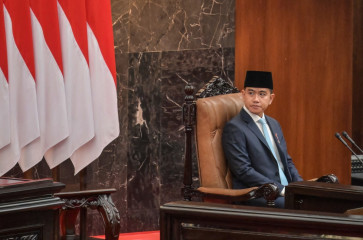
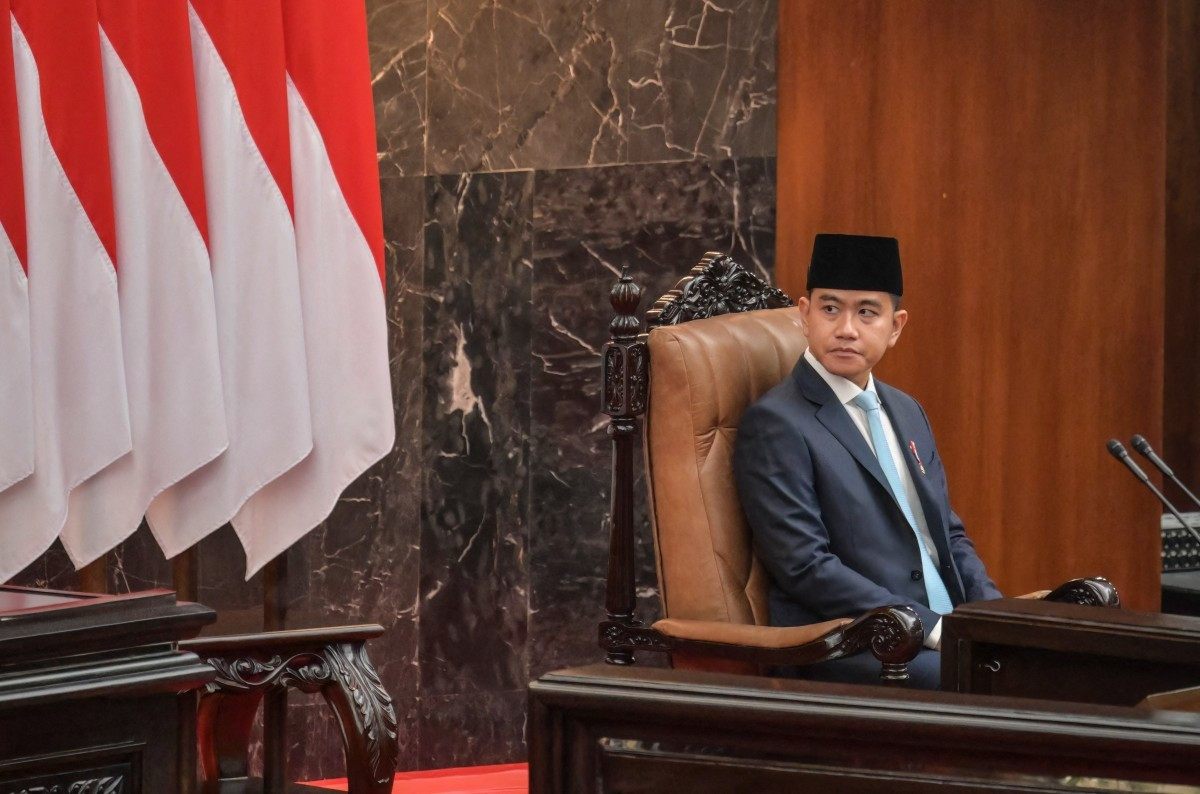 Vice President Gibran Rakabuming Raka looks on before President Prabowo Subianto's speech on the macroeconomic framework to lawmakers on May 20 at the Senayan Legislative Complex in Jakarta. (AFP/ Bay Ismoyo)
T
he latest ruling by the Constitutional Court has raised far more questions than it has answered regarding the educational qualifications of Vice President Gibran Rakabuming Raka.
In a decision handed down on Oct. 6, the court noted it found no convincing evidence that Gibran possessed a foreign diploma, certificate or other credential that could legitimately serve as the foundation for an Indonesian senior high school equivalency certificate. Yet the court stopped short of annulling Gibran’s candidacy or removing him from office as the petitioners demanded.
In October 2023, the court cleared the path for the eldest son of former president Joko “Jokowi” Widodo, then aged 36, to run for vice president the 2024 general election by ruling that the age of candidacy, set at a minimum 40 years, could be bypassed by individuals who had held an elected regional post. That controversial decision, issued by a bench led by Gibran’s uncle by marriage Anwar Usman, was followed nine days later by Gibran registering as Prabowo Subianto’s running mate. Anwar was subsequently removed as chief justice by the court's ethics council over a severe breach regarding conflict of interest.
The court determined that the petitioners lacked legal standing, precluding a hearing on the petition's merits. It further ruled that Gibran could not be unseated through an election dispute because he ceased to be a candidate the moment he was inaugurated in October 2024. Questions regarding preelection eligibility, the bench reiterated, fell under the purview of other state bodies.
The outcome ensures that this decision alone does not invalidate Gibran’s mandate. However, the legal challenge served an equally potent purpose: laying bare institutional vulnerabilities in the country’s electoral architecture. The Constitutional Court has effectively become a public forum where systemic flaws in election administration are dragged into daylight, even when it lacks the authority to correct them.
Here, the proceedings have cast serious doubt on whether the state properly enforced the most fundamental constitutional and legal requirements for an executive office. That burden of accountability now falls squarely on the General Elections Commission (KPU), the body responsible for vetting Gibran’s eligibility in the first place.

The commission maintains that it complied with existing regulations by referring to a 2019 Education and Culture Ministry certificate recognizing Gibran’s overseas schooling, alongside an accompanying decree from the ministry’s Directorate General of Higher Education. But the court’s observations reveal a glaring chasm between administrative rubber-stamping and substantive verification. As the court underscored, the administrative presumption of validity (vermoeden van rechtmatigheid) must always be grounded in accuracy and due prudence. The ruling starkly illuminated the KPU’s failure to conduct factual verification of the actual educational records underlying the ministry's certification.