The Jakarta Post
Please Update your browser
Your browser is out of date, and may not be compatible with our website. A list of the most popular web browsers can be found below.
Just click on the icons to get to the download page.


Popular Reads
Top Results
No results found. Please check your search term and try again
Can't find what you're looking for?
View all search results
Popular Reads
Top Results
No results found. Please check your search term and try again
Can't find what you're looking for?
View all search resultsImpeachment and democratic consolidation
Can impeachment strengthen a democracy, or does it only wound it?
Change text size
Gift Premium Articles
to Anyone
Share the best of The Jakarta Post with friends, family, or colleagues. As a subscriber, you can gift 3 to 5 articles each month that anyone can read—no subscription needed!
 Set as preferred source
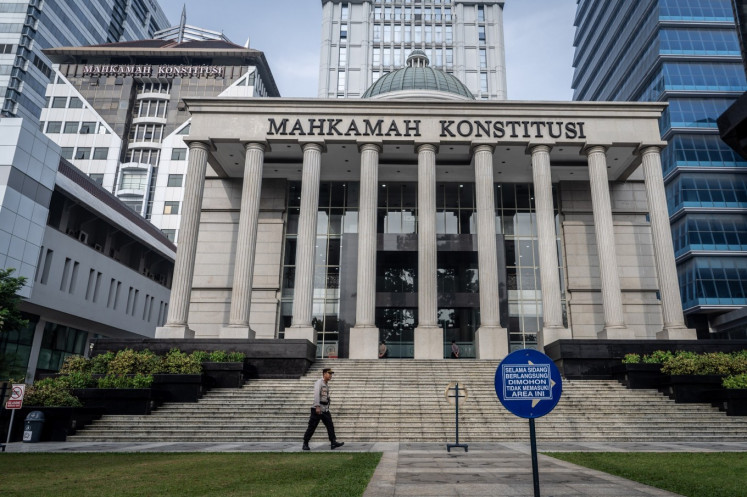
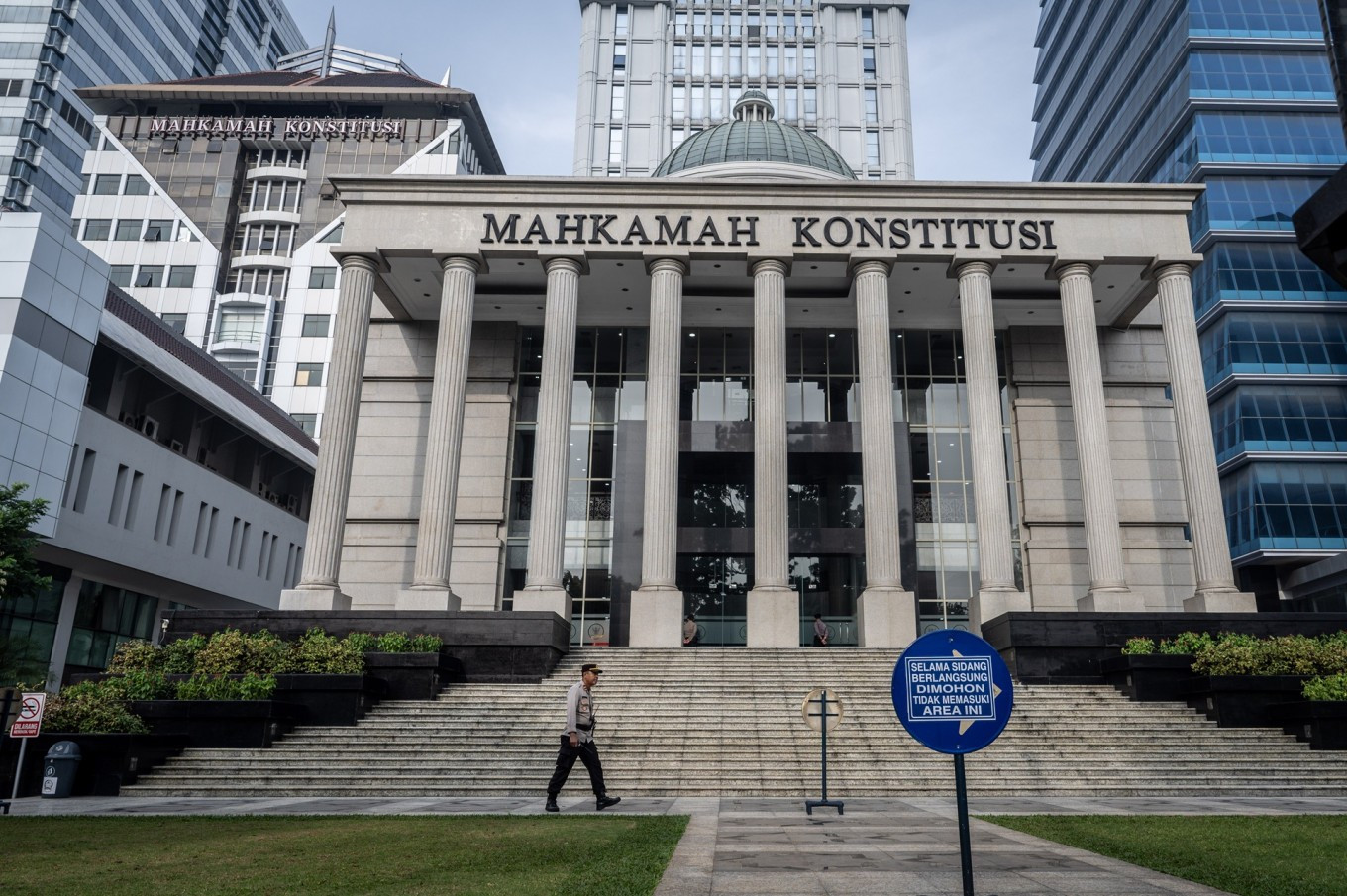 A police officer patrols the grounds of the Constitutional Court on Feb. 4, 2025, in Central Jakarta. (Antara/Bayu Pratama S.)
O
n Oct. 6, the Constitutional Court produced one of the ambiguous rulings in its history. In its legal considerations, the justices unanimously stated that they had found no convincing evidence that Vice President Gibran Rakabuming Raka holds a foreign diploma equivalent to senior high school. Yet the verdict itself declared the petition inadmissible because the petitioners lacked legal standing. The court said it had no authority to judge whether the candidacy requirements had been met.
The result is a factual finding without a legal remedy. The question has now moved from Medan Merdeka Barat to Senayan, and with it comes an older question: can impeachment strengthen a democracy, or does it only wound it?
Political scientists Juan Linz and Alfred Stepan described a consolidated democracy as one in which democracy is “the only game in town.” Losers accept defeat because they trust the rules will give them another chance. Impeachment is the hardest test of that trust, because it asks institutions to undo the verdict of an election. The question for Indonesia, then, is not simply whether Gibran stays or goes. It is whether the outcome follows rules that both supporters and opponents can accept.
Comparative experience offers a sobering guide. Aníbal Pérez-Liñán’s study of presidential crises in Latin America found that leaders fall when three conditions converge: a credible scandal, sustained public mobilization and the collapse of what he calls the “legislative shield,” the bloc of lawmakers willing to protect the executive. Of the three, the shield is decisive. Scandals without defections rarely end presidencies, while defections without scandal often do.
South Korea shows the virtuous version. In 2004, the National Assembly impeached President Roh Moo-hyun for minor breaches of electoral neutrality. Voters punished the impeaching parties at the ballot box, and the Constitutional Court reinstated him. In 2017 and again in 2025, the same court unanimously removed Park Geun-hye over influence-peddling and Yoon Suk-yeol over his declaration of martial law. The court filtered out a partisan impeachment and confirmed two grave ones. Three crises passed without regime rupture, which is what consolidation looks like.
Latin America shows the darker version. Paraguay’s Fernando Lugo was impeached and convicted in roughly 36 hours in 2012 for “poor performance,” after his coalition partners defected. Brazil’s Dilma Rousseff fell in 2016 on budgetary technicalities her predecessors had also used; the real cause was recession and the desertion of her largest ally. Peru has gone further, turning “permanent moral incapacity” into a routine tool of congressional bargaining and producing a succession of presidents in under a decade. In these cases impeachment became the constitutional heir of the coup: legal in form, majoritarian in substance and corrosive in effect.

Indonesia knows both faces. In 2001, the People’s Consultative Assembly removed president Abdurrahman “Gus Dur” Wahid through a purely political process, without any court ever ruling on the allegations against him. The reformers who amended the Constitution that same year drew the obvious lesson. Articles 7A and 7B place the Constitutional Court between the House of Representatives and the Assembly, so that coalition arithmetic alone can never again remove a president or vice president. The House must first adopt a motion of opinion by a two-thirds majority, the court must find a constitutional violation, and only then may the Assembly decide.