The Jakarta Post
Please Update your browser
Your browser is out of date, and may not be compatible with our website. A list of the most popular web browsers can be found below.
Just click on the icons to get to the download page.


Popular Reads
Top Results
No results found. Please check your search term and try again
Can't find what you're looking for?
View all search results
Popular Reads
Top Results
No results found. Please check your search term and try again
Can't find what you're looking for?
View all search resultsSino-American stability, without trust
While the recent Trump-Xi summit in Washington was largely successful in terms of curbing escalation, Sino-American relations are in a general holding pattern for now.
Change text size
Gift Premium Articles
to Anyone
Share the best of The Jakarta Post with friends, family, or colleagues. As a subscriber, you can gift 3 to 5 articles each month that anyone can read—no subscription needed!
 Set as preferred source
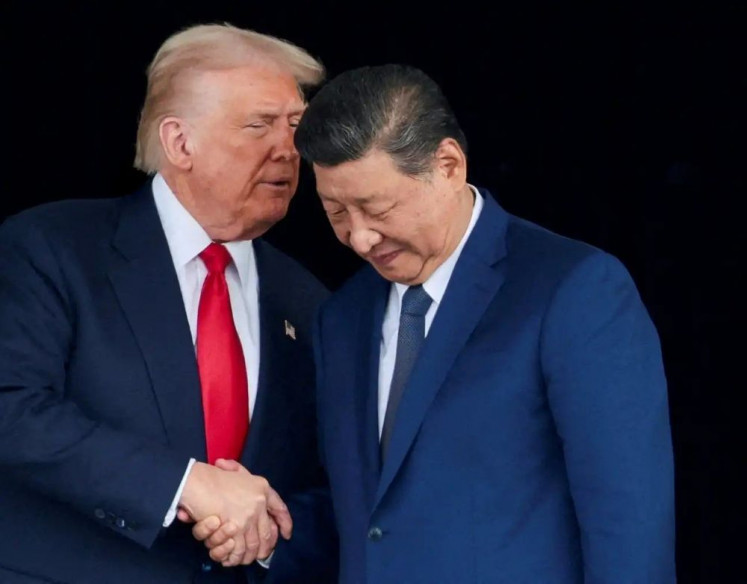
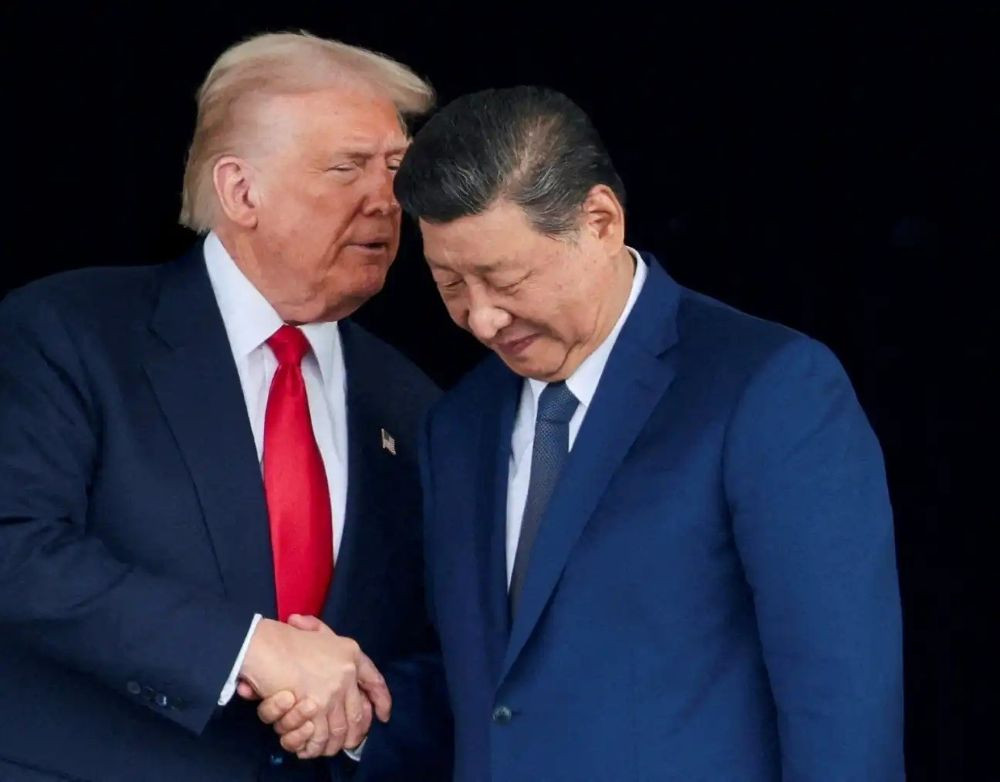 United States President Donald Trump (left) and Chinese President Xi Jinping talk on Oct. 30, 2025, at Gimhae International Airport in Busan, South Korea, following a bilateral meeting on the sidelines of the APEC summit. (Reuters/Evelyn Hockstein)
A
t the recent summit between United States President Donald Trump and Chinese President Xi Jinping, China’s primary objective was to prevent tensions from escalating further. From that perspective, it was largely successful.
The most important outcome was a joint commitment to build a “constructive China-US relationship of strategic stability on the basis of respect, fairness and reciprocity”.
The challenge now is to agree on what that means. The Trump administration has interpreted the phrase as a possible opening for trilateral arms control talks involving the US, Russia and China. But China appears far less enthusiastic about that prospect. What both sides seem to agree on is that regular leader-level communication is the only dependable safeguard against accidental escalation.
Trump and Xi have committed to meet again in November at the Asia-Pacific Economic Cooperation summit in Shenzhen and at the Group of 20 summit in Miami in December. Four summits in a single calendar year, including three in four months, would set a record in the history of US-China relations.
At the same time, the two-month extension of the trade truce, far shorter than many had anticipated, underscored the mutual distrust that has plagued the Sino-American relationship since Trump’s first term.
The two-month window is effectively a compliance observation period during which both sides will “review, evaluate and consider” their next steps: an arrangement designed to postpone confrontation, not to resolve its underlying causes. Neither government is prepared to make significant concessions when confidence in the other side’s intentions remains so low.

The US and China also agreed to extend preferential tariff treatment on approximately US$30 billion worth of “nonsensitive” goods in each direction. China will purchase 10 million tonnes of US coal in 2027-2028, and the two countries will establish a bilateral agricultural working group. These measures point toward a model of managed trade, which implies reduced expectations more than diplomatic success.