The Jakarta Post
Please Update your browser
Your browser is out of date, and may not be compatible with our website. A list of the most popular web browsers can be found below.
Just click on the icons to get to the download page.


Popular Reads
Top Results
No results found. Please check your search term and try again
Can't find what you're looking for?
View all search results
Popular Reads
Top Results
No results found. Please check your search term and try again
Can't find what you're looking for?
View all search resultsCan Myanmar’s war be contained without ending it?
Myanmar risks entering a phase in which the conflict is contained without being resolved.
Change text size
Gift Premium Articles
to Anyone
Share the best of The Jakarta Post with friends, family, or colleagues. As a subscriber, you can gift 3 to 5 articles each month that anyone can read—no subscription needed!
 Set as preferred source
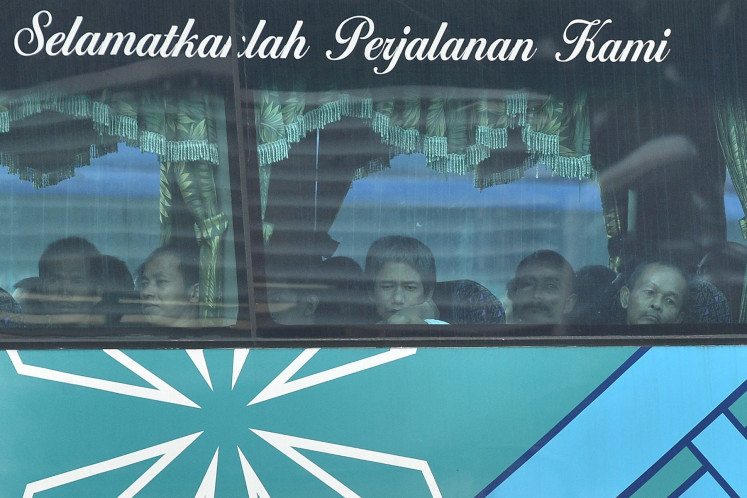
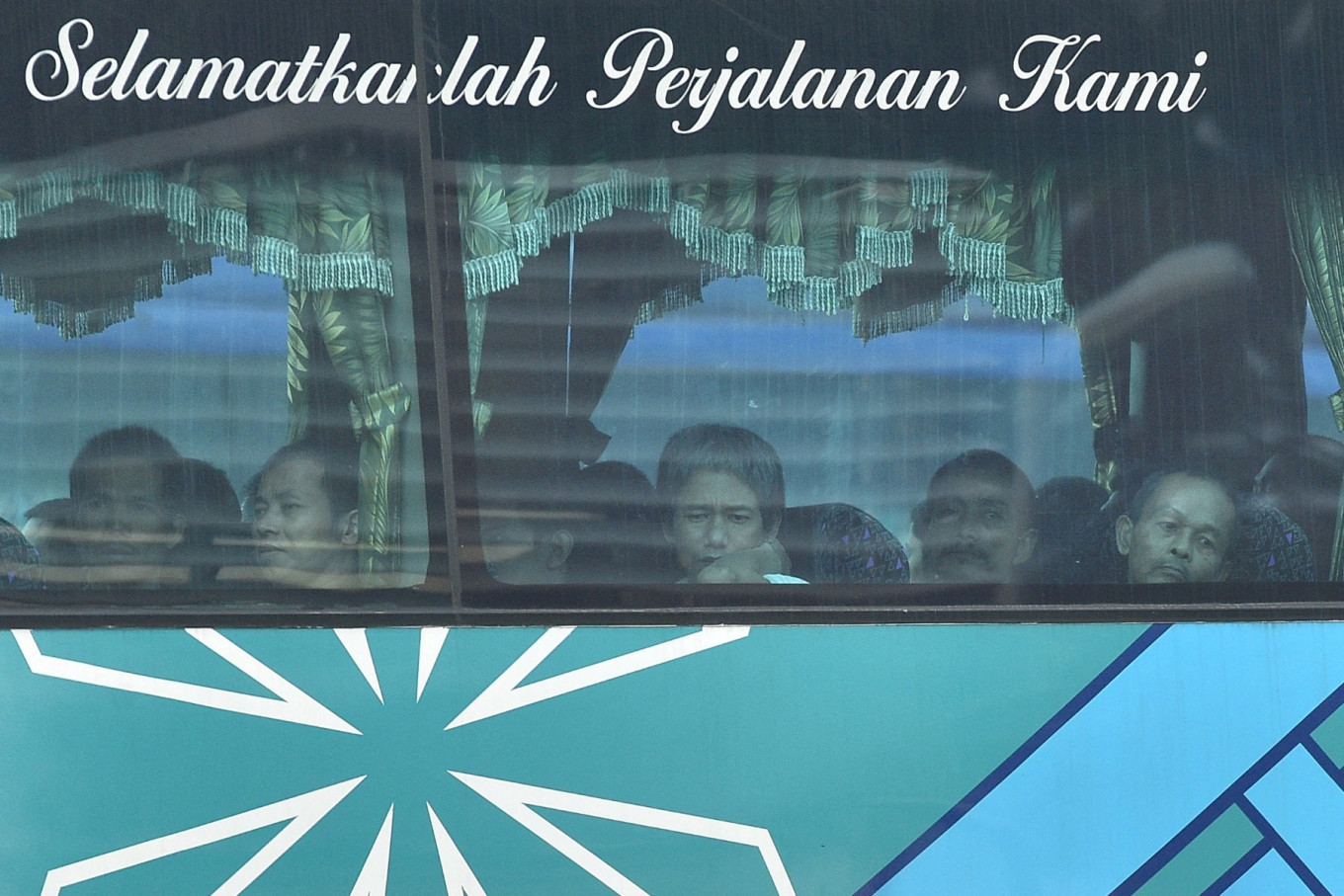 A bus carrying Myanmar nationals being repatriated from Malaysia to their homeland, is seen heading toward to navel base in Lumut, on the outskirts of Kuala Lumpur on Sept. 29, 2026. Malaysia began sending back around 1,500 Myanmar nationals on Sept. 29, AFP journalists saw, launching a scheme rights groups say may endanger migrants by returning them to the war-torn country. (AFP/Arif Kartono)
O
n Sept. 28, a Myanmar military airstrike struck a market in Kyauktaw, Rakhine State, reportedly killing at least 50 people and injuring 58. Among the victims were traders, shoppers and passers-by, including women and children. The United Nations’s Independent Investigative Mechanism for Myanmar is investigating the attack, which could constitute war crimes or crimes against humanity. The strike is part of a broader and distributing rise in deliberate or indiscriminate aerial and artillery attacks on civilians since 2025.
The attack raises a question that goes beyond how to stop the fighting: what happens when the guns fall silent? Reducing violence is essential, but a ceasefire that leaves the underlying political conflict untouched can freeze it. Myanmar risks entering a phase in which the conflict is contained without being resolved.
That dilemma became clearer after Operation 1027, launched on Oct. 27, 2023 by the Three Brotherhood Alliance — the Arakan Army (AA), Myanmar National Democratic Alliance Army (MNDA) and Ta’ang National Liberation Army (TNLA). The offensive targeted military positions and cyber-scam centers in northern Shan State near the Chinese border. Some observers argue that the offensive could not have proceeded without tacit Chinese support, although the extent of Beijing’s involvement remains unclear. As resistance forces advanced, China shifted toward brokering ceasefires, seeking to contain the conflict and protect its border and economic interests.
Operation 1027 transformed the military equation. After the February 2021 coup, repression of the Civil Disobedience Movement pushed parts of the opposition toward armed resistance, while the National Unity Government, People’s Defense Force and ethnic armed organizations developed political and military structures. Operation 1027 demonstrated that resistance forces could capture territory and challenge the military.
But battlefield gains have not produced a political settlement. The military has adapted through conscription, air power, drones, artillery and allied militias, while resistance forces remain politically fragmented over territory, administration and federalism.
This is Myanmar’s paradox: the military can lose territory without losing its capacity to fight, while resistance forces can gain territory without resolving the political conflict.

For communities caught in the fighting, peace means more than fewer battles. It means safe return, functioning schools and hospitals, livelihoods, justice and a meaningful voice in determining what comes next.



Your Opinion Matters
Share your experiences, suggestions, and any issues you've encountered on The Jakarta Post. We're here to listen.
Enter at least 30 characters
0
/ 30
Thank you
Thank you for sharing your thoughts. We appreciate your feedback.