The Jakarta Post
Please Update your browser
Your browser is out of date, and may not be compatible with our website. A list of the most popular web browsers can be found below.
Just click on the icons to get to the download page.


Popular Reads
Top Results
No results found. Please check your search term and try again
Can't find what you're looking for?
View all search results
Popular Reads
Top Results
No results found. Please check your search term and try again
Can't find what you're looking for?
View all search resultsWantimpres and its million-dollar question
Prabowo’s supersize, 26-strong advisory council offers plenty of room for political accommodation.
Change text size
Gift Premium Articles
to Anyone
Share the best of The Jakarta Post with friends, family, or colleagues. As a subscriber, you can gift 3 to 5 articles each month that anyone can read—no subscription needed!
 Set as preferred source
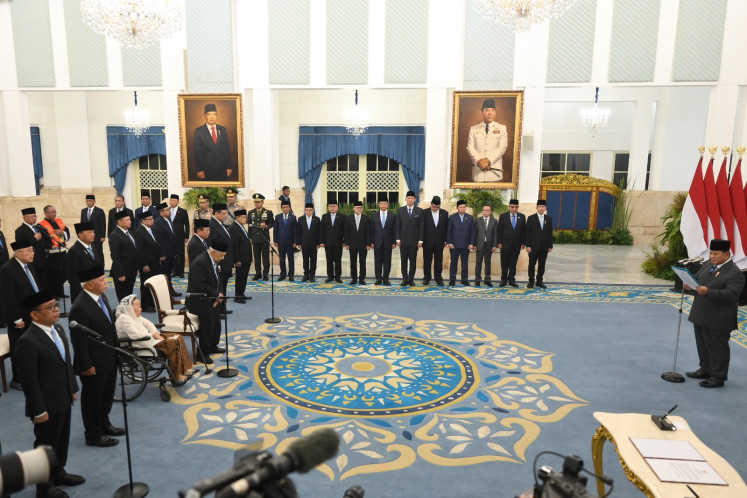
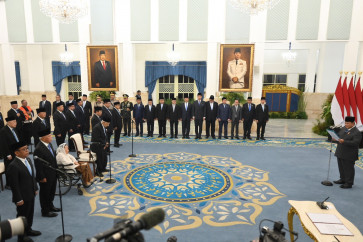
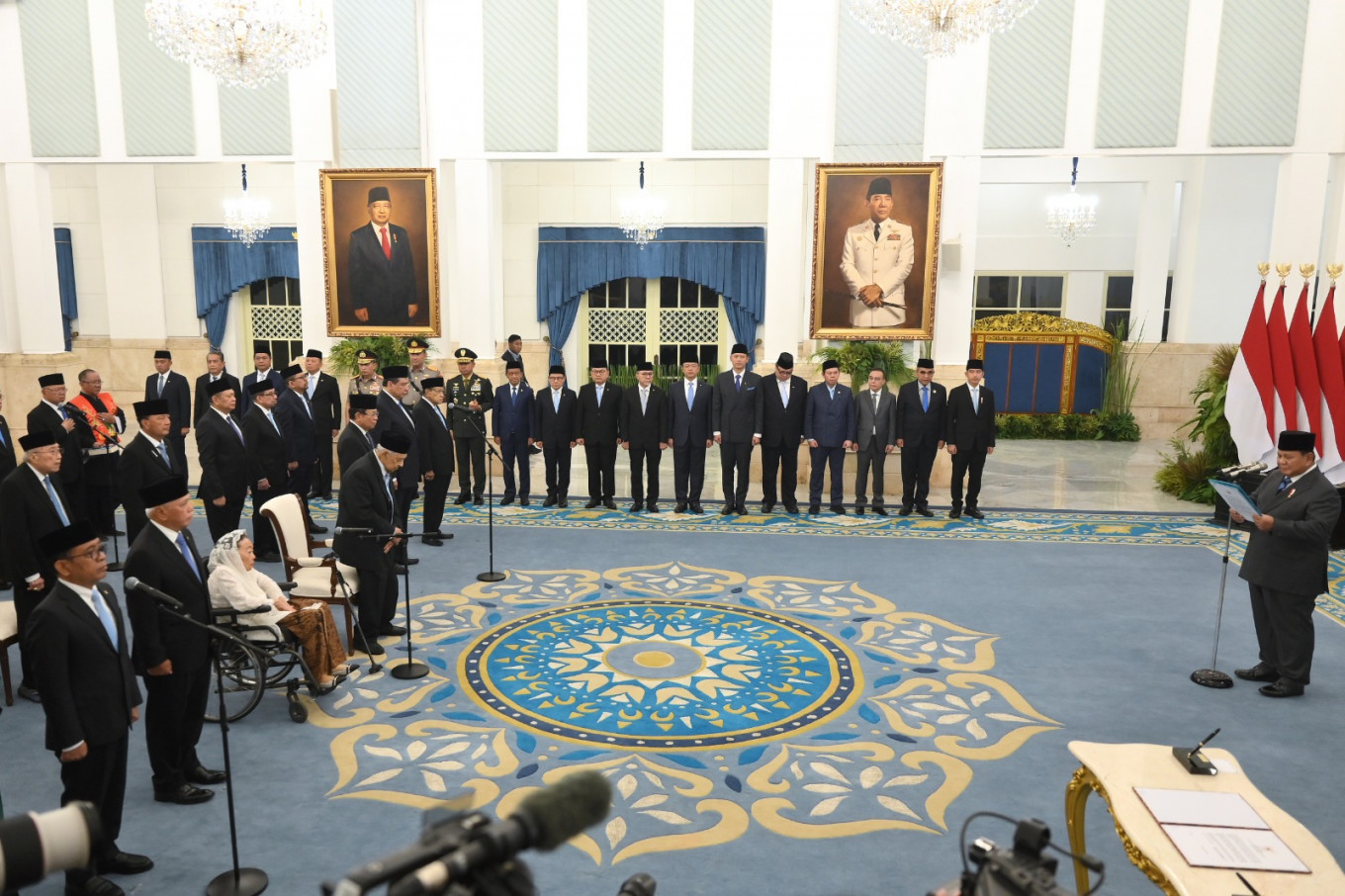 President Prabowo Subianto (right) inaugurates members of the Presidential Advisory Board (Wantimpres) on Oct. 2, 2026, at the State Palace in Central Jakarta. (Antara/Bayu Pratama S)
O
n Oct. 2, President Prabowo Subianto swore in 26 members of the Presidential Advisory Council (Wantimpres), the largest cohort in the institution’s history, nearly triple the nine-member councils appointed under Susilo Bambang Yudhoyono and well above the roster maintained under Joko “Jokowi” Widodo. While its sheer scale has drawn immediate scrutiny, the more consequential issue is whether the body possesses the structural integrity and technical expertise required to elevate presidential decision-making.
An advisory council must be evaluated by the quality of its counsel rather than the stature of its personnel. In public administration theory, John Halligan’s model of a “policy advisory system” maps the institutional configurations through which executives source intelligence, while Jonathan Craft and Michael Howlett emphasize that advisers derive real influence from two primary sources: proximity to the executive and the balance between political and technical acumen.
To function effectively, an advisory body must broaden the perspectives available to the head of state, align with contemporary policy priorities and organize disparate streams of analysis around clear functional mandates. The newly configured Wantimpres offers little indication that it meets these benchmarks.
Political figures have always populated Wantimpres, but their dominance has steadily intensified. Under Yudhoyono, the council remained comparatively lean, anchored by seasoned technocrats and statesmen such as Ali Alatas and Emil Salim. Under Jokowi, partisan representation expanded rapidly and by 2015, then-state secretary Pratikno had openly acknowledged that political actors dominated the chamber.
Over successive administrations, the council shifted from a compact deliberative board into a forum for coalition accommodation. The 2024 revision of the Wantimpres Law codified this evolution. By repealing the nine-seat cap, granting the president unilateral authority over council size and elevating Wantimpres to the status of a full state institution, the legislature removed institutional guardrails.
The appointment of 26 members marks the first deployment of this unconstrained authority, expanding executive discretion without establishing objective benchmarks for institutional scale or requisite expertise.

The resulting lineup underscores the risks of this open-ended mandate. Religious figures, community leaders, business magnates, coalition politicians and retired military brass dominate the appointments. In contrast, expertise in structural policy domains central to 21st-century governance, such as climate change and energy transition, digital economy and tech regulation, public health architecture and fiscal reform, is conspicuously thin or absent.