The Jakarta Post
Please Update your browser
Your browser is out of date, and may not be compatible with our website. A list of the most popular web browsers can be found below.
Just click on the icons to get to the download page.


Popular Reads
Top Results
No results found. Please check your search term and try again
Can't find what you're looking for?
View all search results
Popular Reads
Top Results
No results found. Please check your search term and try again
Can't find what you're looking for?
View all search resultsThe foreign exchange Indonesia leaves at sea: Flag carrier is needed
Indonesia fuels the global economy with its coal, palm oil, and nickel, yet loses billions every year by paying foreign fleets to carry its own wealth away.
Change text size
Gift Premium Articles
to Anyone
Share the best of The Jakarta Post with friends, family, or colleagues. As a subscriber, you can gift 3 to 5 articles each month that anyone can read—no subscription needed!
 Set as preferred source
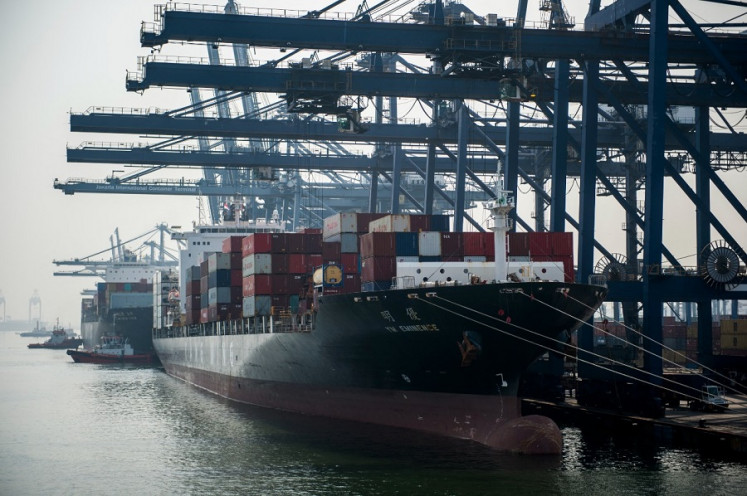
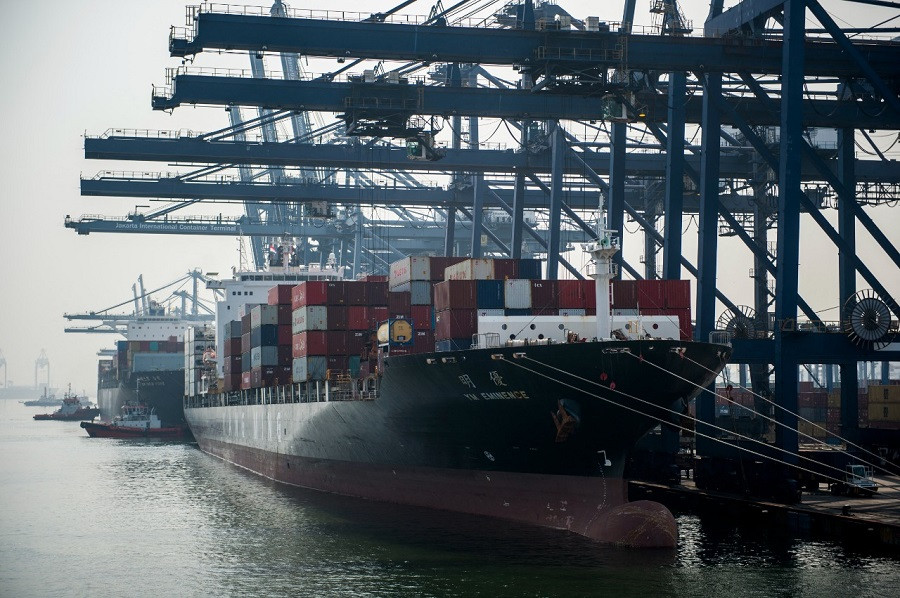 Container vessels are moored at the Jakarta International Container Terminal on Nov. 6, 2018. (AFP/Bay Ismoyo)
E
very year, Indonesia sends staggering volumes of thermal coal, crude palm oil and refined nickel to global markets. Yet every year, the country quietly pays foreign corporations to haul that very wealth away.
This is not an abstract figure of speech. It is an immediate, balance-of-payments drain caused by the freight and marine insurance charges tied to outbound trade. Because most raw materials leave domestic shores under free on board (FOB) contracts, international buyers choose the vessels, set the carriage terms and hire the underwriters.
While the archipelago anchors roughly a third of the international seaborne coal trade, supplies the lion’s share of global palm oil, and underpins the world nickel supply, domestic operators handle almost none of the deep-sea transit. Instead, overseas shipping lines capture the revenue, banking profits through maritime hubs in Singapore, Tokyo and Europe. Reliable trade figures suggest that this structural handover costs Indonesia over US$10 billion annually in foregone foreign exchange.
This dynamic forms the overlooked blind spot in the national trade balance. Headline releases from Statistics Indonesia (BPS) consistently celebrate robust merchandise trade surpluses, masking the steady erosion beneath. The loss does not register as missing export volume. Rather, it registers as an invisible import: a chronic transport and services deficit hidden inside Bank Indonesia’s current account data, silently clawing back hard-won commodity earnings.
A nation can comfortably lead the planet in resource extraction while remaining a net loser on the physical transit that connects those resources to buyers. Indonesia finds itself in that exact bind, and stemming this financial hemorrhage should be treated as an urgent economic priority rather than a technical footnote for shippers.
To see why this problem strains monetary stability, one must look at how commercial payments actually move across borders. When a domestic producer sells bulk cargo on FOB terms, legal custody and logistical control transfer the second the shipment clears the vessel’s rail at Kalimantan or Sulawesi ports. Beyond that loading point, freight fees and insurance premiums are settled exclusively between the overseas buyer and foreign maritime carriers.

Indonesia claims the spot value of the raw material, yet earns nothing from the ocean crossing, despite having generated the cargo in the first place. This structural imbalance produces an annual services leakage equivalent to importing billions of dollars of manufactured goods that could easily be supplied at home. It never surfaces on customs dockets, but its drag on foreign currency reserves is painfully real.