The Jakarta Post
Please Update your browser
Your browser is out of date, and may not be compatible with our website. A list of the most popular web browsers can be found below.
Just click on the icons to get to the download page.


Popular Reads
Top Results
No results found. Please check your search term and try again
Can't find what you're looking for?
View all search results
Popular Reads
Top Results
No results found. Please check your search term and try again
Can't find what you're looking for?
View all search resultsClimate resilience starts with care
Estimates of funding needs and proposed investment pipelines overlook a critical piece of infrastructure: an ecosystem of climate-adapted care services that helps families prepare for, cope with and recover from climate-induced hazards.
Change text size
Gift Premium Articles
to Anyone
Share the best of The Jakarta Post with friends, family, or colleagues. As a subscriber, you can gift 3 to 5 articles each month that anyone can read—no subscription needed!
 Set as preferred source
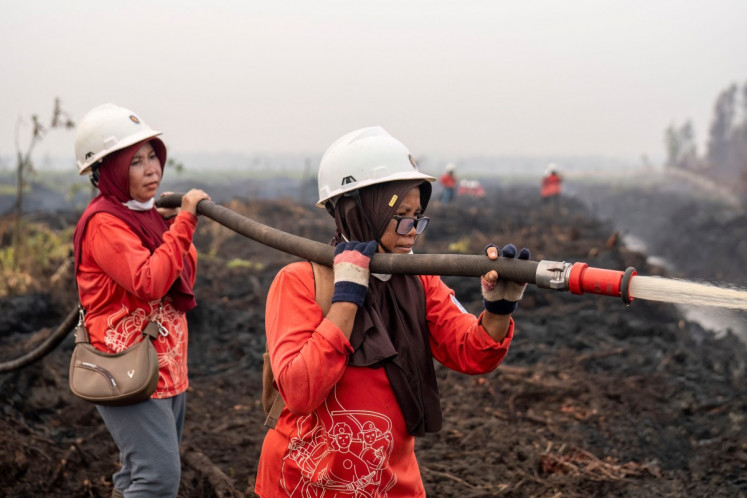
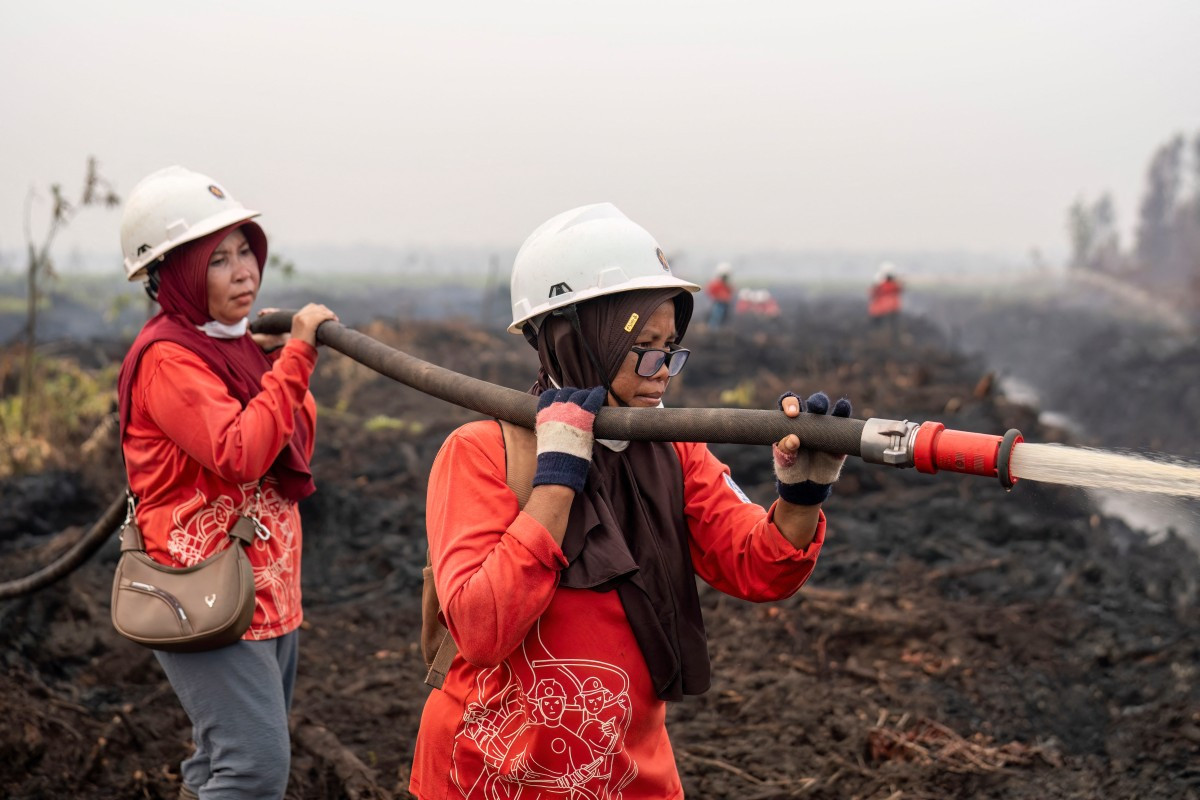 Members of the all-women The Power of Mama (TPoM) volunteer firefighting team spray water onto smoldering peatland on Sept. 26 in Mensubuk Lama, Tanjungpura village, Ketapang, West Kalimantan. (AFP/Heribertus)
I
t is getting harder by the day to justify the slow pace of adaptation to climate change. Last year was one of the hottest on record, with economies and communities around the world disrupted by extreme heat, heavy rainfall, and tropical cyclones. As November’s United Nations Climate Change Conference (COP31) in Turkey approaches, governments must move beyond climate commitments and focus on implementation.
Financing for adaptation activities remains nowhere near what is needed. The UN Environment Programme estimates that developing countries will need US$310–365 billion per year through 2035, putting the current funding gap at $280 billion. Getting the money to where it can do the most good may be an even bigger challenge, as institutions struggle to identify adaptation investments that are ready to implement and whose risks can be properly assessed and priced.
In a new working paper, we argue that estimates of funding needs and proposed investment pipelines overlook a critical piece of infrastructure: an ecosystem of climate-adapted care services that helps families prepare for, cope with and recover from climate-induced hazards. Properly designed, these services can bolster household and community resilience. The same principle underpins investments in early-warning systems and adaptive social protections designed to help countries respond to climate shocks.
Provisional estimates suggest that at least 35,000 excess deaths occurred across Europe during this summer’s severe back-to-back heat waves. Despite their well-developed welfare systems, the absence of climate-adapted physical infrastructure and coordinated services contributed to this excess mortality.
Yet national climate-adaptation plans rarely account for what happens when care breaks down. Floods and wildfires displace families and separate caregivers from the people who depend on them. When household-based care is no longer possible, formal care can become a lifeline for older people and people with disabilities who cannot evacuate or manage on their own. Without reliable care services, health issues can lead to otherwise preventable hospital admissions, putting even more pressure on already strained services.
As matters stand, family caregivers are left to shoulder the burden, facing injury and burnout during prolonged emergencies. Some, most of them women, are forced to leave paid work just when their families can least afford to lose income. When care systems fail, a climate shock can quickly become both a health and economic crisis. Strong care systems can prevent these cascading failures, making care a crucial part of climate resilience.

Leaving care out of national adaptation plans thus means underestimating what climate resilience actually requires. Admittedly, anticipating those needs is difficult, as there is no standard definition of what qualifies as adaptation, and national estimates are often based on individual projects, most of them in conventional sectors.