The Jakarta Post
Please Update your browser
Your browser is out of date, and may not be compatible with our website. A list of the most popular web browsers can be found below.
Just click on the icons to get to the download page.


Popular Reads
Top Results
No results found. Please check your search term and try again
Can't find what you're looking for?
View all search results
Popular Reads
Top Results
No results found. Please check your search term and try again
Can't find what you're looking for?
View all search resultsChina's art of trade
Jakarta can take a critical page out of Beijing's playbook, the outcome of which was proven at last week's Washington summit: Hold vital assets hostage to extract a pragmatic deal.
Change text size
Gift Premium Articles
to Anyone
Share the best of The Jakarta Post with friends, family, or colleagues. As a subscriber, you can gift 3 to 5 articles each month that anyone can read—no subscription needed!
 Set as preferred source
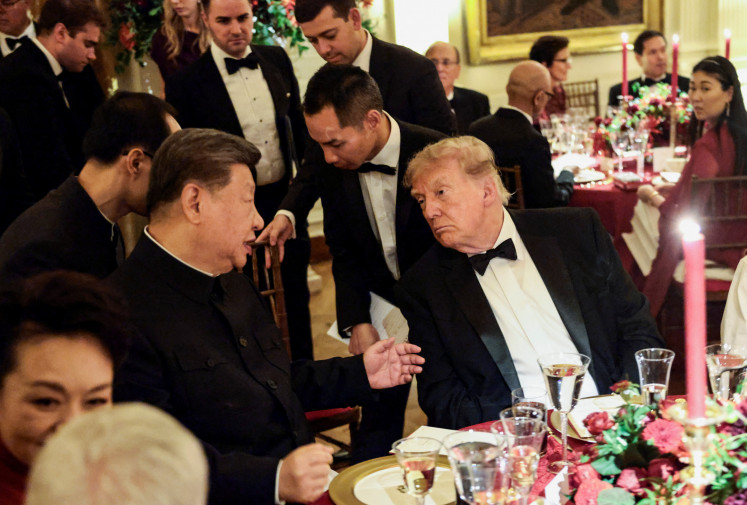
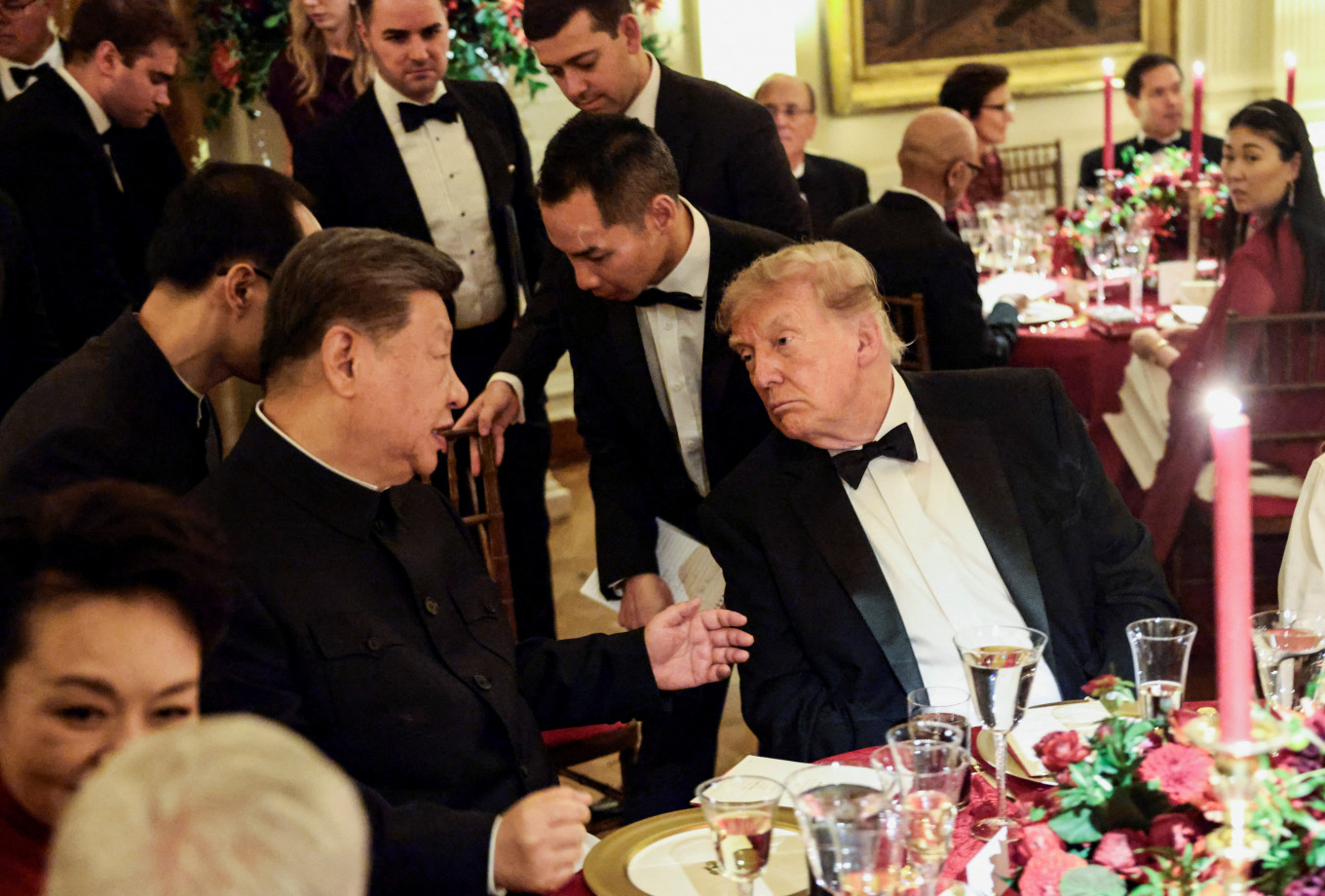 Chinese President Xi Jinping (left) and United States President Donald Trump converse on Sept. 24, 2026, during a state dinner at the White House in Washington, DC. (Reuters/Evelyn Hockstein)
T
he leaders of the world’s two superpowers met last week in the United States capital, producing an outcome that was modest, deliberate and instructive. Far from delivering a grand bargain, the G2 summit between presidents Donald Trump and Xi Jinping was a study in managed expectations.
The headline result was a US$30 billion reciprocal tariff reduction, strictly for nonsensitive goods such as small appliances, toys, poultry, dairy and coal. High-stakes items like semiconductors, electric vehicles and batteries were pointedly excluded. The two largest economies did only the bare minimum to keep their trade truce from expiring in November.
As one seasoned observer noted: “The US-China relationship has settled into a managed stalemate. The elaborate pageantry matters precisely because there is still relatively little substantive progress to showcase.” East Asia Forum (EAF) characterized it as a step toward stabilization rather than a definitive solution, while Beijing-based consultancy Trivium called it a “PR win” for China.
But the most important takeaway lays not in the agreement but in how China negotiated its way to a deal.
Beijing entered the trade war with Washington in genuine economic pain. Youth unemployment was rising; foreign investment was declining; its export dependence made it vulnerable to US tariffs. It could have sought an early and cheap settlement, but it did not.
Chinese manufacturers diversified production lines across third markets while safeguarding core supply chains at home. Beijing accelerated efforts to close the technological gap in semiconductors and AI. Simultaneously, it nurtured Xi’s direct rapport with Trump across three successive summits, in Busan in October 2025, in Beijing in May 2026 and in Washington last week, with more engagements slated for later this year.

China bought American products where the politics was visible: soybeans, coal and aircraft. Then when it sat down to negotiate, it demanded reciprocity. Every tariff cut given to the US, China received in return. Everything that mattered strategically, like rare earths, EV batteries and advanced chips, stayed off the table.