The Jakarta Post
Please Update your browser
Your browser is out of date, and may not be compatible with our website. A list of the most popular web browsers can be found below.
Just click on the icons to get to the download page.


Popular Reads
Top Results
No results found. Please check your search term and try again
Can't find what you're looking for?
View all search results
Popular Reads
Top Results
No results found. Please check your search term and try again
Can't find what you're looking for?
View all search resultsAnalysis: Land agency graft probe puts high-profile figures in spotlight
Change text size
Gift Premium Articles
to Anyone
Share the best of The Jakarta Post with friends, family, or colleagues. As a subscriber, you can gift 3 to 5 articles each month that anyone can read—no subscription needed!
 Set as preferred source
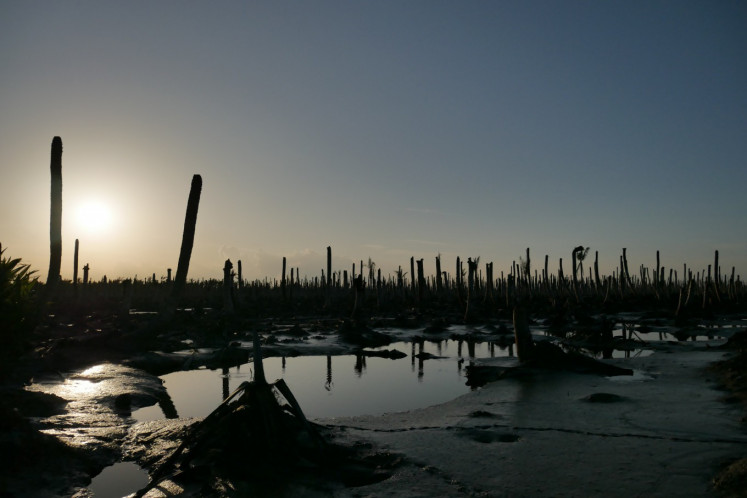
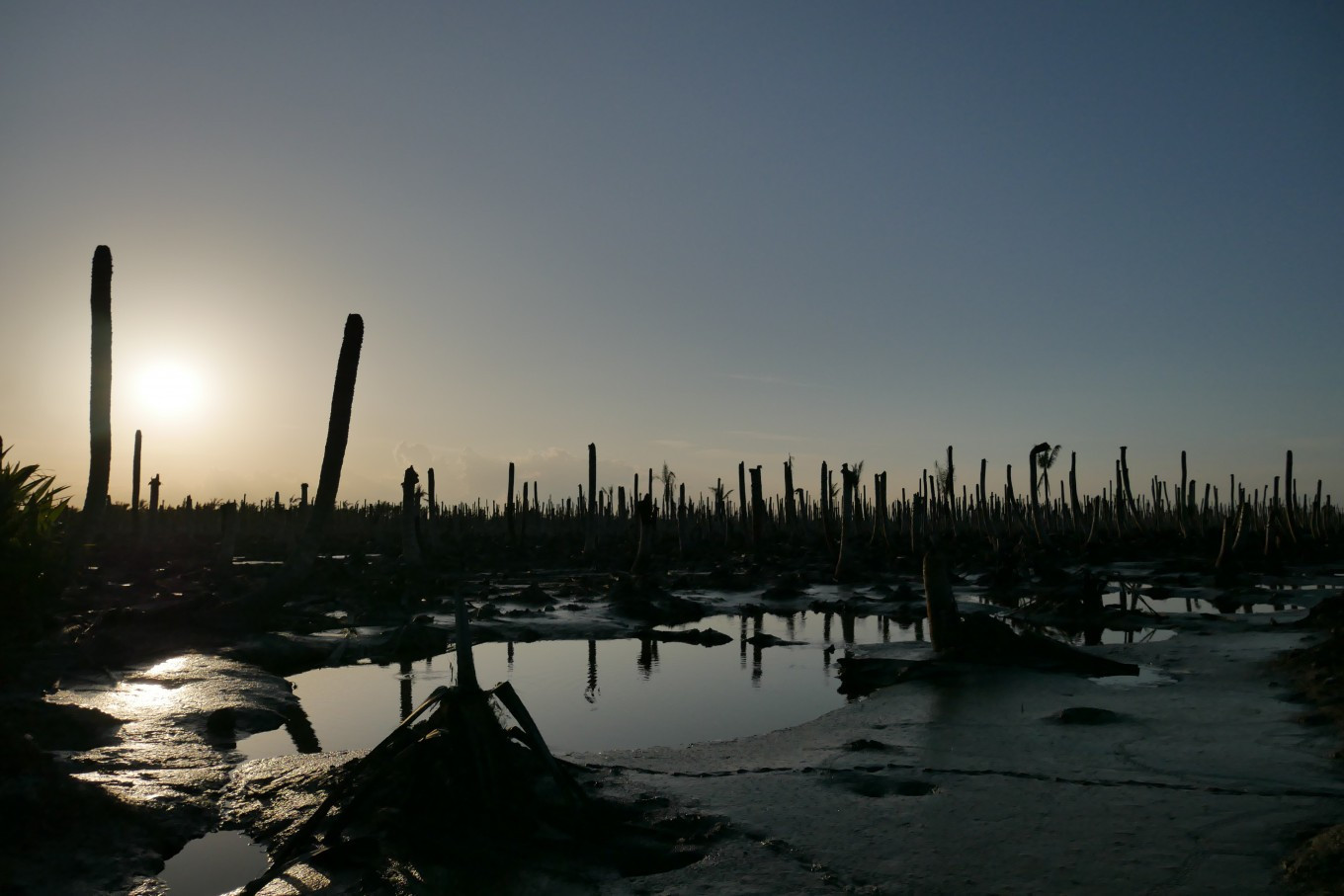 Barren land: Rows of dead coconut trees are seen in this photo taken on July 25, 2023, in one of the former coconut plantations of Kuala Selat village in Indragiri Hilir, Riau. Seawater is intruding further inland as the village loses the mangrove forests that protect it from waves and erosion. ( JP/Tonggo Simangunsong)
I
ndonesia has barely had time to digest one high-profile corruption scandal before another has breached the surface, this time striking at the heart of the country's land administration. The latest case centers on the Agrarian and Spatial Planning Ministry/National Land Agency (BPN). A sweeping bribery probe by the Corruption Eradication Commission (KPK) has ensnared senior bureaucrats, a prominent property developer and multiple operatives identified as close associates of minister Nusron Wahid, a Golkar politician.
The investigation does not establish criminal liability on Nusron’s part, yet it forces a critical question to the fore: How much political and administrative responsibility should a minister carry when an alleged graft network operates freely within an agency under his purview, manned by figures from his own inner circle?
On Sept. 14, the KPK launched a sting operation in Bogor, West Java, targeting illicit payoffs tied to the right to build (HGB) permit of developer PT Summarecon Agung. Eight out the 19 people questioned initially have been named as suspects, the roster reading like a nexus of bureaucratic authority, corporate capital and political patronage: Lampri, director general of land and spatial control; Sontang Coin Manurung, head of the Bogor Land Office; Adrianto Pitojo Adhi, president director of Summarecon Agung; Fahd El Fouz A Rafiq, a Golkar politician; Arif Sugiyanto, former regent of Kebumen, Central Java; and three private intermediaries.
Investigators seized Rp 106.3 billion (US$6.3 million) in cash, including Rp 104.96 billion from Arif’s residence. Critically, the KPK has tied four of the suspects, Arif, Fahd, Erwin and Muhammad Fakhry, directly to Nusron. Investigators allege that Arif collected illicit fees from land service transactions and funneled the proceeds to Fahd, whom the antigraft agency described as a trusted confidant of the minister.
The KPK previously warned of eight systemic vulnerabilities plaguing the land sector, ranging from arbitrary service delays and illicit levies to lax oversight of HGU concessions and land certificate fraud. The Bogor sting’s findings do not reveal an institutional aberration; they expose an open wound. The ministry, combined with the BPN, wields absolute discretion over who acquires, transfers and exploits land: decisions that carry immense economic and political capital.
Nusron has pledged to cooperate with the legal process and denied any knowledge of the scheme, while the KPK maintains it is following the evidentiary trail rather than targeting individuals. Holding political custody of a compromised ministry does not make a minister a criminal accomplice. Yet political accountability cannot hide behind the threshold of criminal guilt. The core issue is administrative failure: Did ministerial leadership establish the internal controls necessary to detect an illicit network operating across multiple tiers of the bureaucracy, especially one allegedly piloted by its own political allies?

Fahd’s reappearance makes the case particularly toxic, given this is his third brush with the KPK. Having served prison sentences for his role in the regional infrastructure adjustment fund (DPID) scandal and the notorious Quran procurement graft at the Religious Affairs Ministry, his enduring influence exposes an endemic institutional rot: Why do graft convicts continue to enjoy frictionless access to the corridors of power?