The Jakarta Post
Please Update your browser
Your browser is out of date, and may not be compatible with our website. A list of the most popular web browsers can be found below.
Just click on the icons to get to the download page.


Popular Reads
Top Results
No results found. Please check your search term and try again
Can't find what you're looking for?
View all search results
Popular Reads
Top Results
No results found. Please check your search term and try again
Can't find what you're looking for?
View all search resultsLand reform is here. Now let Prabowo prove he meant what he said
The will clearly exists. The only question that matters now is whether that will reach into the president's own back pocket.
Change text size
Gift Premium Articles
to Anyone
Share the best of The Jakarta Post with friends, family, or colleagues. As a subscriber, you can gift 3 to 5 articles each month that anyone can read—no subscription needed!
 Set as preferred source
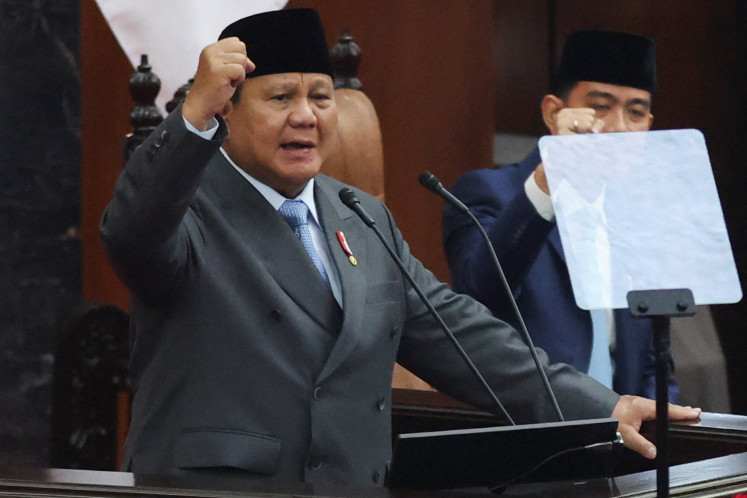
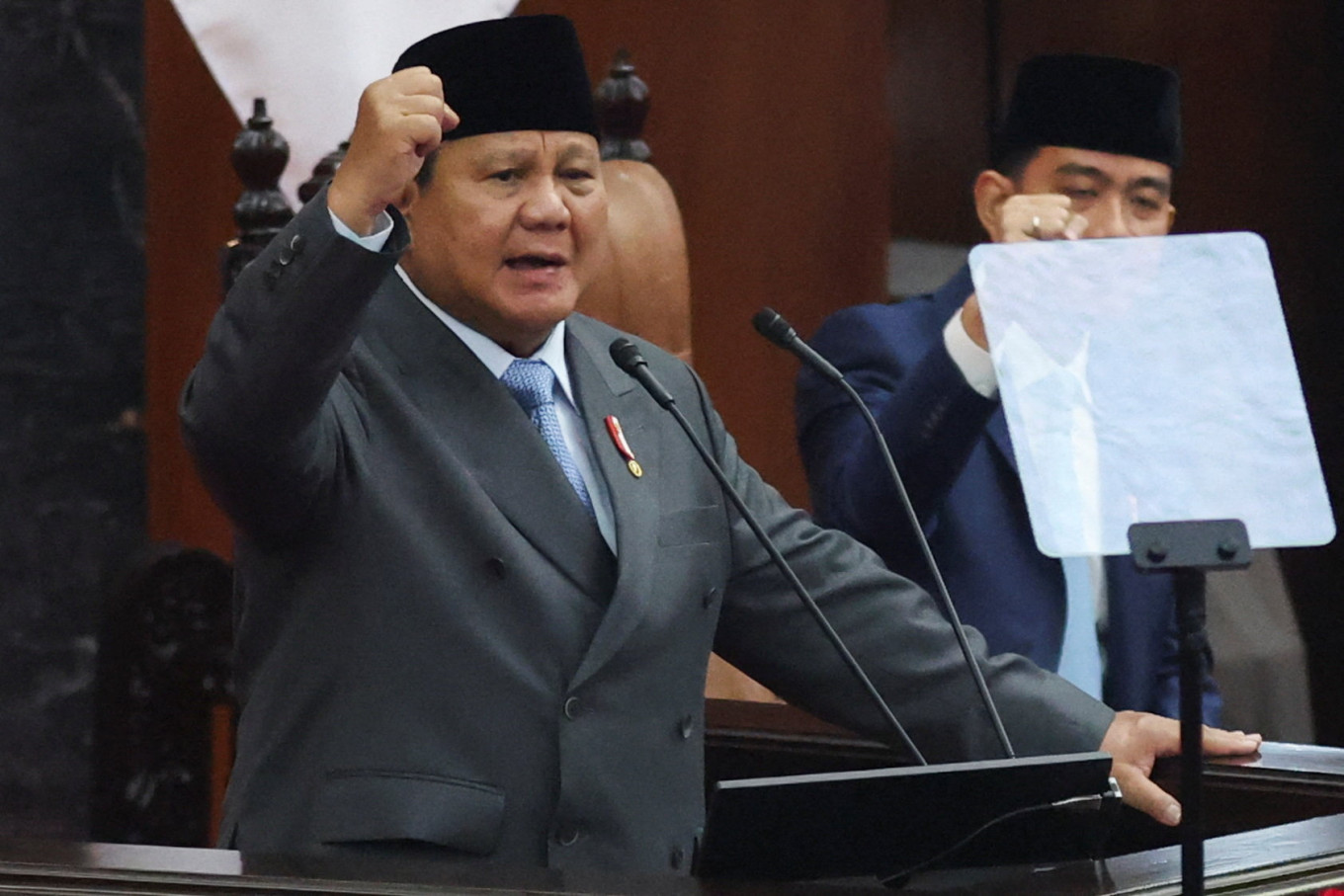 President Prabowo Subianto (left) raises his hand, next to Vice President Gibran Rakabuming Raka, as he shouts 'merdeka’ (freedom), during his annual state of the nation address before members of the legislature, ahead of the country's 81st Independence Day, in Jakarta, on Aug. 14, 2026. (Reuters/Stringer)
F
or the better part of two decades, the words "agrarian reform" sat inside House of Representatives’ filing cabinets, dusted off every National Farmers' Day for a speech and then quietly shelved again. On Sep. 22, that finally ended. And not a moment too soon.
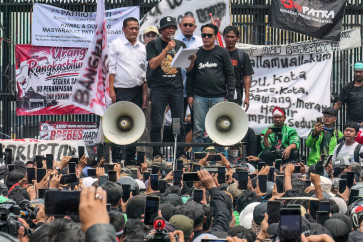
In a plenary session watched from the gallery by farmers' unions, women's farming federations and members of the Consortium for Agrarian Reform, the House ratified the Agrarian Reform Regulation Law, fourteen chapters, fifty-three articles and, for the first time in the republic's history, a single unified legal basis for resolving the land conflicts that have scarred rural Indonesia for generations.
It is worth pausing to actually welcome this. So much of Indonesia's legislative history is decades of talk followed by nothing; this is decades of talk followed, finally, by something.
But let's not get carried away with the applause. A law is a promise on paper. Indonesia has been burned by exactly this kind of promise before. And this one comes with an obvious, overdue test of sincerity, a test aimed squarely at the one man whose signature turns it from a bill into a law.
Here is what makes this personal, and it should be personal.
During the fractious 2024 presidential debates, Prabowo Subianto did something almost admirable for a politician cornered on a wealth question: he didn't deny it, he doubled down.

Confronted first by his rival Anies Baswedan's claim that he held 340,000 hectares, then reminded that Joko “Jokowi” Widodo himself had put the figure at 220,000 hectares in East Kalimantan and 120,000 in Aceh five years earlier, Prabowo corrected the record upward. Upward. The true figure, he said, held under cultivation rights, was closer to 500,000 hectares. He did not flinch and he did not apologize. He defended it, insisting the land would be put to productive use for the people.