The Jakarta Post
Please Update your browser
Your browser is out of date, and may not be compatible with our website. A list of the most popular web browsers can be found below.
Just click on the icons to get to the download page.


Popular Reads
Top Results
No results found. Please check your search term and try again
Can't find what you're looking for?
View all search results
Popular Reads
Top Results
No results found. Please check your search term and try again
Can't find what you're looking for?
View all search resultsCivil society needs protection, not stigmatization
Prabowo’s londo ireng remark directed at civil society groups does not reflect the actual policy work civil society is providing, including the promotion of democratic values, good governance and human rights perspectives.
Change text size
Gift Premium Articles
to Anyone
Share the best of The Jakarta Post with friends, family, or colleagues. As a subscriber, you can gift 3 to 5 articles each month that anyone can read—no subscription needed!
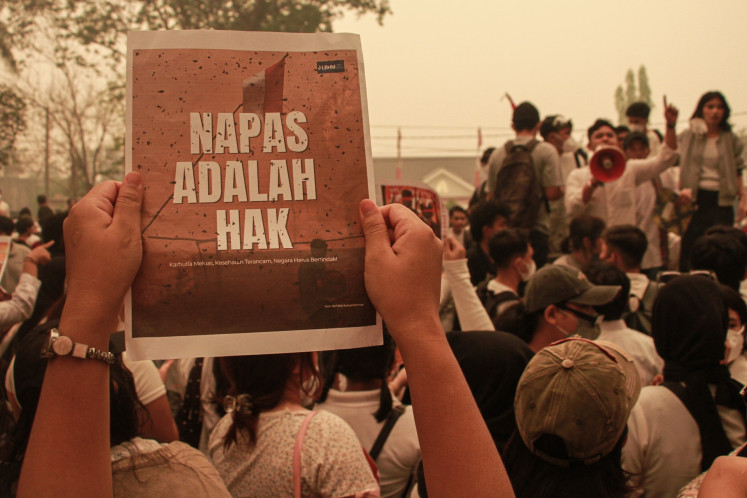
 Health advocates: People hold a rally on Sept. 8, 2026 in Yogyakarta to demand the government end the free nutritious meal (MBG) program following repeated cases of mass food poisoning. (Reuters/Dwi Oblo)
T
he government’s rhetoric accusing nongovernmental organizations (NGOs) and advocacy groups of being antek asing (foreign lackeys) has long been weaponized in Indonesian political discourse.
The latest entry into this hostile lexicon is londo ireng—a Javanese slur meaning “black Dutchmen”, historically used to disparage indigenous collaborators who aided Dutch colonial rulers. In July, President Prabowo Subianto invoked the term directly, targeting civil society groups critical of his administration’s flagship policies and regulatory agenda.
These civic watchdogs routinely provide the government with ground-level evidence—much of it drawn from citizen reporting—exposing policy missteps, including reports of food poisoning linked to the free nutritious meal program and operational setbacks in Red and White Cooperatives (KDMP)—both among the President’s flagship initiatives.
By dismissing these watchdogs as foreign stooges, the administration squanders a vital opportunity for policy learning, choosing defensive rhetoric over sound governance. Policy learning requires decision-makers to evaluate real-world shortcomings, identify operational bottlenecks and deliberately adapt their strategies.
In the country’s modern democracy, civil society groups have evolved well beyond providing emergency relief during crises. They have earned the legitimacy and expertise needed to ground public policy in verifiable evidence. Notable milestones include the sustained, decades-long advocacy by feminist and labor coalitions for the domestic workers protection bill as well as legal defenses mounted by environmental groups to protect customary land rights against state policies favoring big corporations.
Regardless of its imperfections, the bill was passed into law on April 21 of this year, ending 22 years of wait.

These interventions show how non-state actors enrich policy design and oversight, pushing the country toward a more equitable and inclusive order. Compounding the democratic backsliding Indonesia has been enduring, the law making process in the past five years has frequently bypassed meaningful public consultation.