The Jakarta Post
Please Update your browser
Your browser is out of date, and may not be compatible with our website. A list of the most popular web browsers can be found below.
Just click on the icons to get to the download page.


Popular Reads
Top Results
No results found. Please check your search term and try again
Can't find what you're looking for?
View all search results
Popular Reads
Top Results
No results found. Please check your search term and try again
Can't find what you're looking for?
View all search resultsThe war on terror and its unintended consequences
We cannot claim our war on terror as a success if it breeds new generations of anger, alienation and hatred.
Change text size
Gift Premium Articles
to Anyone
Share the best of The Jakarta Post with friends, family, or colleagues. As a subscriber, you can gift 3 to 5 articles each month that anyone can read—no subscription needed!
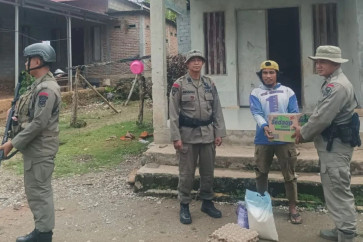
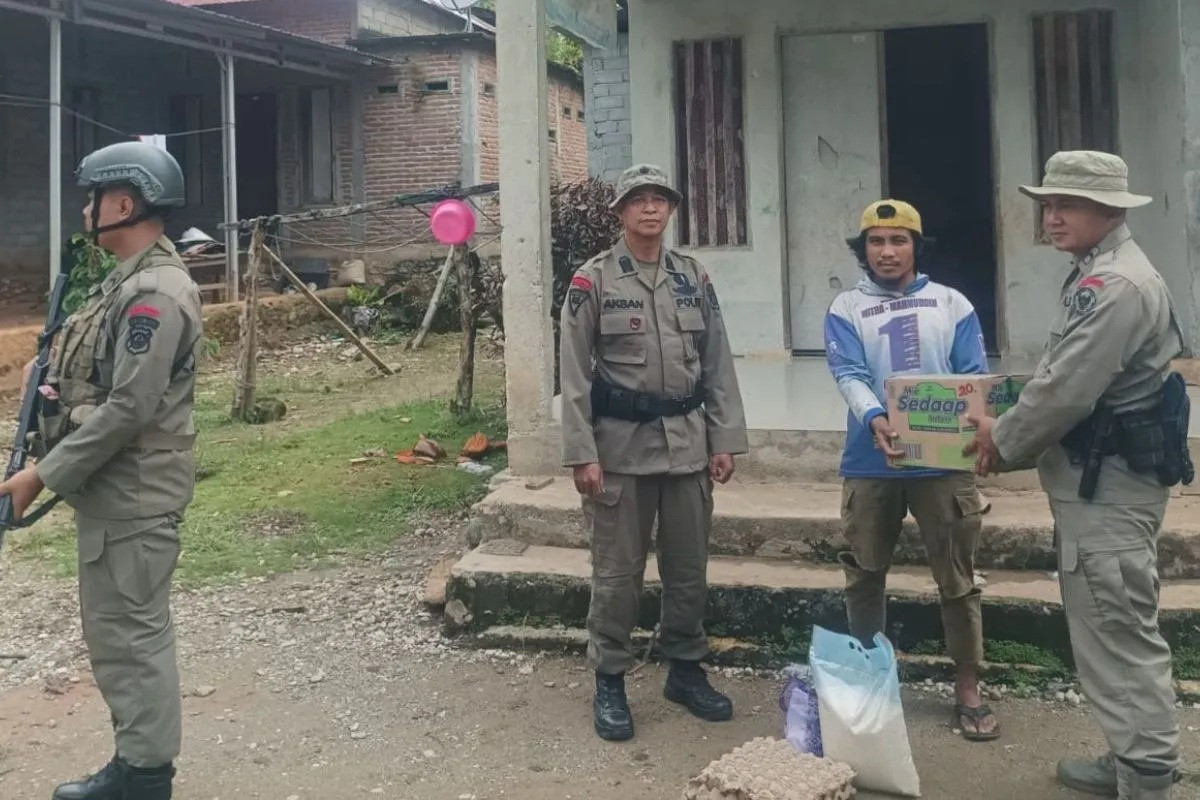 Local members of Operation Madago Raya, a joint public security initiative on deradicalization and counterterrorism run by the National Police and the Indonesian Military, provide a box of basic staples to a former terrorist (second right) on Nov. 3, 2025, during a social assistance handover event in Poso, Central Sulawesi. (Antara/Central Sulawesi Police)
T
wenty-five years ago on Sept. 11, 2001, the world watched in disbelief as four passenger jets were hijacked in the United States and turned into weapons. Two crashed into the World Trade Center in New York. Another struck the Pentagon. The fourth, United Airlines Flight 93, crashed into a field in Pennsylvania after passengers attempted to regain control of the plane.
A total of 2,976 people were killed in the attacks, excluding the 19 hijackers. They were office workers, firefighters, police officers, paramedics, airline passengers and regular people who had begun what they thought would be an ordinary day.
It was anything but ordinary. The attacks changed the way the world understood terrorism. They also changed the way states understood security, war and the use of power.
A quarter of a century later, however, one question deserves to be asked without sentimentality: Did the world really become safer after 9/11?
For many jihadists at the time, the attacks were presented as a historic victory. Al-Qaeda had demonstrated that the world's most powerful country could be attacked at the heart of its own territory. The destruction and fear were interpreted through a narrative of confrontation between the Muslim world and the West.
That narrative was both dangerous and profoundly misleading. There can be no religious or political justification for deliberately killing civilians. Yet dismissing the narrative altogether would also be a mistake.

For those who have observed, studied or experienced the trajectory of radicalization, one uncomfortable lesson is that extremist narratives do not emerge in a vacuum. Ideology matters, but so do perceptions of injustice, humiliation, identity, violence and grievance. Propaganda works by bringing these elements together and giving them a simple explanation: We are the victims, they are the enemies, and violence is the answer.