The Jakarta Post
Please Update your browser
Your browser is out of date, and may not be compatible with our website. A list of the most popular web browsers can be found below.
Just click on the icons to get to the download page.


Popular Reads
Top Results
No results found. Please check your search term and try again
Can't find what you're looking for?
View all search results
Popular Reads
Top Results
No results found. Please check your search term and try again
Can't find what you're looking for?
View all search resultsAnak Krakatau doesn't need an earthquake to kill
Tsunami sirens are built to detect earthquakes, but Anak Krakatau can kill without one, and our warning systems are still waiting for a shake that’s never coming.
Change text size
Gift Premium Articles
to Anyone
Share the best of The Jakarta Post with friends, family, or colleagues. As a subscriber, you can gift 3 to 5 articles each month that anyone can read—no subscription needed!
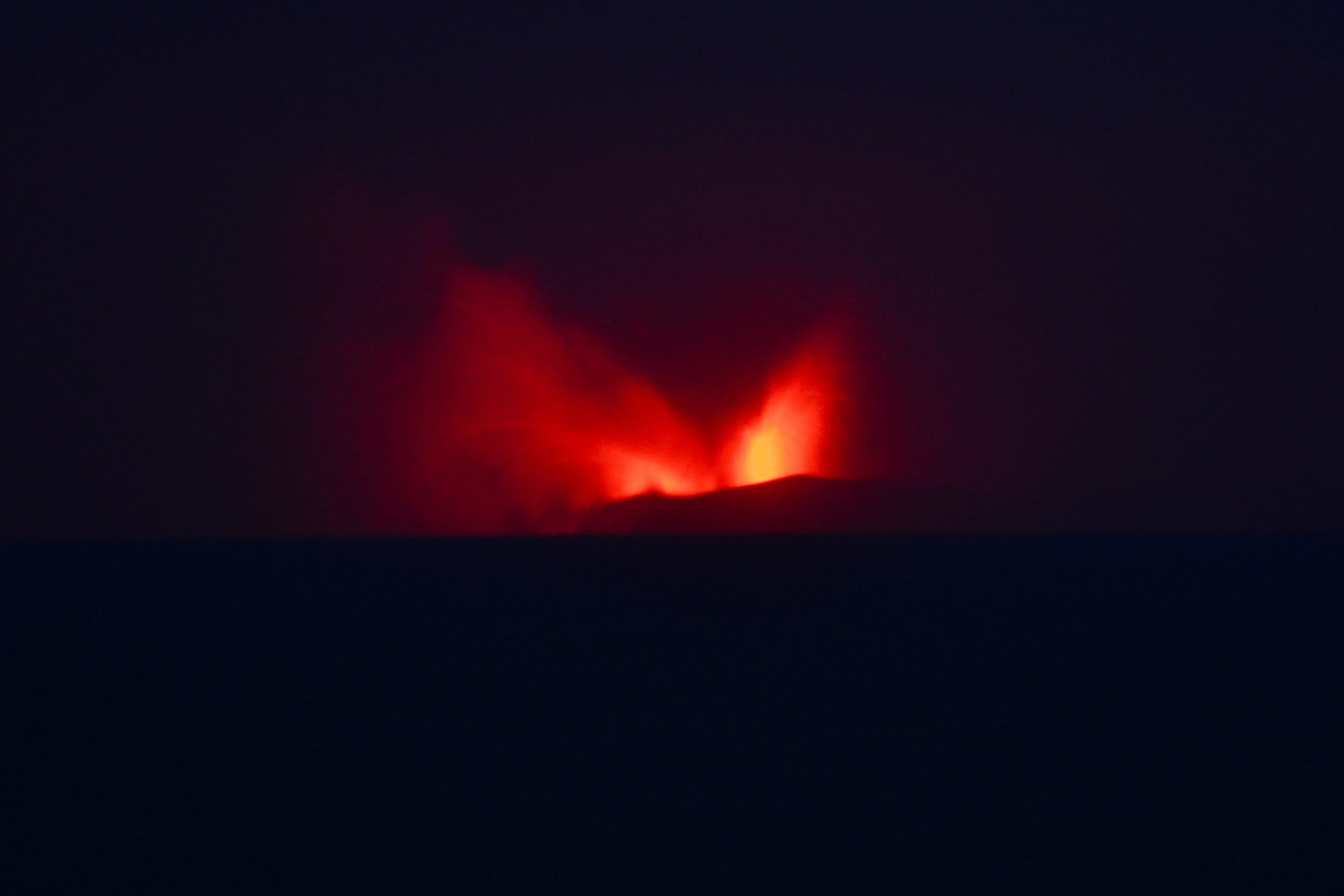 Mount Anak Krakatau volcano spews hot lava as seen from Pasauran village in Serang, Banten, on Sept. 5, 2026. (Reuters/Rikardo)
T
he question left in the wake of the recent eruptions of Anak Krakatau is not whether the volcano will threaten the Sunda Strait again. It is whether we will still be waiting on a seismograph to tell us so when it does.
In the early hours of Sept. 5, the Meteorology, Climatology and Geophysics Agency (BMKG) recorded the volcano’s most violent blast of 2026. A 15-kilometer ash column punched into the sky, paired with a sustained lava fountain that set the narrow strait between Java and Sumatra glowing for over an hour and a half.
The fallout was immediate: Transportation Minister Dudy Purwagandhi said over 2,900 domestic and international flights were grounded in a number of affected airports, including Soekarno-Hatta International Airport, until operations resumed on Tuesday. Thousands of kilometers away, the Japan Meteorological Agency issued a precautionary tsunami watch after picking up the acoustic-seismic signature of the blast.
Back home, authorities kept the alert at Level III and maintained that the tsunami risk from this particular event was minimal. They are almost certainly right about this round. But it should not be mistaken for a reason to relax, because Anak Krakatau has a documented history of punishing that exact complacency.
On the night of Dec. 22, 2018, following weeks of heightened activity, a massive chunk of Anak Krakatau’s southwestern flank slid into the sea. The resulting underwater landslide displaced vast volumes of water, sending a wall of sea surging into the shorelines of Banten and Lampung in barely 24 minutes. It killed 437 people and injured thousands, virtually none of whom had any warning.
There was no major earthquake to trip Indonesia’s early warning network, InaTEWS, which was designed almost entirely around the tectonic rumbles of subduction zones, not the silent shearing of a volcanic flank. By the time coastal tide gauges picked up the wave, water was already crashing through seaside villages and beachfront hotels.

This is the central, uncomfortable fact about Anak Krakatau: It can generate a lethal tsunami through a mechanism that the country's primary early warning infrastructure was never designed to catch in time. A seismograph waiting for a large earthquake will miss a slow-building flank collapse entirely, right up until the moment several hundred million cubic meters of rock and volcanic debris plunge into the water.