The Jakarta Post
Please Update your browser
Your browser is out of date, and may not be compatible with our website. A list of the most popular web browsers can be found below.
Just click on the icons to get to the download page.


Popular Reads
Top Results
No results found. Please check your search term and try again
Can't find what you're looking for?
View all search results
Popular Reads
Top Results
No results found. Please check your search term and try again
Can't find what you're looking for?
View all search resultsAnalysis: Oil and gas reform accelerates, but will it boost production?
Change text size
Gift Premium Articles
to Anyone
Share the best of The Jakarta Post with friends, family, or colleagues. As a subscriber, you can gift 3 to 5 articles each month that anyone can read—no subscription needed!
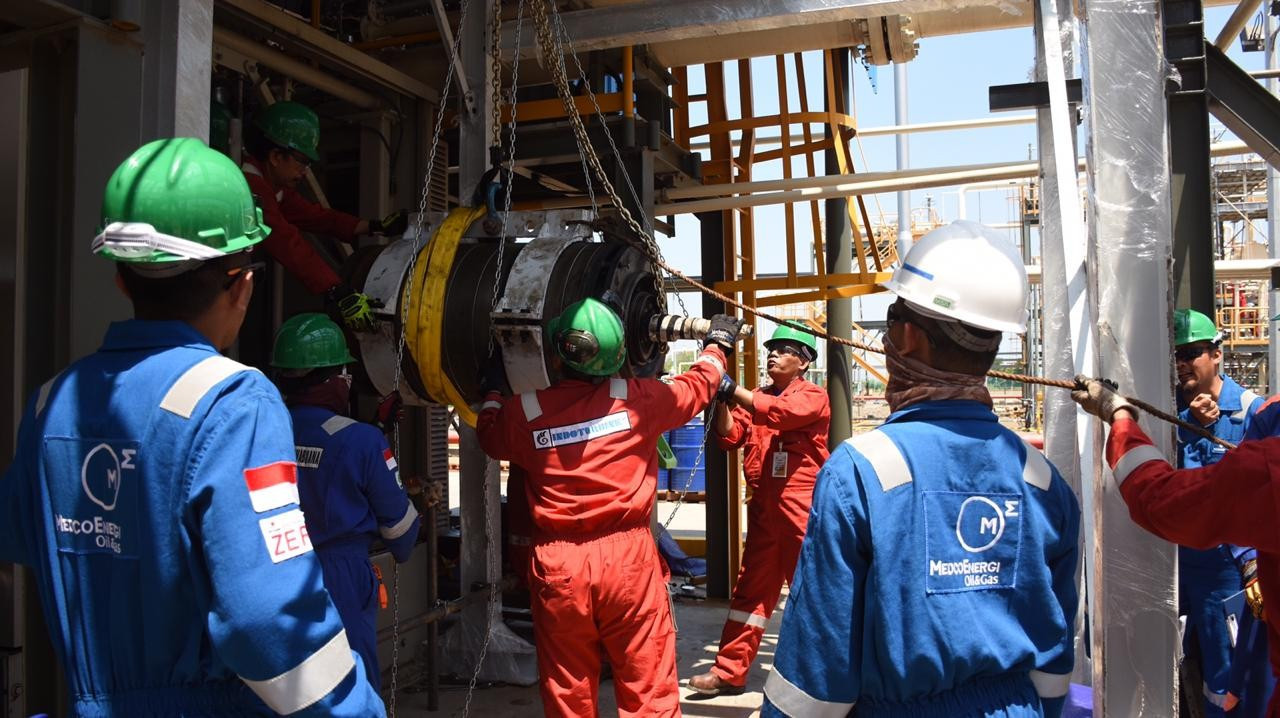 Technicians install a component at a gas pressure reduction station in East Java belonging to Ophir Indonesia (Sampang) Pty. Ltd., in this undated file photo. The London-listed energy company was acquired in May 2019 by PT Medco Energi Internasional. (Courtesy of/SKK Migas)
T
he revision to the Oil and Gas (Migas) Law is now being pushed through the House of Representatives at unusual speed, with lawmakers targeting completion by mid-October 2026 and hoping to conclude deliberations before the current sitting period ends. The pace is notable because the Migas Law revision was not originally included in this year’s national legislation program (Prolegnas), despite years of delays.
Members of Commission XII, which oversees energy and mineral resources, have described its acceleration as a response to shifting global geopolitics and the need to strengthen Indonesia’s domestic energy supply. Yet the speed of the process also raises a broader question: How much can the bill realistically resolve on such a compressed timeline?
The case for reform, however, has been building for years, particularly as the current administration places greater emphasis on energy security. National oil production has fallen from around 1.2 million barrels per day (bpd) in the early 2000s to approximately 700,000 bpd by 2015 and around 600,000 bpd in recent years. The prolonged decline has steadily increased the country’s reliance on imported crude and fuel, making a recovery in domestic production increasingly vital to energy security.
At the same time, the investment environment has become more challenging. The sharp decline in global oil prices, from around US$99 per barrel in 2014 to $52 in 2015 and then to $44 in 2016, significantly reduced the commercial attractiveness of exploration and development projects. The impact was particularly pronounced for Indonesia, where many fields are increasingly mature and therefore more costly and technically challenging to develop. Subsequent price volatility has added another layer of uncertainty, making it harder for both companies and the government to plan long-term investment and production.
This creates a fundamental policy tension. The government wants higher domestic production to reduce import dependence and strengthen energy security, while contractors make investment decisions based on expected commercial returns. When oil prices are low, the potential returns from exploration and development decline, even as the costs and risks of upstream projects remain substantial.
Indonesia’s regulatory framework therefore has to achieve two objectives at once: provide greater certainty for investors while ensuring that increased domestic production remains aligned with the country’s energy security goals. The draft Migas Law revision seeks to address part of this challenge through a major institutional restructuring. The bill would establish a special oil and gas business entity, dubbed BUK Migas, to assume the current functions of the Upstream Oil and Gas Regulatory Task Force (SKK Migas).

In the version now under discussion, BUK Migas would have authority over work areas nationwide, manage upstream operations and report directly to the President rather than through the Energy and Mineral Resources Ministry. Lawmakers argue this structure could reduce bureaucratic layers and streamline decision-making.