The Jakarta Post
Please Update your browser
Your browser is out of date, and may not be compatible with our website. A list of the most popular web browsers can be found below.
Just click on the icons to get to the download page.


Popular Reads
Top Results
No results found. Please check your search term and try again
Can't find what you're looking for?
View all search results
Popular Reads
Top Results
No results found. Please check your search term and try again
Can't find what you're looking for?
View all search resultsAnalysis: External debt rises, current account deficit widens
Change text size
Gift Premium Articles
to Anyone
Share the best of The Jakarta Post with friends, family, or colleagues. As a subscriber, you can gift 3 to 5 articles each month that anyone can read—no subscription needed!
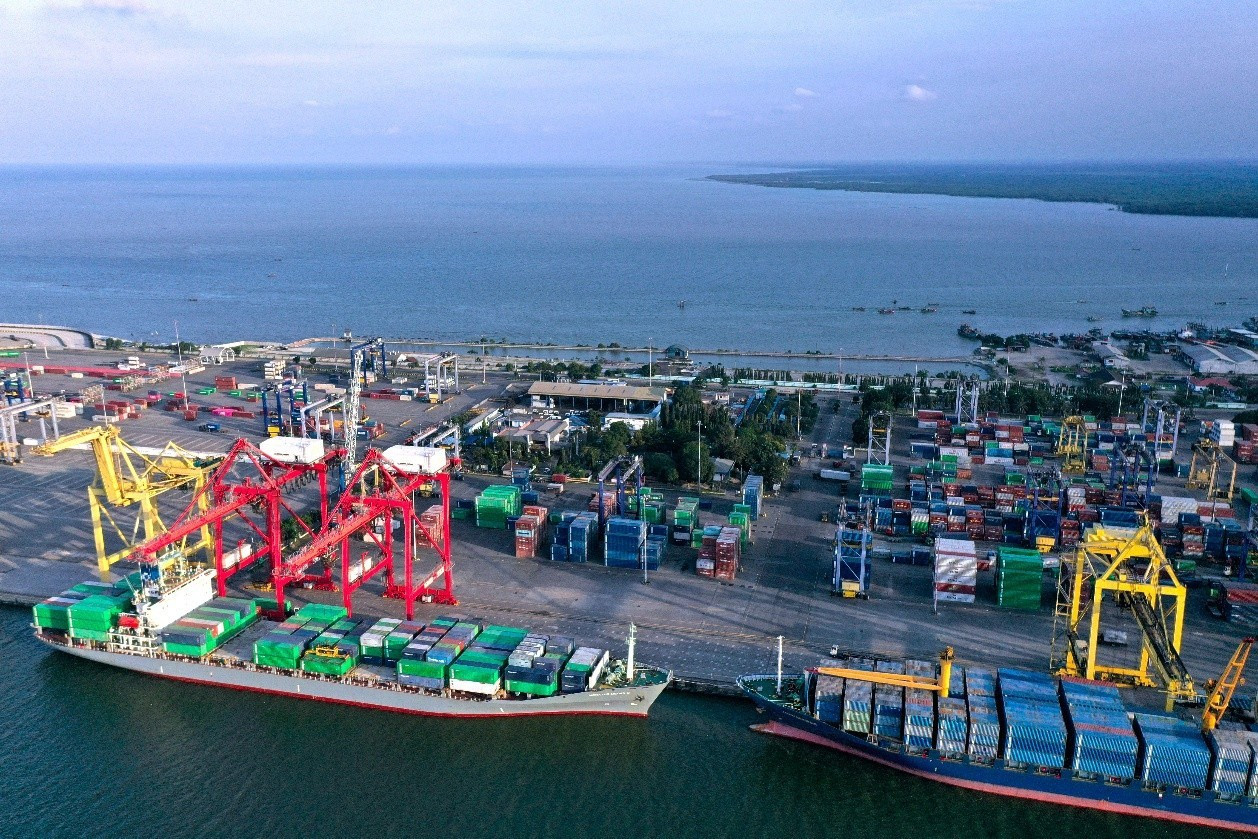 Containers are loaded onto ships at the Belawan New Container Terminal (BNCT) in Medan, North Sumatra, located in the Malacca Strait. BNCT has been developed and operated through a partnership between the INA, Pelindo and DP World.
S
everal of the country’s external sustainability indicators have weakened, as reflected in a widening current account deficit and rising external debt and external debt-to-gross domestic product ratio. The development is not entirely unexpected, as the government has signaled a greater willingness to rely on debt financing to support its growth agenda.
The concern, however, is that the increase in external debt is occurring alongside a sharp deterioration in the current account, which moved into deficit in the fourth quarter (Q4) of 2025 and has since widened further. If this trend persists, particularly if larger current account deficits are increasingly financed through debt-creating inflows, Indonesia’s external financing needs could rise, potentially increasing pressure on future debt servicing.
Indonesia’s current account deficit reached a staggering US$12.5 billion in the Q2 2026, or around 3.3 percent of GDP. This marked a sharp deterioration from the previous quarter, when the deficit stood at $3.6 billion, or 1.0 percent of GDP. The Q2 2026 deficit was also the largest nominal quarterly current account deficit in the available Bank Indonesia series since Q1 2004, surpassing the previous peak of around $10.1 billion recorded in Q2 2013.
The scale of the deterioration is particularly striking in terms of how quickly it occurred. Within just three months, the deficit widened by approximately $8.9 billion, more than tripling from the first quarter. As a result, the current account deficit-to-GDP ratio rose sharply this year from 0.97 percent in the first quarter to 3.34 percent in the second quarter. Bank Indonesia (BI) attributed the deterioration to a wider oil and gas trade deficit amid higher oil prices, a narrower non-oil and gas trade surplus as imports increased and a larger primary income deficit.
External debt nevertheless continued to increase, reaching $453.4 billion in the second quarter, up 4.4 percent year-on-year (yoy). The increase was driven by higher public sector external debt, including government and central bank liabilities, while private sector external debt continued to contract, albeit at a slower pace.
Government external debt rose 2.9 percent yoy to $216.3 billion, while private sector external debt declined 0.6 percent yoy to $194.6 billion. BI characterized the increase in government external debt as relatively contained, noting that its growth had moderated from 3.8 percent yoy to 2.9 percent in the first and second quarters, respectively.

However, the pace of nominal debt growth does not provide a complete picture of the external debt burden. Indonesia’s external debt-to-GDP ratio increased from 29.6 percent in Q1 to 30.6 percent in Q2, indicating that external debt grew faster than nominal GDP over that period. BI also noted that long-term debt accounted for 82.1 percent of total external debt, which helped limit near-term rollover risks.