The Jakarta Post
Please Update your browser
Your browser is out of date, and may not be compatible with our website. A list of the most popular web browsers can be found below.
Just click on the icons to get to the download page.


Popular Reads
Top Results
No results found. Please check your search term and try again
Can't find what you're looking for?
View all search results
Popular Reads
Top Results
No results found. Please check your search term and try again
Can't find what you're looking for?
View all search resultsCan Indonesia build trust in its welfare data?
Indonesia needs not only better welfare data, but also greater public understanding and trust in how that data is produced.
Change text size
Gift Premium Articles
to Anyone
Share the best of The Jakarta Post with friends, family, or colleagues. As a subscriber, you can gift 3 to 5 articles each month that anyone can read—no subscription needed!
 Set as preferred source
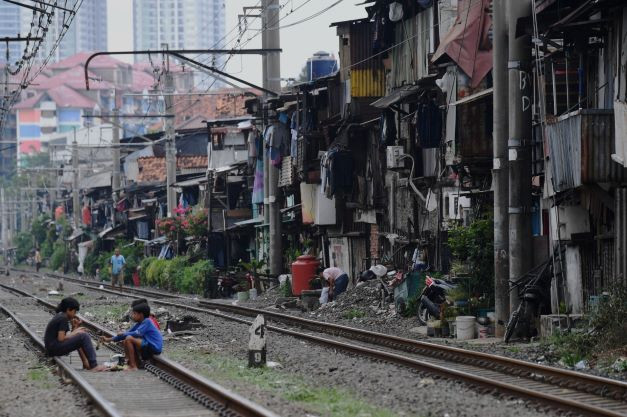 Children defy the heat as they play on the rail tracks on July 15, 2022, in a low-income area in Pejompongan, Central Jakarta. (Antara/Hafidz Mubarak Ahmad)
I
ndonesia is trying to solve a difficult question: how can limited social protection resources reach the people who need them most? The question has become increasingly visible as Indonesians pay closer attention to their welfare decile — a ranking that describes the relative socioeconomic position of households.
Some people worry that being placed in a higher decile could reduce their chances of receiving social assistance. In some places, this concern has even made people reluctant to participate in data collection.
The concern is understandable. But it points to a deeper challenge, Indonesia needs not only better welfare data, but also greater public understanding and trust in how that data is produced.
Recent findings by Indonesia's Ombudsman illustrate the problem. In Central Bangka regency, Bangka Belitung Islands, the agency found misconceptions about who determines welfare rankings under the National Single Social and Economic Data (DTSEN). Some members of the public believed that village governments or local social affairs offices directly determine household deciles, when the ranking involves statistical assessment.
The first thing to understand is what a decile actually means. A decile divides households into ten groups according to their relative socioeconomic welfare. Decile 1 represents the lowest group, while decile 10 represents the highest. It is therefore a ranking, not a monthly income figure and not a permanent label of being poor or wealthy.
Indonesia's official social assistance portal explains that the classification considers socioeconomic characteristics such as employment, education, housing conditions, electricity access and asset ownership. A household in decile 6 is not necessarily "rich." It simply occupies a relatively higher position in the distribution of estimated welfare than households in the lower deciles. The decile is an instrument for policy targeting, not a verdict on a family's life.

How, then, is household welfare estimated? One important concept is the Proxy Means Test (PMT). In simple terms, PMT is a statistical method for estimating household welfare using observable characteristics when accurate information on income or consumption is difficult or costly to obtain.