The Jakarta Post
Please Update your browser
Your browser is out of date, and may not be compatible with our website. A list of the most popular web browsers can be found below.
Just click on the icons to get to the download page.


Popular Reads
Top Results
No results found. Please check your search term and try again
Can't find what you're looking for?
View all search results
Popular Reads
Top Results
No results found. Please check your search term and try again
Can't find what you're looking for?
View all search resultsLook East for lessons in democratic resistance
For all the horror of the Tiananmen crackdown, this period also brought extraordinary democratic breakthroughs elsewhere in Asia, as entrenched autocratic systems finally began to yield to democratic rule.
Change text size
Gift Premium Articles
to Anyone
Share the best of The Jakarta Post with friends, family, or colleagues. As a subscriber, you can gift 3 to 5 articles each month that anyone can read—no subscription needed!
 Set as preferred source
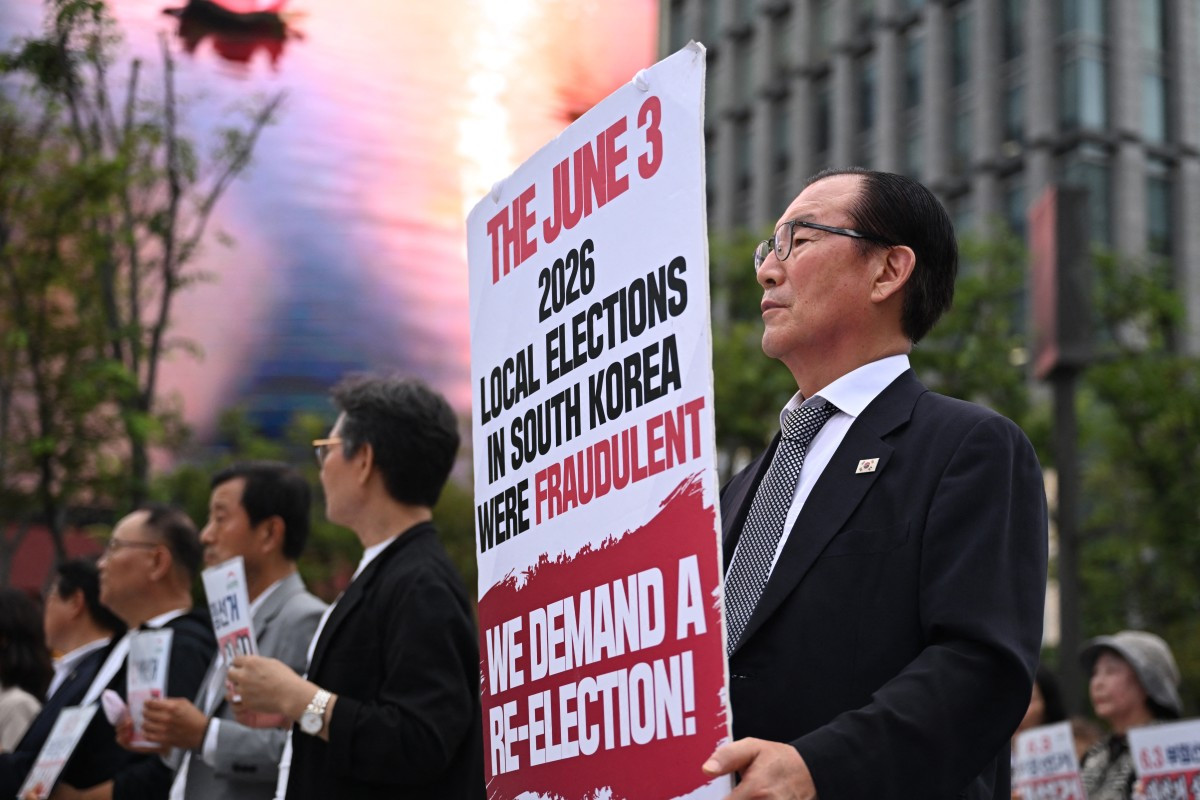 A man holds a banner claiming local elections held in June were fraudulent, during a protest demanding new elections on July 23 in Seoul. (AFP/Greg Baker)
S
ixty years ago, harsh autocratic rule dominated a region at the eastern edge of a continent. Quixotic quests for political change seemed to have little chance of succeeding — until they did. By the end of the 20th century, competitive elections had become the norm, and former political prisoners were leading governments. Despite recent setbacks, voters in one of these countries just reversed years of authoritarian drift, joining forces to oust a would-be dictator.
I could be describing Central and Eastern Europe’s trajectory from the Cold War to the recent election defeat of former Hungarian Prime Minister Viktor Orbán. But my description applies just as well to East and Southeast Asia.
In 1966, autocratic rule prevailed in the Philippines, Taiwan and South Korea, with determined democratic activists devoting decades to causes that often seemed hopeless. They endured brutal crackdowns, including South Korea’s 1980 Gwangju Massacre, which came 12 years after the Prague Spring was crushed and just before martial law ended Solidarity’s first great surge in Poland.
Then came the breakthroughs. In 1986, the People Power Revolution brought down Ferdinand Marcos’s dictatorship in the Philippines. The improbable journeys of Václav Havel and Lech Wałęsa from dissidents to presidents had an East Asian counterpart in 1998, when Kim Dae-jung — once South Korea’s most famous dissident — became president. Taiwan, too, underwent a democratic transition during those years, holding its first direct presidential election in 1996.
Fast-forward to this decade, and East Asia has again produced a striking example of democratic resilience. In December 2024, protesters, legislators and ordinary citizens in South Korea rallied against then-President Yoon Suk Yeol’s declaration of martial law, defeating it within hours and setting in motion the process that removed him from office and led to his conviction and life imprisonment.
Why, then, do defenders of democracy confronting today’s autocratic wave look to Solidarity rather than People Power for inspiration? Why is Havel a more familiar model of democratic resistance than Kim?

It is tempting to attribute the imbalance to enduring Eurocentrism. Certainly, Western observers have paid more attention to Hungary’s recent election than to South Korea’s 2024 democratic crisis. But when it comes to memories of the Cold War, something else is at work as well.