The Jakarta Post
Please Update your browser
Your browser is out of date, and may not be compatible with our website. A list of the most popular web browsers can be found below.
Just click on the icons to get to the download page.


Popular Reads
Top Results
No results found. Please check your search term and try again
Can't find what you're looking for?
View all search results
Popular Reads
Top Results
No results found. Please check your search term and try again
Can't find what you're looking for?
View all search resultsAnalysis: Pursuing energy security with self-sufficiency, demand controls
Change text size
Gift Premium Articles
to Anyone
Share the best of The Jakarta Post with friends, family, or colleagues. As a subscriber, you can gift 3 to 5 articles each month that anyone can read—no subscription needed!
 Set as preferred source
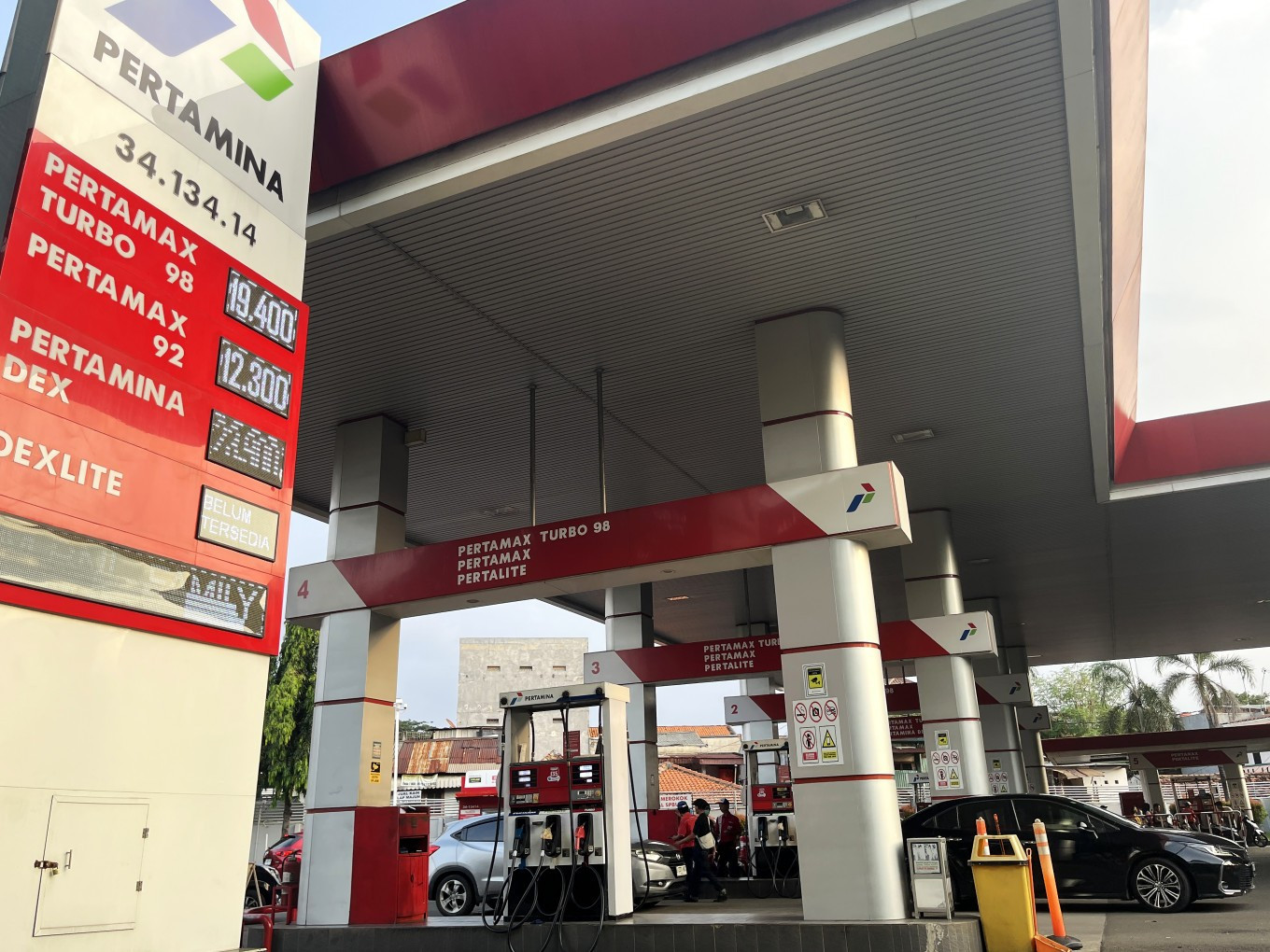 A price board displays the current prices of fuel on April 19, 2026, at a gas station on Jl. Jend. Basuki Rachmat in East Jakarta. ( JP/Iqro Rinaldi)
T
he government is pursuing a two-pronged strategy to strengthen energy security: reducing dependence on fuel imports through the mandatory B50 biodiesel policy while reforming fuel subsidies to make them more targeted toward lower-income households. Both policies, however, come with challenges. The B50 program, which combines 50 percent palm oil-based biofuel with 50 percent fossil-fuel diesel, could increase domestic demand for crude palm oil (CPO), potentially affecting exports and cooking oil prices. Meanwhile, the government’s planned restrictions on subsidized fuel purchases have raised questions about the accuracy of household welfare assessments used to determine eligibility.
President Prabowo Subianto has said Indonesia is beginning to achieve energy self-sufficiency through the mandatory B50 biodiesel policy, which took effect on July 1, allowing the country to stop importing diesel fuel. The President said the policy could save up to Rp 170 trillion (US$9.5 billion) in foreign exchange (forex), adding that Indonesia is the first country to implement a B50 mandate. Prabowo views the policy as a milestone in the country’s pursuit of energy self-sufficiency and part of broader efforts to strengthen food, energy and water security as pillars of national resilience.
The rollout of B50 began with a transition phase, during which some gas stations continued to clear existing B40 stocks while major cities began offering B50. Additional CPO demand is not expected to be significant this year because implementation began midway through the year. The Indonesian Palm Oil Association (Gapki) estimates that B50 will require around 14 million tonnes of CPO feedstock, accounting for more than a quarter of national production of 53 million to 54 million tonnes and potentially reducing stocks available for export. This requirement is projected to rise to 16.2 million to 17 million tonnes when the program is fully operational in 2027.
However, the supply outlook could become more challenging. The National Research and Innovation Agency (BRIN) has predicted that a moderate El Niño could bring an extended dry season and below-average rainfall. Such conditions could delay fruit ripening, with the resulting impact on palm oil production potentially becoming more apparent the following year. Gapki estimates that if CPO production fails to increase while B50 demand rises, Indonesia’s CPO exports could decline by around 3 million tonnes in 2027. Lower exports could also reduce revenue for the Plantation Fund Management Agency (BPDP), although the government maintains that biodiesel incentive funding remains secure as long as global oil prices stay high.
For oil palm farmers, however, the B50 rollout has yet to translate into higher fresh fruit bunch (FFB) prices. The Indonesian Palm Oil Farmers Association (Apkasindo) says the best FFB price currently stands at around Rp 15,200, below levels recorded before the B50 initiative. Farmers have also criticized the lack of transparency in the CPO tender mechanism operated by state-owned plantation company PT Perkebunan Nusantara III (PTPN III) through PT Kharisma Pemasaran Bersama Nusantara (KPBN). They have proposed establishing an Indonesian palm oil exchange to improve transparency in price formation.
On the demand side, the government plans to restrict purchases of Pertamina’s subsidized Research Octane Number (RON) 90 gasoline, Pertalite, by people in deciles 9 and 10 starting in late 2026. The policy is intended to better target fuel subsidies. It follows earlier attempts to tighten subsidy controls, including through the MyPertamina system, which were considered ineffective in accurately assessing consumers’ economic eligibility and remained vulnerable to misuse. The government is now considering using decile data from the Integrated Social Welfare Data (DTSEN), or vehicle classifications, to determine eligibility.

The DTSEN’s deciles divide the population into 10 groups based on their relative welfare status, using a range of socioeconomic characteristics. The assessment considers 39 variables, including employment, education, housing conditions, electricity access, asset ownership, expenditure and household vulnerability. Being classified in decile 9 or 10, therefore, does not automatically mean that a household is wealthy. Nevertheless, social media discussions show that the decile system is increasingly perceived as a proxy for economic class, particularly as it is being used to determine access to assistance and policies that directly affect household expenses.