The Jakarta Post
Please Update your browser
Your browser is out of date, and may not be compatible with our website. A list of the most popular web browsers can be found below.
Just click on the icons to get to the download page.


Popular Reads
Top Results
No results found. Please check your search term and try again
Can't find what you're looking for?
View all search results
Popular Reads
Top Results
No results found. Please check your search term and try again
Can't find what you're looking for?
View all search resultsAceh’s peace anniversary turmoil: The gap between generations
For those born after the Helsinki agreement, peace is not something remembered as being won through intense political negotiation and sacrifice. It is simply the default baseline of existence.
Change text size
Gift Premium Articles
to Anyone
Share the best of The Jakarta Post with friends, family, or colleagues. As a subscriber, you can gift 3 to 5 articles each month that anyone can read—no subscription needed!
 Set as preferred source
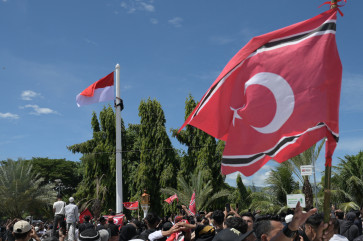
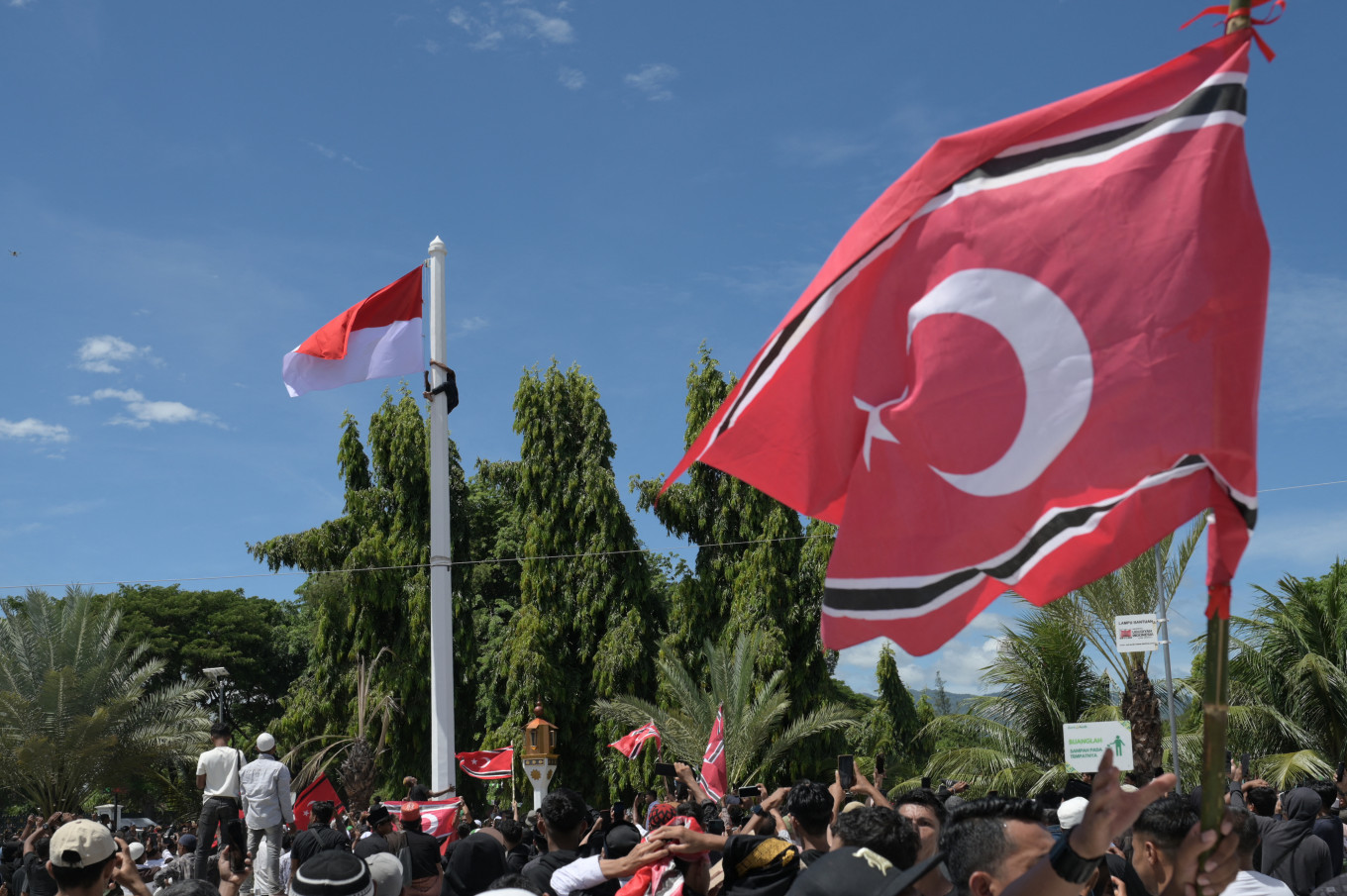 A man (top left) climbs a flagpole as he attempts to raise a Free Aceh Movement flag alongside the Indonesian national flag during a rally outside the Baiturrahman Grand Mosque in Banda Aceh, Aceh, on Aug. 15, 2026. (AFP/Reza Saifullah)
T
here are moments when a society tells you far more about itself through a heated argument than through a formal celebration. Aceh experienced one of those defining moments on Aug. 15, when the 21st anniversary of its historic peace agreement was intended to reaffirm post-conflict progress. The commemoration at Banda Aceh's Baiturrahman Grand Mosque became entangled in unrest following the display of the crescent moon and star flag. That event highlighted deeper underlying political tensions.
For those who lived through the long conflict, peace was precious because they experienced its terrifying opposite: midnight gunfire, intimidating military checkpoints and the constant anxiety of missing relatives. For those born after the Helsinki agreement, however, peace is not something remembered as being won through intense political negotiation and sacrifice. It is simply the default baseline of existence.
This generational shift radically alters the region's political equation. The generation that remembers war has spent two decades protecting peace as a fragile achievement, while the generation that inherited peace asks what peace has delivered in return.
To understand this rift, two neurochemical metaphors prove useful: melatonin and dopamine. One explains why an exhausted post-conflict society remained politically quiet for years; the other reveals why that quiet is ending.
After decades of devastating conflict and the overwhelming trauma of the 2004 tsunami, Aceh craved rest above all else. The Helsinki Agreement offered something that had become priceless: social normality.
In that sense, "social melatonin" is a fitting metaphor. Just as melatonin prepares the body for sleep, memories of violence induce a collective desire to lower political temperatures, avoid public confrontation, and preserve stability at almost any cost.

For years, this implicit social bargain held immense political power across the province. Weak governance, bureaucratic inefficiency, patronage networks and political corruption were endured. This was not irrational; it was the natural psychology of a trauma-weary society.