The Jakarta Post
Please Update your browser
Your browser is out of date, and may not be compatible with our website. A list of the most popular web browsers can be found below.
Just click on the icons to get to the download page.


Popular Reads
Top Results
No results found. Please check your search term and try again
Can't find what you're looking for?
View all search results
Popular Reads
Top Results
No results found. Please check your search term and try again
Can't find what you're looking for?
View all search resultsThe harder work of holding Papua
The more difficult question is what allows sovereignty to endure not merely as an assertion of authority, but as a political relationship in which citizens can see themselves.
Change text size
Gift Premium Articles
to Anyone
Share the best of The Jakarta Post with friends, family, or colleagues. As a subscriber, you can gift 3 to 5 articles each month that anyone can read—no subscription needed!
 Set as preferred source
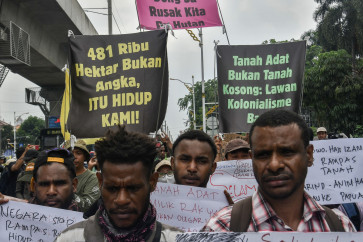
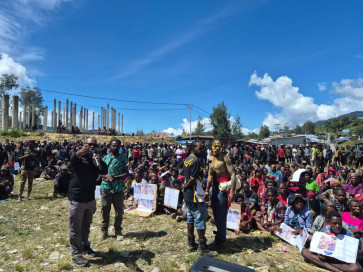
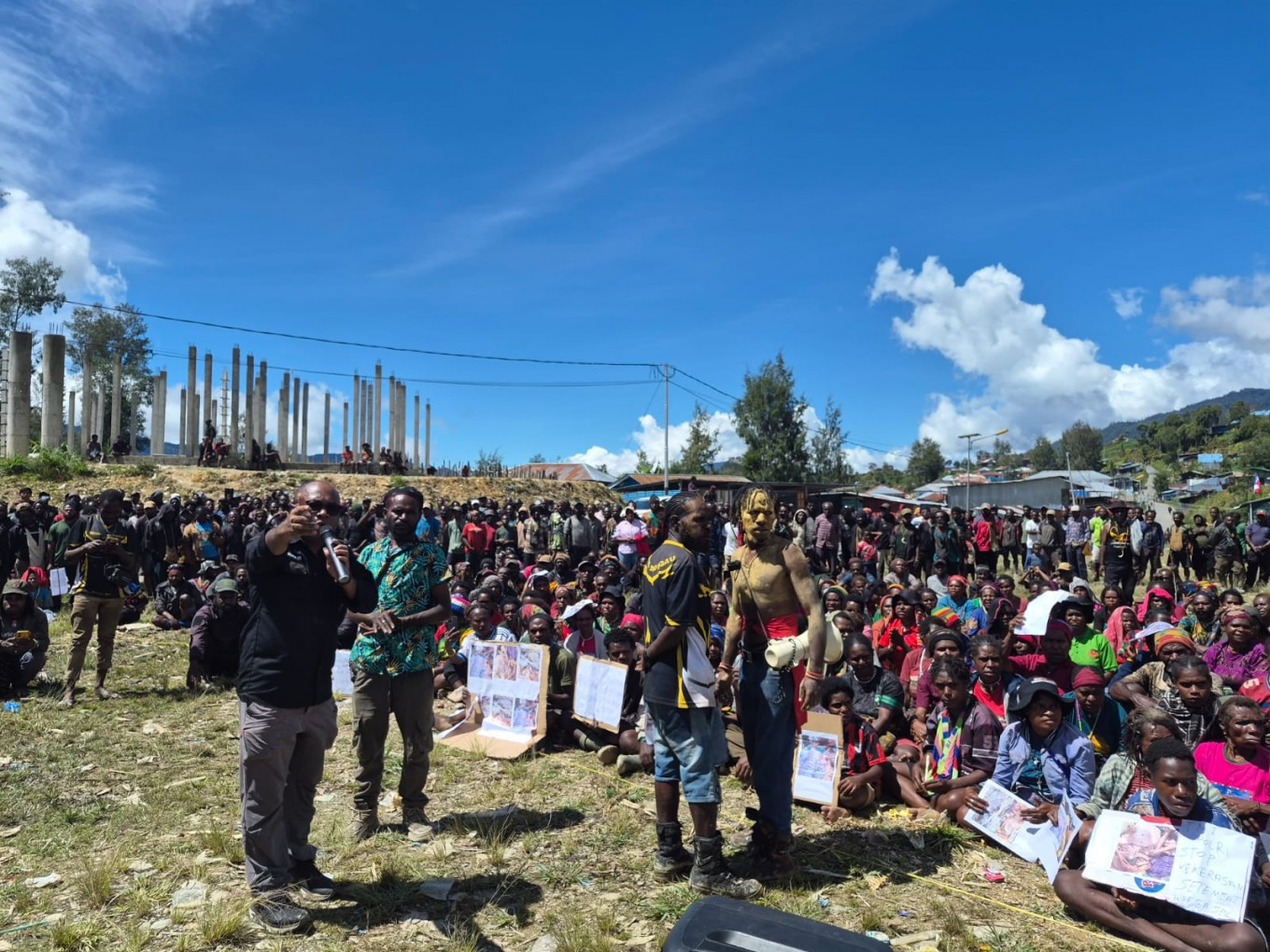 Dozens of Papuans gather on July 4, 2026, at the Sugapa field in Intan Jaya regency, Central Papua, to meet with representatives from the National Commission on Human Rights (Komnas HAM) following the deadly clash between the Indonesian Military (TNI) and a separatist group in the district two days earlier. ((Komnas HAM) Papua/-)
“Papuans can only demand for justice, not independence”. The statement by Human Rights Minister Natalius Pigai on Aug. 17, draws a clear constitutional boundary. Yet a constitutional boundary does not, by itself, settle a political relationship.
The boundary may be clear. Belonging is not.
In Papua, the distinction matters. Indonesia’s sovereignty over the territory is not the issue here. The more difficult question is what allows sovereignty to endure not merely as an assertion of authority, but as a political relationship in which citizens can see themselves.
John Locke confronted a related problem more than three centuries ago. In Two Treatises of Government (1689), he argued that political authority rests not simply on the capacity to rule, but on the consent of those who are governed and the protection of their rights. Authority, in other words, does not justify itself.
For Papua, this does not mean reopening the question of Indonesian sovereignty. It suggests something more demanding: sovereignty must continually demonstrate its value to those who live under it. That demonstration is rarely found in constitutional language. It is encountered in ordinary institutions, in schools and hospitals, courts and local government offices, workplaces and political forums.
A policy may look generous from Jakarta and still feel inadequate in Jayapura. The distance between policy design and lived experience is often where legitimacy begins to fray.

The Basque experience in Spain offers a useful comparison, precisely because it should not be treated as a model for Papua.