The Jakarta Post
Please Update your browser
Your browser is out of date, and may not be compatible with our website. A list of the most popular web browsers can be found below.
Just click on the icons to get to the download page.


Popular Reads
Top Results
No results found. Please check your search term and try again
Can't find what you're looking for?
View all search results
Popular Reads
Top Results
No results found. Please check your search term and try again
Can't find what you're looking for?
View all search resultsThe global land agenda's moment of truth
For the first time, the key ingredients for large-scale land restoration, political will, international cooperation, implementation capacity and financing, are beginning to align.
Change text size
Gift Premium Articles
to Anyone
Share the best of The Jakarta Post with friends, family, or colleagues. As a subscriber, you can gift 3 to 5 articles each month that anyone can read—no subscription needed!
 Set as preferred source
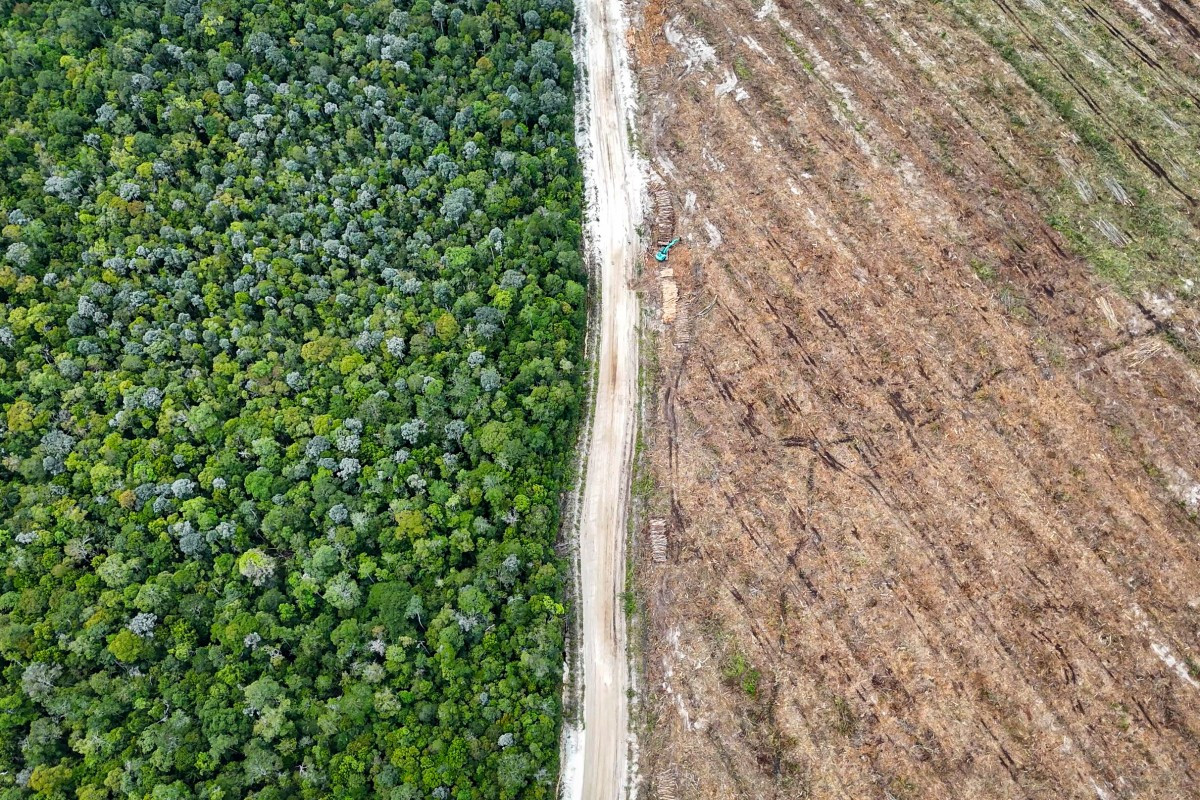 A road bisects untouched forest (left) and land cleared and prepared for industrial planting (right) on Feb. 11, 2026, in Lahei Mangkutup, Kapuas regency, Central Kalimantan. (AFP/Satya Adhi)
E
very second, land degradation claims four soccer fields of healthy terrain, resulting in a yearly loss equivalent to two Spains. As one would expect, the costs of these losses are staggering, putting billions of people at risk and draining the global economy of nearly US$1 trillion annually.
Left unchecked, up to 95 percent of the world’s land could be degraded, defined as a loss of capability to produce benefits from a particular use, by 2050, with droughts hitting more than three-quarters of the world’s population.
Nonetheless, there is cause for optimism. As delegates gather in Ulaanbaatar, Mongolia, for the 17th Conference of the Parties (COP17) to the United Nations Convention to Combat Desertification (UNCCD), there is growing momentum for a more ambitious global response. The summit’s theme, “Restoring Land. Restoring Hope.,” reflects a growing recognition that land restoration is not just an environmental imperative but an economic and development opportunity.
For the first time, the key ingredients for large-scale land restoration, political will, international cooperation, implementation capacity and financing, are beginning to align. Five recent signs suggest that this could be the moment when we turn ambition into action.
The first is broader participation in the UNCCD process. COP16 in Riyadh in 2024 was the largest and most inclusive such summit to date. It elevated land use and drought on the global agenda and linked them to issues such as food and water security, gender equality and land tenure. The landmark result was the Riyadh Action Agenda, the first global framework dedicated to land, which has since brought together more than 100 public and private partners.
COP16 also mobilized $12 billion for programs like the Riyadh Global Drought Resilience Partnership, alongside expanded private-sector engagement through Business4Land. Now, two forthcoming Riyadh Action Agenda initiatives, the Land & Soil Breakthroughs and the Community Platform, aim to accelerate progress as countries increasingly translate political commitments into national drought plans and land-degradation-neutrality targets.

The second sign is the progress made toward greater convergence among the Rio Conventions. For decades, the climate, biodiversity and land agendas that emerged from the 1992 Rio Earth Summit advanced separately. Yet they are now increasingly seen as interconnected dimensions of a single planetary crisis, an understanding that is long overdue and essential to developing more integrated approaches to policymaking, finance and implementation.