The Jakarta Post
Please Update your browser
Your browser is out of date, and may not be compatible with our website. A list of the most popular web browsers can be found below.
Just click on the icons to get to the download page.


Popular Reads
Top Results
No results found. Please check your search term and try again
Can't find what you're looking for?
View all search results
Popular Reads
Top Results
No results found. Please check your search term and try again
Can't find what you're looking for?
View all search resultsKowani’s dual leadership reflects Indonesia’s democratic malaise
What does the Kowani dual leadership debacle reflect about women’s rights, politics and democracy in Indonesia?
Change text size
Gift Premium Articles
to Anyone
Share the best of The Jakarta Post with friends, family, or colleagues. As a subscriber, you can gift 3 to 5 articles each month that anyone can read—no subscription needed!
 Set as preferred source
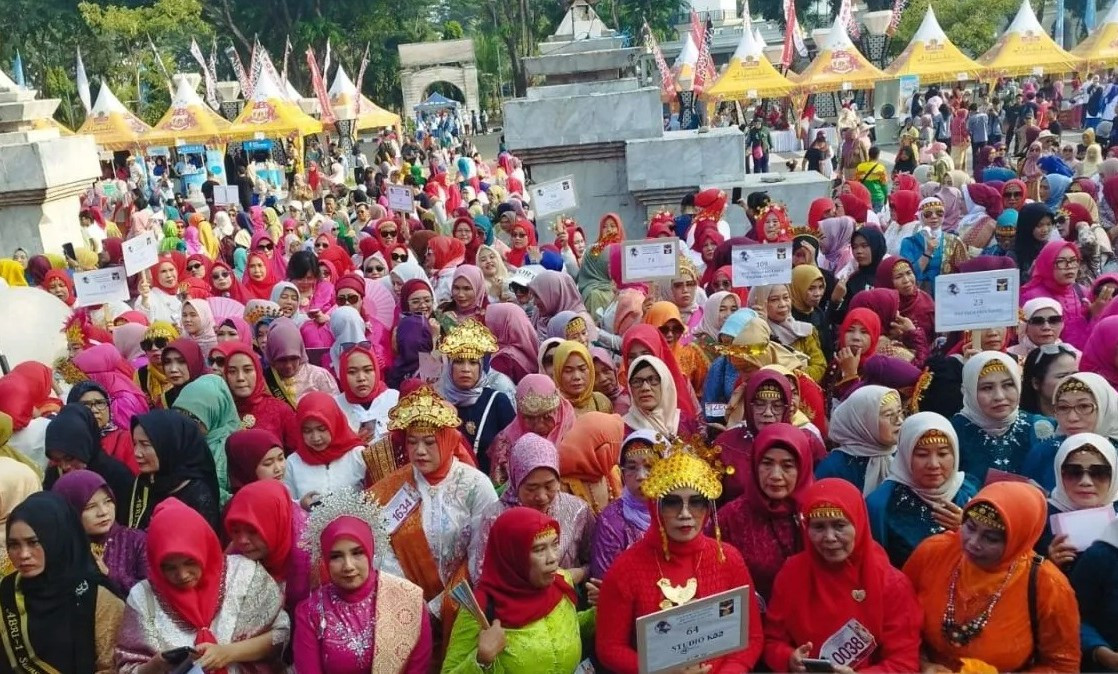 More than 1,000 women take part in a kebaya parade to celebrate National Kebaya Day, organized by the Indonesian Women's Congress (Kowani) in Palembang, South Sumatra on July 19, 2026. (Antara/Edo Purmana)
T
wo-headed creatures abound in mythology, such as Orthrus, a monstrous double-headed dog slain by Hercules; Amphisbaena, a serpent with a head at each end; and Ettins, brutish giants with two heads from European folklore.
They also occur in nature, though rarely: reptiles, farm animals, even humans.
In Indonesia, two-headed entities are neither a myth nor a freak of nature. They are a recurring product of rival factions fighting for power: Golkar in 2014, the National Awakening Party (PKB) in 2008, the Indonesian Chamber of Commerce (Kadin, 2010-2015, 2015-2020, 2024), the Indonesian Red Cross in 2024, the Indonesian Notary Association in 2023-25, and the National Committee of Indonesian Youth (KNPI).
In 2026, it’s Kowani’s turn.
Founded on Dec. 22, 1928, the Indonesian Women’s Congress (Kowani) was formally established as a federation in 1946, with 30 members. It is Indonesia’s largest umbrella organization for women’s groups, and in 2026 reportedly has 119 members. Its member organizations have diverse social, religious and political backgrounds, but all purportedly share the aim of advancing women’s rights, education and empowerment.
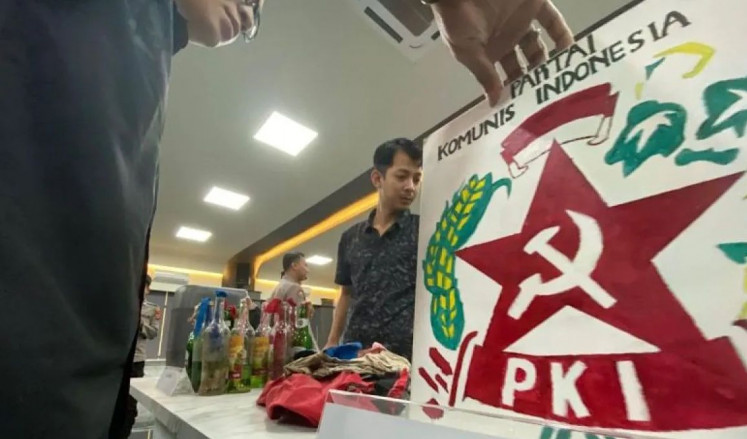
In 1965-1966, Kowani not only experienced a purge of its leftist organizations, in line with the annihilation of the Indonesian Communist Party (PKI), it was also coopted by the New Order regime (1966-98) and became the state corporatist organization for women. It was one of the breeding grounds of the “state ibuism” state gender ideology that prioritizes women’s roles as wives and mothers (ibu), and institutionalizes their duty to serve their husbands, families, society and the state.

Since the start of the Reform era in 1998, Kowani has supposedly become a more independent, empowerment-focused entity, advocating female leadership, economic independence and legal protection. Due to the fact that Kowani remains closer to the state than society, it’s been largely off my radar, save for a column I wrote in 2018 “Power of ‘emak-emak’, ‘babu-babu’ or ‘ibu bangsa’?” (Sept. 18, 2018, The Jakarta Post).