The Jakarta Post
Please Update your browser
Your browser is out of date, and may not be compatible with our website. A list of the most popular web browsers can be found below.
Just click on the icons to get to the download page.


Popular Reads
Top Results
No results found. Please check your search term and try again
Can't find what you're looking for?
View all search results
Popular Reads
Top Results
No results found. Please check your search term and try again
Can't find what you're looking for?
View all search resultsAnalysis: Trump's forced labor tariffs: Flawed but revealing
Change text size
Gift Premium Articles
to Anyone
Share the best of The Jakarta Post with friends, family, or colleagues. As a subscriber, you can gift 3 to 5 articles each month that anyone can read—no subscription needed!
 Set as preferred source
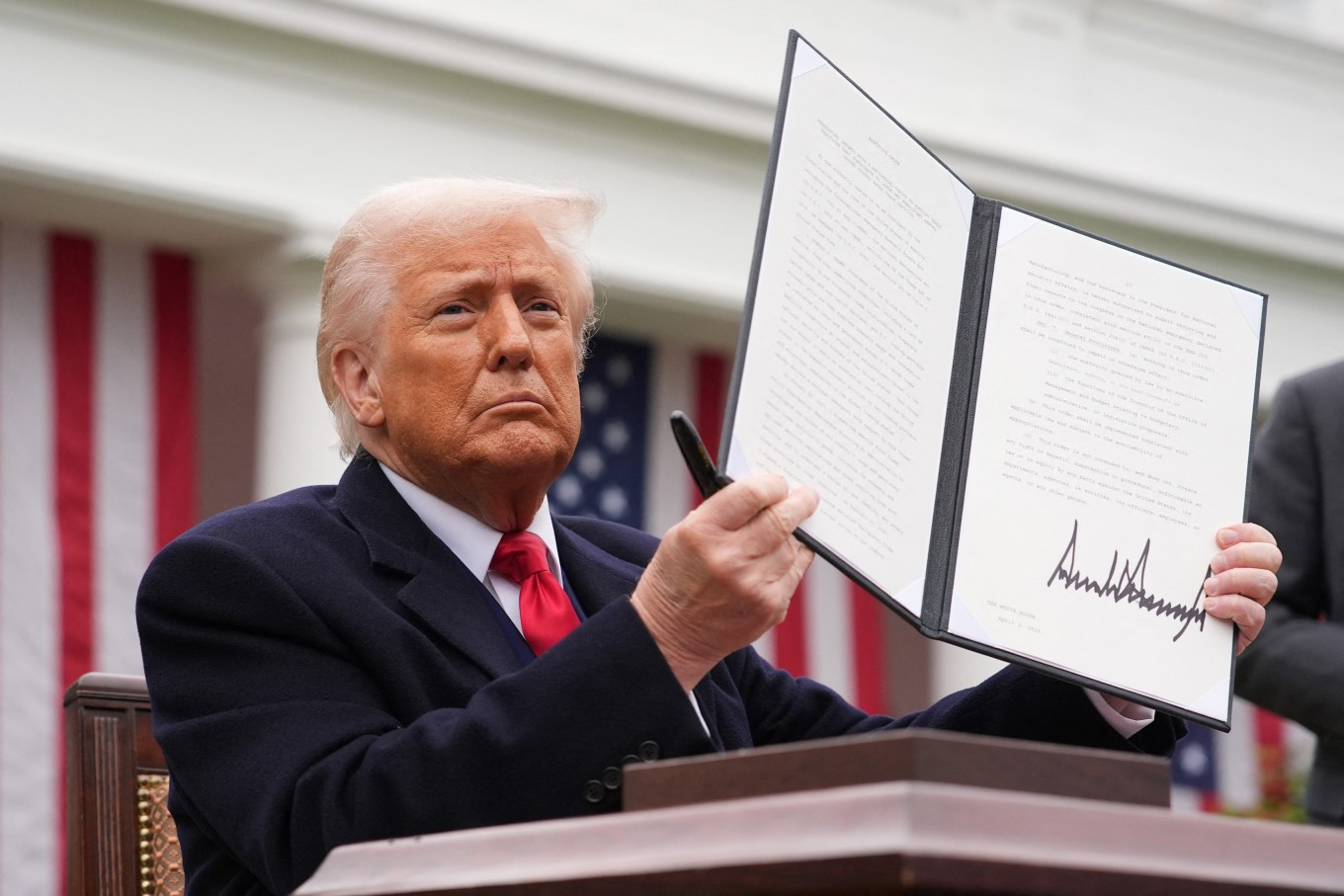 US President Donald Trump displays a signed executive order imposing tariffs on imported goods during a “Make America Wealthy Again” trade announcement event in the Rose Garden at the White House in Washington, DC, on April 2, 2025. (AFP/Andrew Hanik)
U
nited States President Donald Trump has revived his tariff agenda under a new legal justification. After the Supreme Court struck down his "Liberation Day" tariffs in February, his administration turned to Section 301 of the Trade Act of 1974, accusing trading partners of failing to prevent forced labor in their supply chains. Indonesia is among the affected countries, which has raised questions about how effectively it is tackling forced labor at home.
Trump first invoked Section 122 of the 1974 Trade Act to impose a temporary 10 percent tariff on nearly all imports for 150 days. When that expired on July 24, Washington replaced it with tariffs of 10 to 12.5 percent on goods from the 60 largest trading partners under Section 301, citing their alleged failure to address forced labor.
Under this policy, covered products from Indonesia have been subject to an additional 10 percent duty since July 31. These products’ longer-term future remains uncertain, however, due to product exemptions, continuing negotiations and ongoing legal challenges. Nevertheless, Indonesia's inclusion warrants closer scrutiny.
In April, the government issued Trade Minister Regulation No. 9/2026, prohibiting imports of goods proven to be produced using forced labor, which adopts a definition broadly aligned with International Labour Organization and American standards.
The Office of the US Trade Representative (USTR) has recognized Indonesia’s newly established legal prohibition but questions whether this can be enforced effectively through supply chain tracing, investigations, import restrictions and meaningful sanctions.
The USTR's findings do not suggest that forced labor is widespread in local industries. Rather, they highlight the potential gap between regulatory adoption and enforcement while raising broader concerns about whether similar risks are being detected across domestic supply chains.

These concerns become particularly relevant in industries that rely on complex cross-border supply chains, where tracing the origin of raw materials is often difficult, such as the country’s textile industry.