The Jakarta Post
Please Update your browser
Your browser is out of date, and may not be compatible with our website. A list of the most popular web browsers can be found below.
Just click on the icons to get to the download page.


Popular Reads
Top Results
No results found. Please check your search term and try again
Can't find what you're looking for?
View all search results
Popular Reads
Top Results
No results found. Please check your search term and try again
Can't find what you're looking for?
View all search resultsAI could end Wall Street’s EPS obsession
Investors are focusing more on tangible results: cash flow.
Change text size
Gift Premium Articles
to Anyone
Share the best of The Jakarta Post with friends, family, or colleagues. As a subscriber, you can gift 3 to 5 articles each month that anyone can read—no subscription needed!
 Set as preferred source
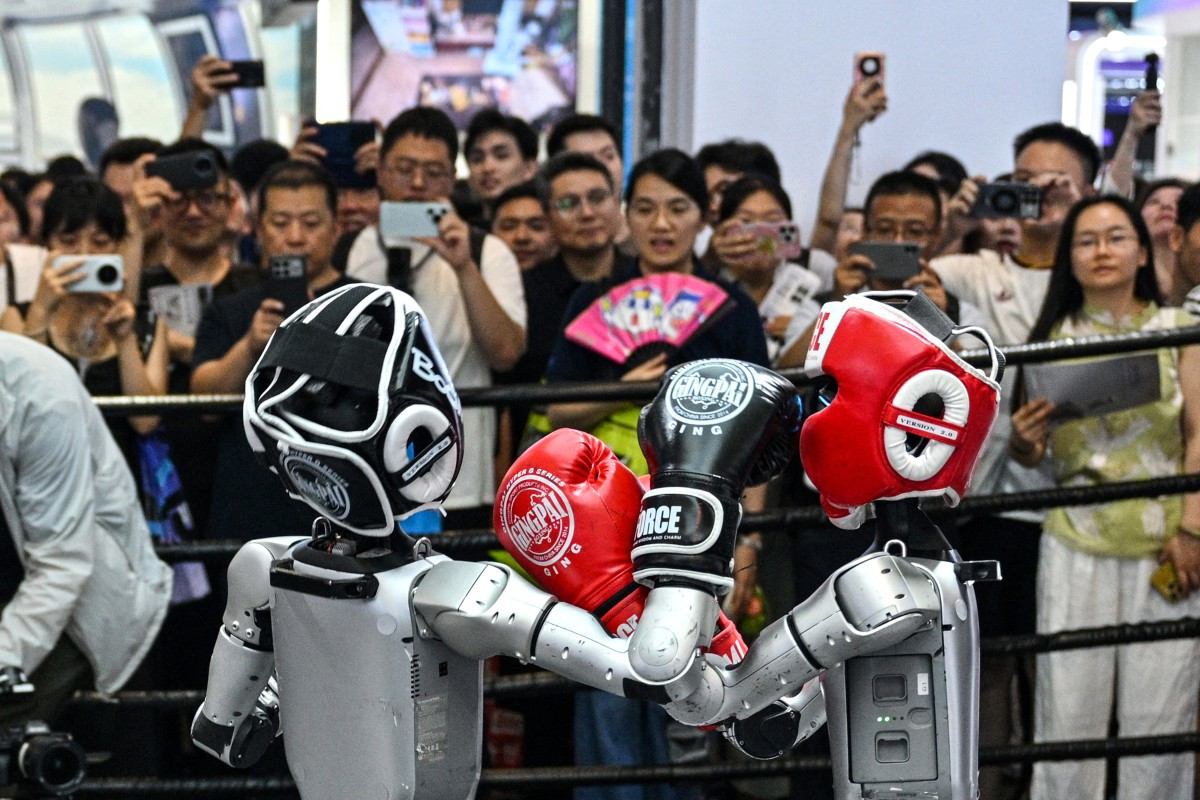 Humanoid robots controlled by a remote control by Unitree Robotics take part in a fight during the World Artificial Intelligence Conference (WAIC) in Shanghai on July 18, 2026. (AFP/Hector Retamal)
T
he artificial intelligence boom is reshaping earnings season, pulling attention away from earnings per share (EPS) beats and misses as the focus shifts instead to cold hard cash. While this is a positive development for all of us EPS skeptics, it certainly does not mark the end of accounting gimmicks.
Many, including yours truly, have long argued that investors’ obsession with EPS is overdone. The figure reflects discretionary accounting treatments that provide corporate management teams with considerable power to make the number come in exactly where they want it. (That is to say, usually a penny or two above the EPS guidance the company previously dispensed.)
But AI is complicating this long-running game.
AI has transformed the formerly asset-light Big Tech firms, which dominate US markets, into big-spending “hyperscalers” that are plowing hundreds of billions of dollars into plants and equipment. Investors, in turn, are focusing more on tangible results, namely cash flow.
Alphabet is a prime example. The Google parent seemed to get everything right when it reported second-quarter results on July 23. Earnings quadrupled to US$112.3 billion from $24.8 billion in the comparable 2025 period. EPS exceeded forecasts, as did revenue, which was up a robust 24 percent year-on-year.
Granted, a few statistics came up a bit short, but Alphabet’s performance was a blowout victory by most measures, except for the one that wound up mattering most.

For the first time since going public, Alphabet reported negative free cash flow (FCF). This gauge of corporate performance adds back non-cash expenses (including, critically, depreciation) to net income, adjusts for working capital changes and subtracts capital expenditures.
Alphabet’s cash burn was driven primarily by its capex binge of $44.92 billion, which overshot the $44.15 billion consensus forecast. The company’s guidance also suggested that these outlays would likely continue running above Wall Street’s previous expectations for the next few years. In response, the market slashed Alphabet’s share price by 7 percent on the day, paying no heed to its EPS beat.
FCF is much less susceptible to manipulation than reported earnings, which can be altered meaningfully without violating any securities laws. In today’s increasingly asset-heavy era, one of the most important distinctions between the two gauges is that EPS, unlike FCF, is affected by amortization and depreciation, which gradually write off an asset’s cost over its useful life.
The Financial Accounting Standards Board prescribes no guidelines regarding the useful lives that should be assumed for calculating depreciation on data centers or servers. That means companies use their judgment to determine the appropriate useful lives of these assets with the approval of the auditors whom they hire, and can fire.
A firm may select one time frame only to decide later that longer lives would be more appropriate, with the fortuitous consequence that the company’s annual depreciation charges would decline, making it easier to beat expectations and guidance.
This is only a modest concern with data centers. Companies typically assign long lives, often on the order of 40 years, to the buildings, so an opportunistic decision to shift to a longer period would have a limited impact.
It is a different story, though, for the equipment inside. When it comes to servers, these types of accounting changes are already being made.
In 2023, Alphabet extended the assumed average lives of its servers and certain networking equipment by 50 percent, moving from four years to six years. Microsoft’s Azure also went from four to six years in fiscal 2022, while Meta switched from about three years to 5.5 years in stages from 2020 to 2025. Amazon Web Services extended its servers’ assumed lives from five years to six years in 2024, although it took a subset of them back to five years in 2025.
One might like to believe that all of these adjustments were designed to align depreciation charges more closely with the physical and technological facts. But accounting expert Baruch Lev says that companies are “playing games” with the service lives of AI assets. He calls their chosen depreciation schedules “totally arbitrary.”
Given that bleak assessment, it is appropriate for investors to cast aside Wall Street’s longstanding EPS fixation and focus instead on FCF, as they did so forcefully following Alphabet’s latest earnings announcement.
But this does not mean that investors can let their guard down.
Given investors’ growing concerns about hyperscalers’ enormous AI outlays, one of the most important data points now is the capex estimate itself, and depreciation can play a role here.
Just look at Microsoft. Its shares bounced on July 29 after it reported, among other positive results, that its capex estimate for the first quarter of 2027 would be lower than expected. The reason for this change was not an actual decrease in spending, however. It reflected a change in the accounting method for the related leases, spreading the cost over 25 years instead of 15.
The tech giant certainly did not try to hide this fact, but the “reduction” in expected spending appeared to shift the narrative regardless.
It is a reminder that skepticism remains a financial analyst’s greatest asset.
---
The writer is the publisher of Income Securities Investor. The views expressed are personal.