The Jakarta Post
Please Update your browser
Your browser is out of date, and may not be compatible with our website. A list of the most popular web browsers can be found below.
Just click on the icons to get to the download page.


Popular Reads
Top Results
No results found. Please check your search term and try again
Can't find what you're looking for?
View all search results
Popular Reads
Top Results
No results found. Please check your search term and try again
Can't find what you're looking for?
View all search resultsWhat a Sino-American G2 would mean for Asian security
The G2 concept that Trump has been touting lately is a highly unstable proposition that could make the emergence of a unipolar Asia more likely. Fortunately, Japan remains committed to advancing the far more effective “free and open Indo-Pacific" framework, with India as an indispensable partner.
Change text size
Gift Premium Articles
to Anyone
Share the best of The Jakarta Post with friends, family, or colleagues. As a subscriber, you can gift 3 to 5 articles each month that anyone can read—no subscription needed!
 Set as preferred source
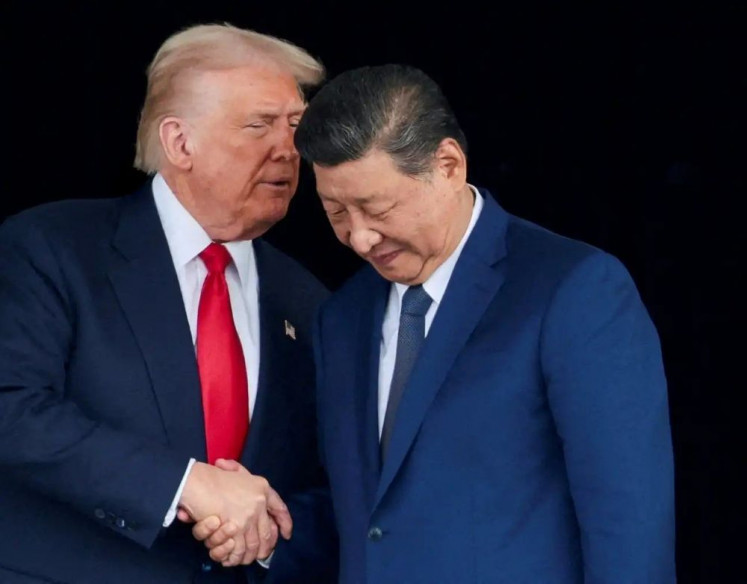
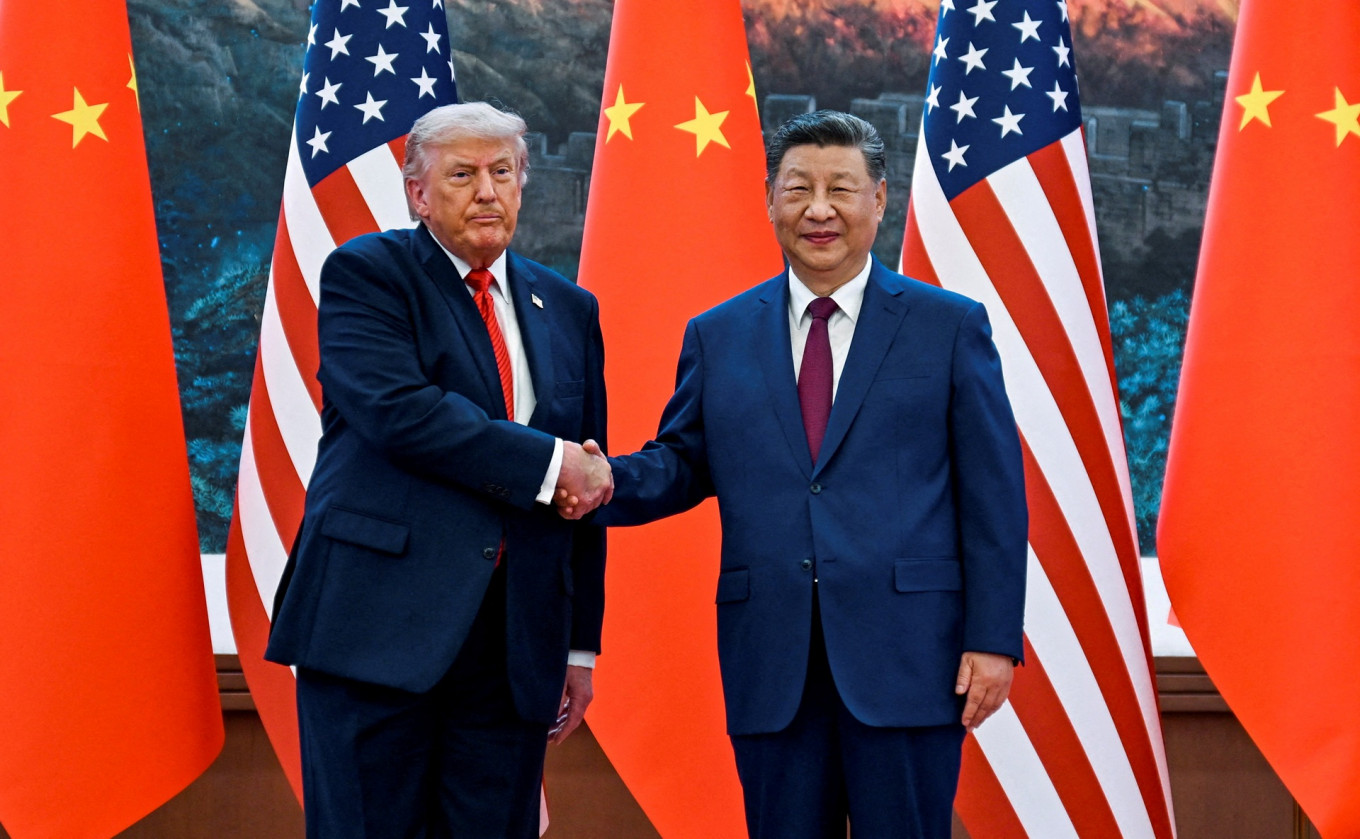 Chinese President Xi Jinping (right) and United States President Donald Trump shake hands during a photo op at the Great Hall of the People in Beijing on May 14, 2026, amid talks focusing on trade, regional security and bilateral ties between the world’s two largest economies. (Reuters/Pool/Kenny Holston)
G
rand foreign policy strategies rarely disappear overnight. More often, they are dismantled gradually through subtle rhetorical shifts, bureaucratic adjustments and changing diplomatic priorities. The United States’ Indo-Pacific strategy is no exception.
A decade ago, then-Japanese prime minister Shinzo Abe unveiled the concept of a “free and open” Indo-Pacific. Based on the idea that the Indian and Pacific oceans form a single strategic theater, he sought to build a coalition of democracies committed to preventing any one power from dominating the region.
The US subsequently embraced this vision, reviving the Quad coalition and establishing its members, Australia, India, Japan and the US, as the principal anchors of the regional balance of power. The underlying strategic logic was compelling. Like the alliance system more broadly, the Indo-Pacific coalition would amplify US influence by encouraging middle powers to shoulder greater responsibility for regional stability. Moreover, its multiple centers of power and shared objective would make it inherently resilient.
More recently, however, US President Donald Trump has advanced the idea of a “Group of Two” comprising just the US and China. Unlike the free and open Indo-Pacific vision, which seeks to maintain stability by cultivating a broad network of like-minded partners, the G2 concept assumes that the world’s two leading powers should shape the regional and global order through direct negotiations.
The approach elevates bilateral dealmaking at the expense of multilateral diplomacy, thereby diminishing the strategic weight of middle powers and, by extension, US influence. Its durability largely rests on the personal chemistry and shifting calculations of leaders in Washington and Beijing. While Trump seems to be warming up to Chinese President Xi Jinping today, there is no telling what tomorrow will bring.
Simply put, the G2 is a highly unstable proposition.

One might be tempted to dismiss this as just another example of Trump’s unconventional diplomacy, which often emphasizes bilateral bargaining over coalition building. But his administration has also systematically deprioritized the Quad, with its latest National Security Strategy making just a single passing mention of the grouping. The US Department of Defense, for its part, has reverted to referring to its principal theater as the “Pacific” instead of the “Indo-Pacific”.