The Jakarta Post
Please Update your browser
Your browser is out of date, and may not be compatible with our website. A list of the most popular web browsers can be found below.
Just click on the icons to get to the download page.


Popular Reads
Top Results
No results found. Please check your search term and try again
Can't find what you're looking for?
View all search results
Popular Reads
Top Results
No results found. Please check your search term and try again
Can't find what you're looking for?
View all search resultsTrump's new tariffs are an opportunity to fight back
Once again, President Donald Trump is subverting domestic and international law in an effort to seize a larger fraction of global value and supply chains, this time on the hypocritical pretext of forced labor.
Change text size
Gift Premium Articles
to Anyone
Share the best of The Jakarta Post with friends, family, or colleagues. As a subscriber, you can gift 3 to 5 articles each month that anyone can read—no subscription needed!
 Set as preferred source
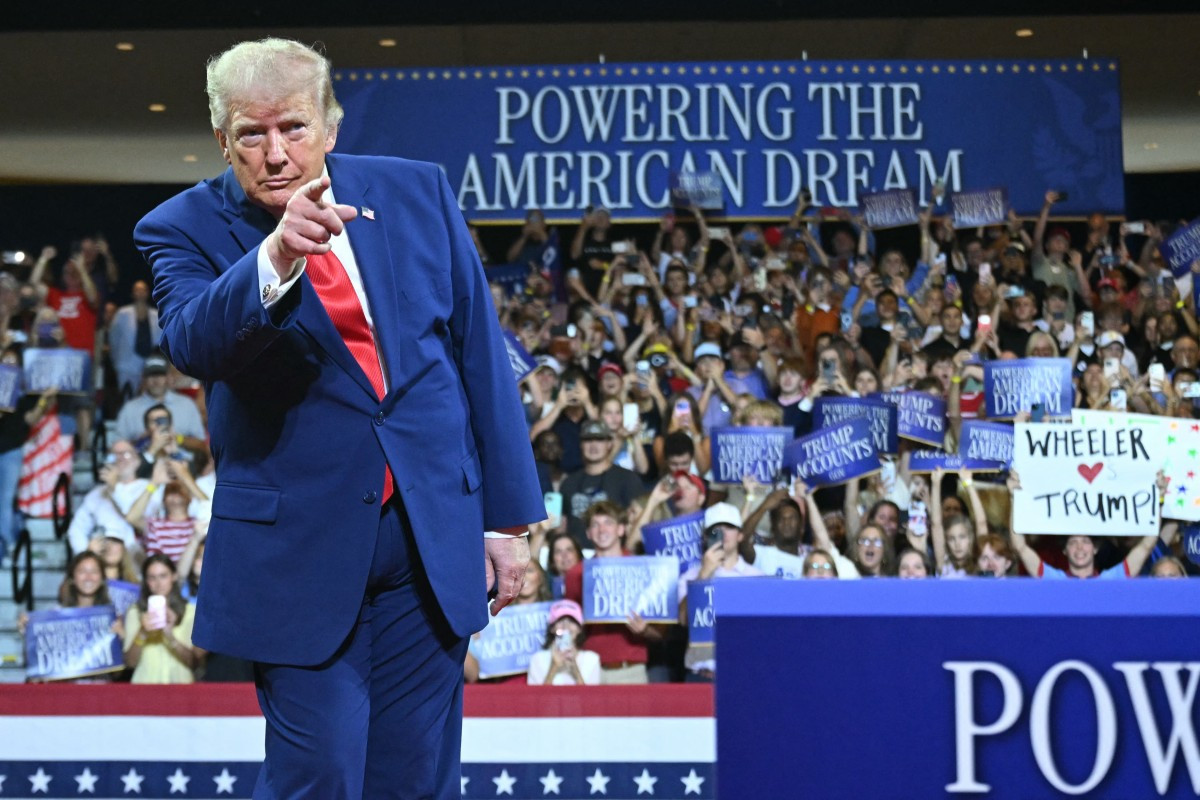 United States President Donald Trump gestures on July 22, 2026, as he arrives onstage to speak at Wheeler High School in Marietta, Georgia. (AFP/Saul Loeb)
H
ere he goes again. United States President Donald Trump is increasing and decreasing tariffs willy-nilly, violating international agreements that he himself signed and almost surely violating federal law. The only difference this time is that he has a new pretext for abusing tariffs: stopping forced labor.
Of course, the administration is right that too little is being done about forced labor. But its stated concern is a ruse. With the new tariffs closely tracking the ones that Trump imposed on the basis of trade balances, are we supposed to believe that bilateral trade deficits just so happen to be highly correlated with the use of forced labor?
After the Supreme Court struck down Trump’s previous tariffs, the administration imposed 150-day temporary tariffs, already deemed illegal by the courts but still under appeal even as they expired in late July, and now these new ones following an “investigation” into other countries’ supposed failure to police labor abuses.
Not surprisingly, China, long a suspected source of goods produced with forced labor, has largely been given a pass. With its control of rare earths and critical minerals, China can slap Trump down whenever it wants. When another country has the means and the willingness to fight back, Trump always chickens out (TACO). This time, he didn’t even bother picking a fight with the Chinese.
Moreover, if Trump was really concerned about forced labor, he would address the problem at home. After all, America has long been a center of forced labor, owing to the loophole in the 13th Amendment to the US Constitution: “Neither slavery nor involuntary servitude, except as a punishment for crime whereof the party shall have been duly convicted, shall exist within the United States, or any place subject to their jurisdiction.”
This language was infamously used in the Jim Crow South to defend the use of chain gangs, and it continues to be abused throughout much of the US, with less than one-quarter of its states forbidding forced labor. The US has just 5 percent of the world’s population but accounts for one-quarter of the world’s prisoners.

According to one of the most thorough studies of forced labor in America (by Michael Poyker), nearly 1.4 million US inmates were employed in 2005, with roughly 600,000 working specifically in manufacturing: 4.2 percent of the total manufacturing workforce at the time. (Those seeking a better understanding of America’s system of captive labor should also watch Ava DuVernay’s 2016 documentary, 13th.)