The Jakarta Post
Please Update your browser
Your browser is out of date, and may not be compatible with our website. A list of the most popular web browsers can be found below.
Just click on the icons to get to the download page.


Popular Reads
Top Results
No results found. Please check your search term and try again
Can't find what you're looking for?
View all search results
Popular Reads
Top Results
No results found. Please check your search term and try again
Can't find what you're looking for?
View all search resultsSoutheast Asia must make healthy diets affordable
Change text size
Gift Premium Articles
to Anyone
Share the best of The Jakarta Post with friends, family, or colleagues. As a subscriber, you can gift 3 to 5 articles each month that anyone can read—no subscription needed!
 Set as preferred source
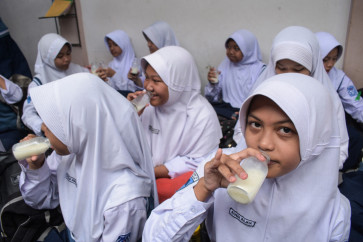
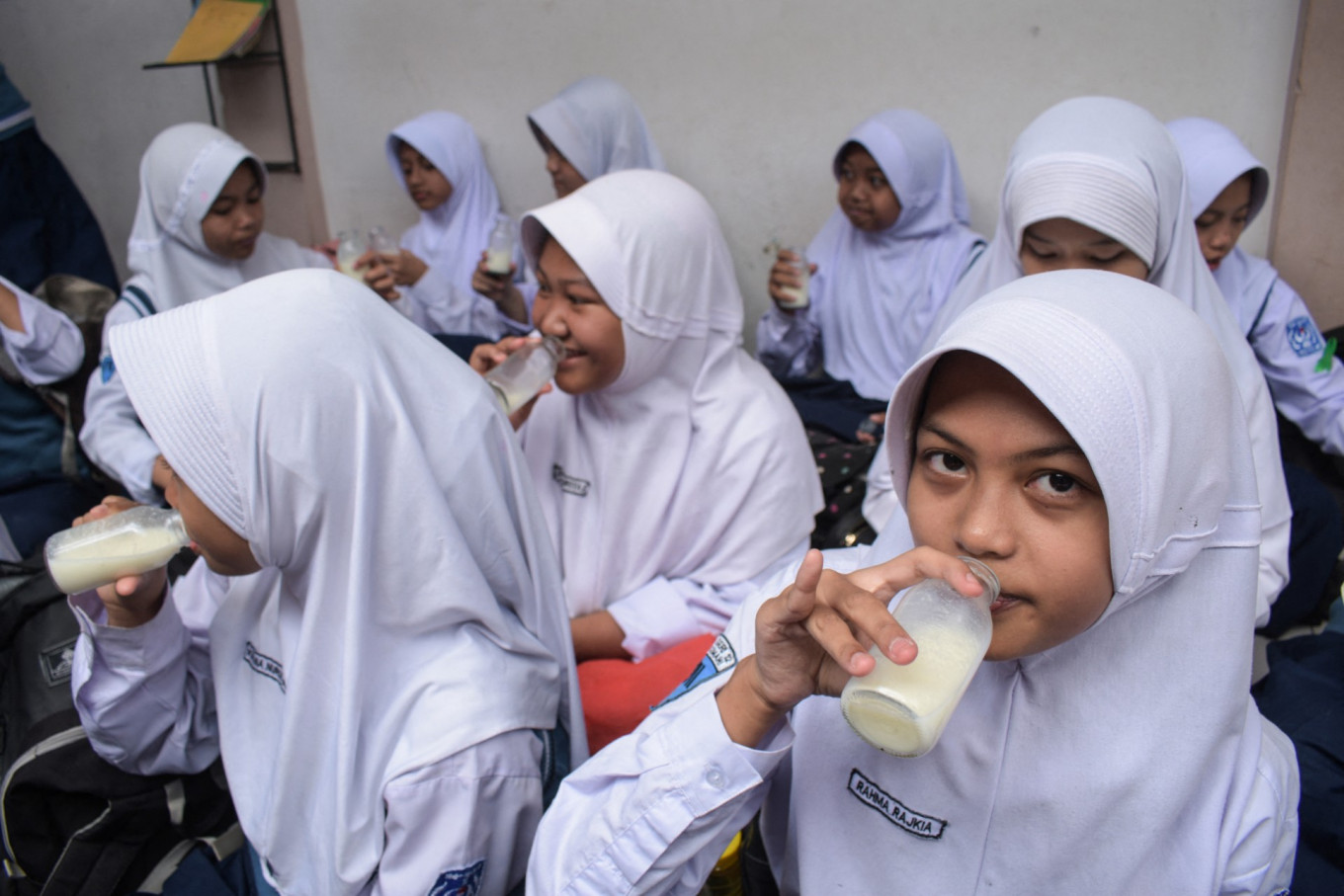 Students drink milk as they eat lunch on Jan. 6, 2025, the first day of the free nutritious meal program at SMPN 12 Cimahi state junior high school in Cimahi, West Java. (AFP/Timur Matahari)
H
unger is falling across Southeast Asia. The region’s next challenge is more demanding: ensuring that everyone can afford a healthy diet, not merely enough calories to survive.
Southeast Asia’s hunger rate fell to 5.1 percent in 2025, its lowest level on record and down from the pandemic peak of 5.9 percent in 2020. About 35 million people faced hunger, roughly half the 70 million recorded in 2010. Over the same period, Southeast Asia’s share of the world’s hungry fell from about 11 percent to about 5 percent.
Moderate or severe food insecurity, which includes people forced to skip meals or reduce how much they eat, also declined. It fell to 12.8 percent in 2025 from a pandemic peak of 15.3 percent, meaning that 14 million fewer people faced food insecurity than in 2020.
This progress did not happen by accident. It reflects sustained investment in agricultural productivity, irrigation, logistics, food distribution and nutrition. Indonesia allocated about US$8.8 billion to food security in 2025 and increased the allocation to Rp 210.4 trillion, nearly $12 billion, in 2026. Vietnam paired its emergence as a major rice exporter with the achievement of national food security, showing that participation in international markets and domestic food access can reinforce one another.
The decline reaches across almost every country in the subregion. Since the mid 2000s, Cambodia has reduced its hunger rate from 15.5 to 4.7 percent. Indonesia brought its rate down from 18.4 to 6.3 percent; the Philippines from 17.3 to 3.4 percent; and Vietnam from 15.2 to 6.1 percent. Malaysia has reduced hunger below 2.5 percent, the threshold below which the Food and Agriculture Organization of the United Nations reports the estimate simply as “less than 2.5 percent.”
These figures, from the 2026 edition of The State of Food Security and Nutrition in the World, show that hunger falls when agricultural, economic and social policies reinforce one another. Irrigation raises and stabilizes production. Logistics connect farmers to markets. Trade creates opportunities for producers. Nutrition and social programs protect vulnerable households.

There is no single Southeast Asian model that every country can copy. But there is a consistent lesson: deliberate investment in food systems can bend the hunger curve.