The Jakarta Post
Please Update your browser
Your browser is out of date, and may not be compatible with our website. A list of the most popular web browsers can be found below.
Just click on the icons to get to the download page.


Popular Reads
Top Results
No results found. Please check your search term and try again
Can't find what you're looking for?
View all search results
Popular Reads
Top Results
No results found. Please check your search term and try again
Can't find what you're looking for?
View all search resultsCan Indonesia's rights law tackle cross-border abuses?
Human rights abuses are no longer confined by national borders, yet the institutions tasked with addressing them remain largely bound by them.
Change text size
Gift Premium Articles
to Anyone
Share the best of The Jakarta Post with friends, family, or colleagues. As a subscriber, you can gift 3 to 5 articles each month that anyone can read—no subscription needed!
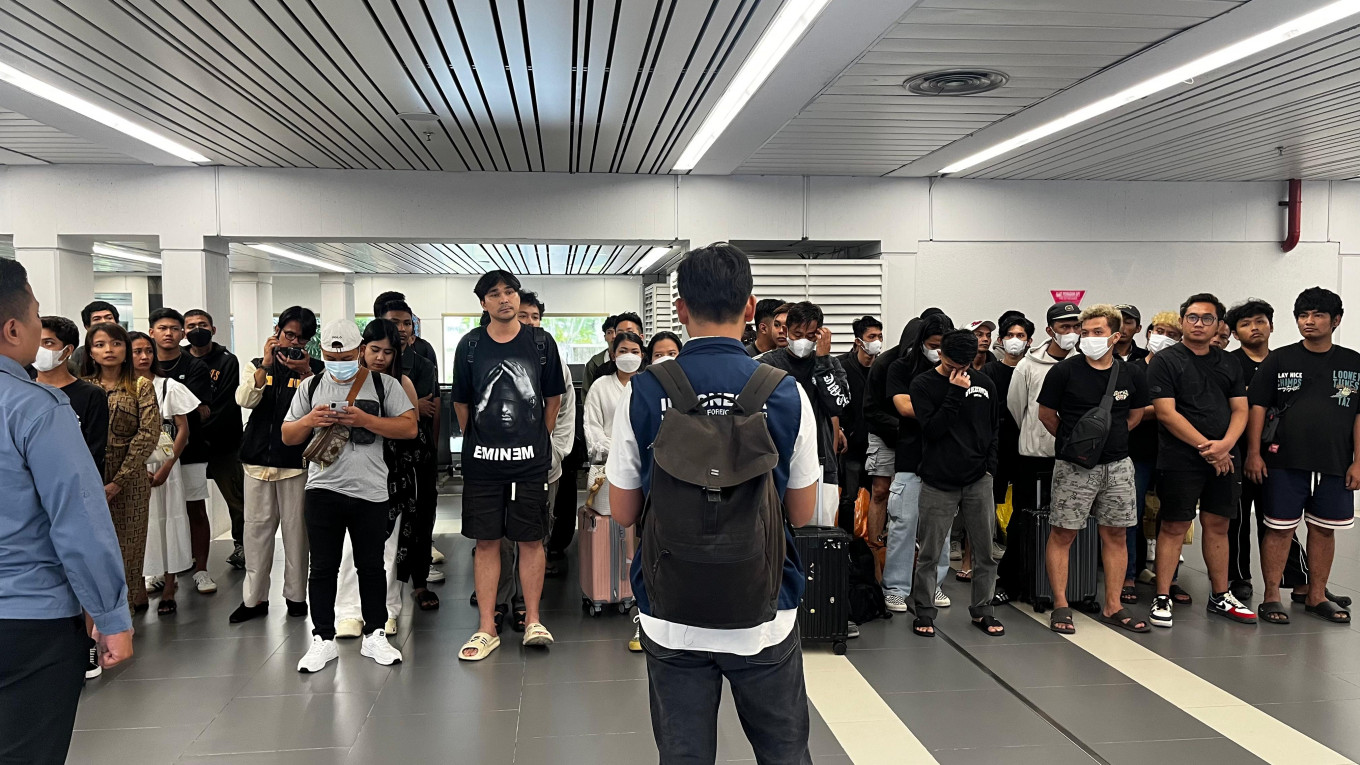 Indonesian nationals line up during questioning at Soekarno-Hatta International Airport in Tangerang, Banten on Feb. 22, 2026, upon returning from Cambodia on commercial airliners. The largest group of returning citizens entangled in online scam operations in Cambodia underwent questioning by a joint team that included law enforcement officers. (Courtesy of Indonesian Embassy in Phnom Penh/-)
I
n 2015, the remote island of Benjina in Maluku became synonymous with one of Southeast Asia’s worst modern slavery scandals. Hundreds of fishermen from Myanmar, Cambodia and Laos were trafficked into Indonesia’s fishing industry, forced to work under brutal conditions and often denied wages for years. Many endured physical abuse, confinement and deprivation, while the seafood they harvested flowed into global supply chains.
Beyond the human tragedy, Benjina exposed a deeper challenge for human rights protection in an increasingly interconnected world. Human rights abuses are no longer confined by national borders, yet the institutions tasked with addressing them remain largely bound by them.
As Indonesia revises its Human Rights Law, an important question arises: is the country’s legal framework equipped to respond to transnational human rights abuses?
Benjina was never merely an Indonesian case. The victims came from across Southeast Asia; recruitment networks operated across borders and profits ultimately flowed through international markets. Accountability therefore required cooperation among multiple countries, institutions and legal systems.
In many ways, Benjina foreshadowed a broader trend. Today, human trafficking, migrant workers exploitation, business-related abuses, environmental harms and refugee crises increasingly span multiple jurisdictions. Violations cross borders with ease, but the institutions established to address them remain overwhelmingly territorial in design.
Indonesia’s National Human Rights Commission (Komnas HAM) demonstrated considerable leadership during the Benjina crisis. It deployed monitoring teams, interviewed victims, documented abuses and identified multiple forms of human rights violations, including slavery, trafficking, wage theft and physical violence. Its findings helped validate victims’ testimonies and strengthened calls for accountability.

Komnas HAM was able to act decisively because the abuses occurred on Indonesian soil. The challenge is different when Indonesians become victims abroad, particularly in countries with weak human rights protections.