The Jakarta Post
Please Update your browser
Your browser is out of date, and may not be compatible with our website. A list of the most popular web browsers can be found below.
Just click on the icons to get to the download page.


Popular Reads
Top Results
No results found. Please check your search term and try again
Can't find what you're looking for?
View all search results
Popular Reads
Top Results
No results found. Please check your search term and try again
Can't find what you're looking for?
View all search resultsNational unity: A lesson from Spain’s World Cup triumph
Spain’s World Cup triumph reveals a crucial lesson for a divided Malaysia: true national unity isn't built by erasing our differences, but by playing for the same goal.
Change text size
Gift Premium Articles
to Anyone
Share the best of The Jakarta Post with friends, family, or colleagues. As a subscriber, you can gift 3 to 5 articles each month that anyone can read—no subscription needed!
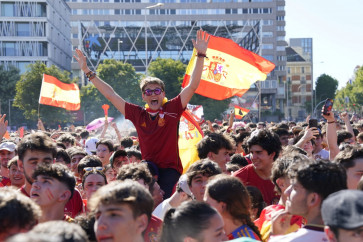
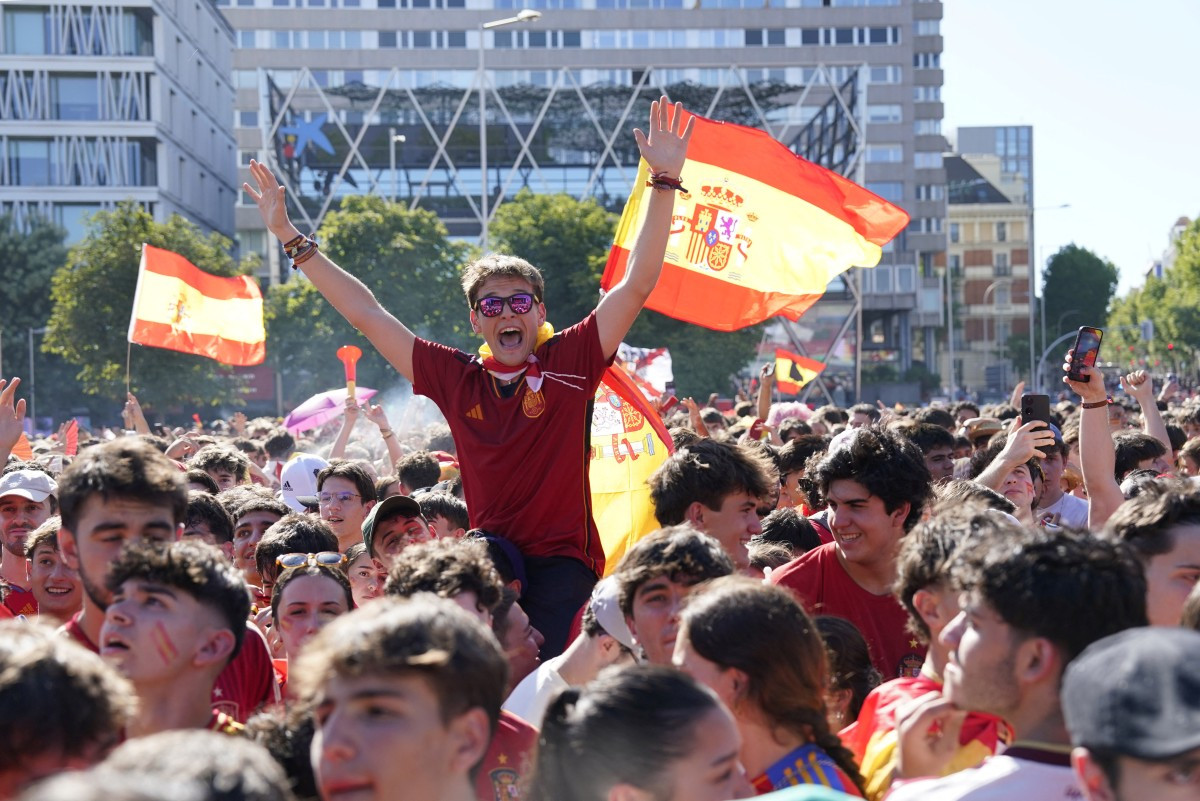 Spain's supporters cheer prior the 2026 World Cup final match between Spain and Argentina on July 19 at Colon square's fan zone in Madrid. (AFP/Paul Hanna)
S
pain’s World Cup victory on Sunday stood as a stark contrast to its historic first triumph in South Africa 16 years ago. The 2010 squad was built upon the extraordinary Barcelona generation of Xavi Hernández, Andrés Iniesta, Sergio Busquets, Carles Puyol, Gerard Piqué and Pedro, reinforced by Real Madrid stalwarts like Iker Casillas, Sergio Ramos and Xabi Alonso. That victory represented the pinnacle of tiki-taka: patient passing, territorial dominance and the gradual suffocation of opponents.
Yet, Spain’s 2010 campaign was far from flawless. It opened with a shocking 1–0 defeat to Switzerland and saw the team concede against Chile during the group stage, before stringing together four successive 1–0 knockout victories—capped by Iniesta’s extra-time strike against the Netherlands—to secure the trophy.
The path to glory this year followed a far more demanding route. Navigating an expanded 48-team tournament featuring an extra knockout round, Spain faced a longer, more exhausting gauntlet.
Yet, across the entire competition, the champions conceded only once—a solitary quarterfinal goal by Belgium in a 2–1 victory—earning Spain’s goalkeeper, Unai Simon, the Golden Glove award. Austria, Portugal, France and Argentina were all held scoreless in the knockout rounds, culminating in a 1–0 extra-time final against Argentina with Ferran Torres smashing the winner.
That defensive resilience distinguished the squad from its illustrious predecessors. Where the 2010 team conceded twice and had to recover from an early defeat, the modern champions surrendered a single goal across seven matches.
Beyond tactical evolution, the deeper contrast was political and generational. The 2010 triumph occurred before the Catalan independence crisis reached its most confrontational phase. At the time, Barcelona’s footballing philosophy double-hatted as Spain’s national identity. The national team drew heavily upon players who had developed together at La Masia, making the victory feel like an international extension of club dominance.

By contrast, Sunday’s victory arrived after years of constitutional tension, separatist mobilization, disputed referendums, and deep friction between Madrid and Catalonia. Spain had borne the political trauma of the 2017 Catalan referendum, followed by trials, imprisonments, exilesand bitter national debate.