The Jakarta Post
Please Update your browser
Your browser is out of date, and may not be compatible with our website. A list of the most popular web browsers can be found below.
Just click on the icons to get to the download page.


Popular Reads
Top Results
No results found. Please check your search term and try again
Can't find what you're looking for?
View all search results
Popular Reads
Top Results
No results found. Please check your search term and try again
Can't find what you're looking for?
View all search resultsSo you want to build your own metals smelter?
The number of barriers to establishing a successful processing business is "vast", according to a joint analysis by consultancy CRU and the World Bank.
Change text size
Gift Premium Articles
to Anyone
Share the best of The Jakarta Post with friends, family, or colleagues. As a subscriber, you can gift 3 to 5 articles each month that anyone can read—no subscription needed!
 Set as preferred source
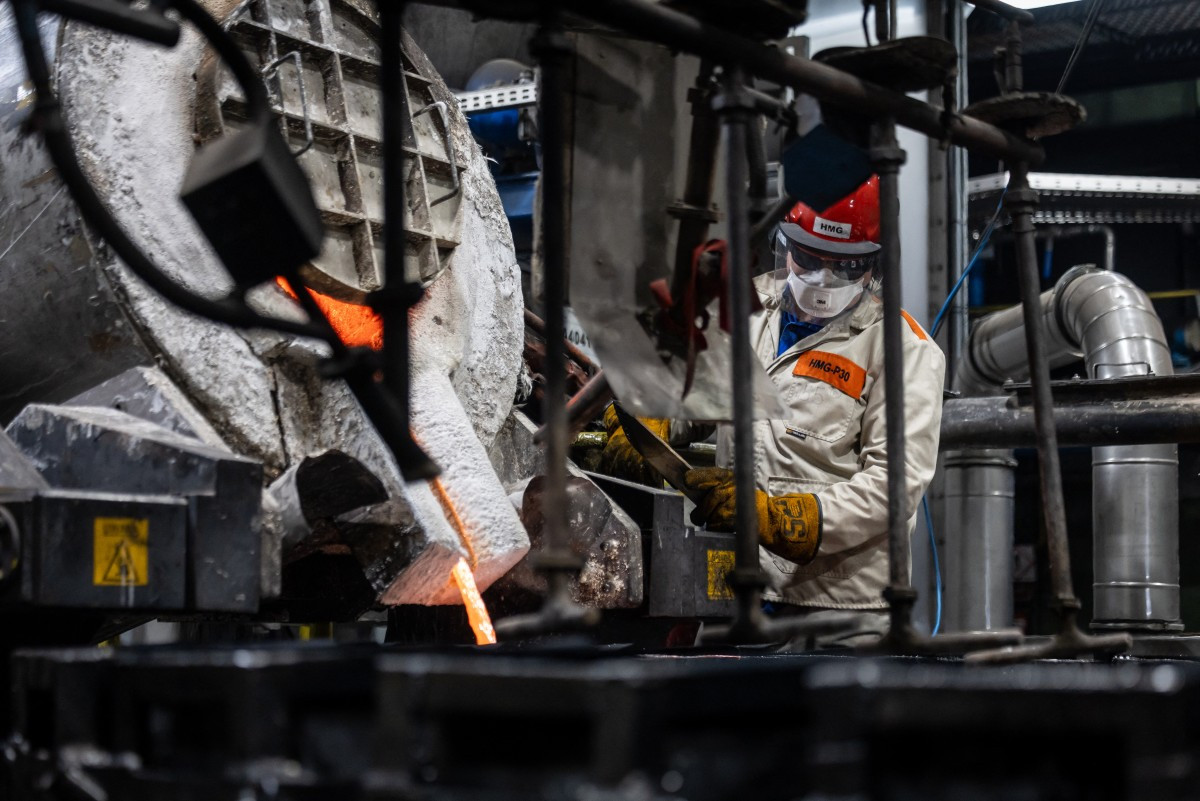 Workers smelt silver ingots known as “the pig sows” at the Precious Metals Division of the Glogow smelter in southwestern Poland, owned by KGHM, the metallurgical giant in the country, on March 24, 2026. (AFP/Wojtek Radwanski)
T
he global race to secure critical minerals has opened up a world of opportunity for developing countries with the good fortune to have the right deposits of the right metals.
The trick is to capture as much value as possible from the metallic riches in the ground.
Processing is an obvious answer. Building smelters to transform ore into metal not only captures more value but offers a pathway to broader industrial and economic development.
For Western policymakers, it's also a way of loosening China's grip on midstream capacity across much of the critical metals spectrum.
However, the number of barriers to establishing a successful processing business is "vast", according to a joint analysis by consultancy CRU and the World Bank released last month.
Power supply, infrastructure, logistics, technical capacity and policy must all be right to make what is a low-margin business profitable over the course of low-price cycles.

It also really helps, of course, if you have the minerals in the first place.
Integrating processing with domestic mining helps build price resilience.
Right now, for instance, it's tough being in the copper or zinc smelting business without a locked-in source of feed. Spot treatment terms are negative, leaving non-integrated smelters dependent on by-product revenue streams for survival.
You then need to keep that ore at home.
Indonesia has led the way in using raw material export bans to force miners to build processing plants, first with nickel and now with aluminum.
Others are doing the same.
The Democratic Republic of Congo has imposed export controls on cobalt, Zimbabwe on lithium and Guinea on bauxite.
An interesting exception is Angola, which has no bauxite but is building an aluminum smelter with first-stage capacity of 120,000 metric tonnes per year at the port of Barra do Dande.
What the Angolan project does have is a deep-sea port suitable for handling raw materials.
It also enjoys a strategic location in a free-trade zone, benefiting from shared infrastructure, favorable business rates and access to reliable power.
Competitively priced power is critical for any aluminum smelter, which can consume as much energy in a year as a city the size of Boston.
Angolan power costs are comparable with global averages, according to the report. Those in Mozambique aren't, which is why South32 has put its Mozal plant on care and maintenance.
For both copper and zinc smelters, the really critical infrastructure is the capacity to store, transport and place the sulfuric acid generated by the smelting process.
The most robust copper smelter economics arise from co-location with large acid consumers such as fertilizer plants or, in the case of Zambia's copper smelters, regional mines using acid as a leaching reagent.
Another advantage enjoyed by Angola's aluminum smelter project is cheap construction.
Capital expenditure (capex) is estimated around US$2,084 per tonne of aluminum, higher than domestic Chinese smelters but "remarkably" low relative to the rest of the world.
This is because the project is using production equipment transferred from idled smelters in China.
Indonesia's massive expansion of aluminum smelting capacity is also being led by Chinese entities and coming in at similarly low capex of under $3,000 per tonne.
Capex for any sort of smelter outside China is high and rising, thanks to soaring equipment and construction costs.
With fewer smelters built in the West in the last decade or so, the number of equipment suppliers has dwindled and prices have risen accordingly.
"Chinese technology and engineering costs can provide more affordable solutions through modular equipment designed to lower specifications," the authors of the report note.
There is no universal or blanket case for building processing capacity.
Success or failure hinges on a complex range of economic, technical and institutional factors that vary by country and metal.
Zambia has successfully built copper processing capacity but Peru's copper mining sector and associated infrastructure have been designed to supply raw materials to overseas smelters via ocean ports.
Angola's aluminum project is more feasible than Ghana's hopes of reviving its existing Volta smelter, a project that faces high modernization costs, elevated power pricing and a lack of vertical integration with an alumina refinery.
Zimbabwe has more chance of lithium processing than Nigeria, which has large reserves but relies on artisanal and small-scale mining.
Turkey's Siirt zinc smelter project benefits from strong demand from the country's thriving steel industry and a design that allows it to generate valuable by-products such as lead, cadmium, nickel and cobalt.
Failure or success is not homogenous across commodities and extremely sensitive to site-specific economics.
"There is value to capture, but developing countries need to be very careful about which metals, which locations and which business models they pursue," is the report's big takeaway.
If you're still interested in building your own smelter, the World Bank would love to hear from you. It may even be able to help.
---
The writer is a columnist for Reuters. The views expressed are personal.