The Jakarta Post
Please Update your browser
Your browser is out of date, and may not be compatible with our website. A list of the most popular web browsers can be found below.
Just click on the icons to get to the download page.


Popular Reads
Top Results
No results found. Please check your search term and try again
Can't find what you're looking for?
View all search results
Popular Reads
Top Results
No results found. Please check your search term and try again
Can't find what you're looking for?
View all search resultsRenewed Gulf hostilities and global uncertainty
Renewed US-Iran hostilities and Israel's protracted military campaigns reflect rising risks of a wider Middle East conflict, threatening to trigger severe energy and food crises worldwide.
Change text size
Gift Premium Articles
to Anyone
Share the best of The Jakarta Post with friends, family, or colleagues. As a subscriber, you can gift 3 to 5 articles each month that anyone can read—no subscription needed!
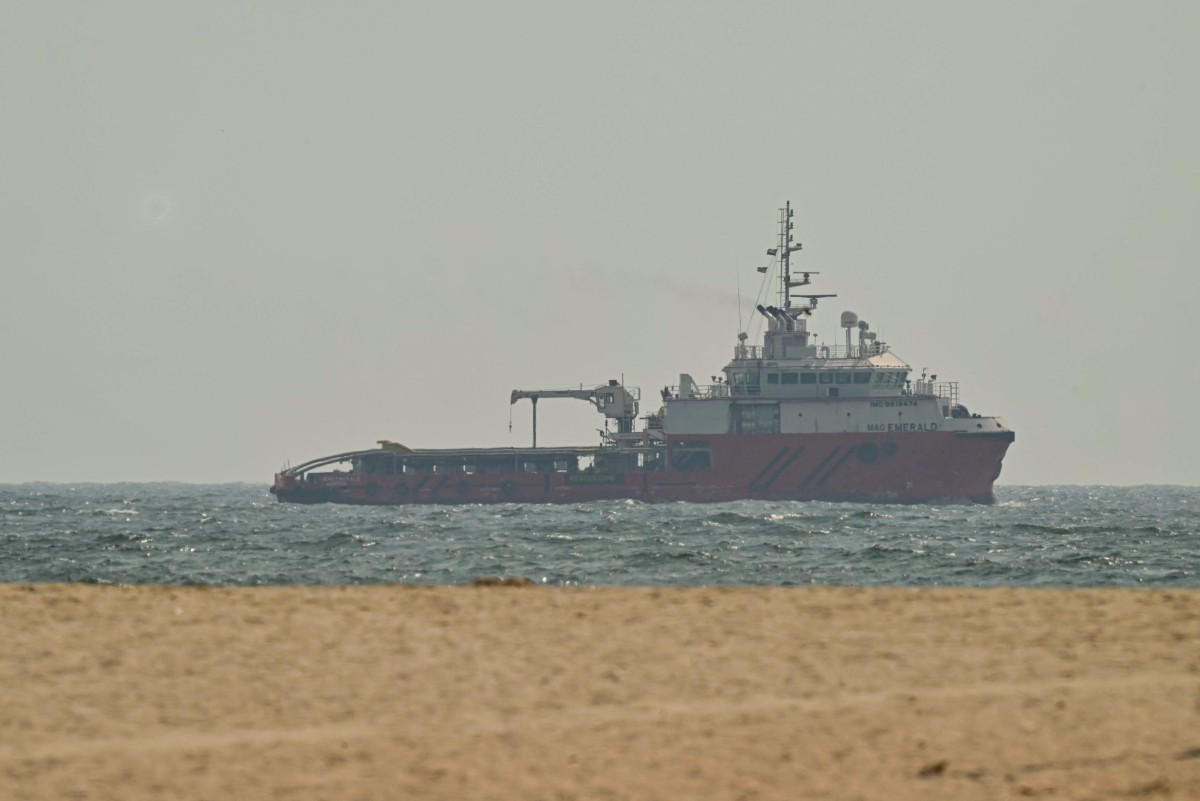 A ship sails off the coast of Ajman on Friday. Traffic through the Strait of Hormuz has fallen sharply since Wednesday, especially through the United Nations-backed Omani route, analysts said, after vessels were attacked earlier this week and as the United States and Iran traded renewed strikes. (AFP/-)
T
he United States and Iran exchanged a series of overnight attacks, disrupting previous understandings aimed at preventing outright regional warfare. The deadly exchanges included targeted US strikes against Iranian military infrastructure, subsequent Iranian retaliation against Western interests and regional partners and continuous Israeli military operations.
This follows a familiar pattern in Western-led regional interventions. While temporary ceasefires may interrupt active combat, the absence of an accompanying political framework ensures a failure to resolve the structural drivers of the conflict.
The current confrontation has rapidly expanded beyond a bilateral US-Iran dispute. It now intersects with a complex, interconnected web of regional crises: the devastation in Gaza, accelerating displacement and settlement expansion in the West Bank, intense conflict in Lebanon and persistent volatility in Syria.
Simultaneously, neighboring states find themselves caught in the crosscurrents, with Jordan attempting a delicate diplomatic balance, Iraq striving to protect its sovereignty amid militia activity and the Gulf monarchies facing deep disruptions to their long-term security architectures. Rather than isolated events, these theaters form a single strategic landscape where developments in one arena immediately reverberate across all others.
The Netanyahu government has publicly reaffirmed its commitment to maintaining military pressure across the region. Israeli strategic planners argue that previous operations significantly degraded Iran's forward military capabilities, emphasizing that continued kinetic pressure is necessary to prevent their reconstruction.
This policy operates on what can be termed an "obliteration doctrine" - a strategic framework that combines scorched-earth tactics, collective punishment and civilian displacement. It treats Gaza, southern Lebanon and Syria not as discrete tactical challenges, but as deeply interconnected fronts within a singular security environment driven by total military superiority.

Over the long term, this strategy faces severe structural limitations. While intense military operations may suppress immediate operational threats, they simultaneously amplify the probability of asymmetric regional retaliation, harden adversarial incentives and close off viable paths for diplomatic resolution. Localized tactical victories do not automatically translate into durable regional stability.