The Jakarta Post
Please Update your browser
Your browser is out of date, and may not be compatible with our website. A list of the most popular web browsers can be found below.
Just click on the icons to get to the download page.


Popular Reads
Top Results
No results found. Please check your search term and try again
Can't find what you're looking for?
View all search results
Popular Reads
Top Results
No results found. Please check your search term and try again
Can't find what you're looking for?
View all search resultsBeyond Tax Day reflection: Fiscal sovereignty matters
True independence requires more than a flag and a border; it demands the fiscal sovereignty to finance the nation's future through public trust and institutional capacity.
Change text size
Gift Premium Articles
to Anyone
Share the best of The Jakarta Post with friends, family, or colleagues. As a subscriber, you can gift 3 to 5 articles each month that anyone can read—no subscription needed!
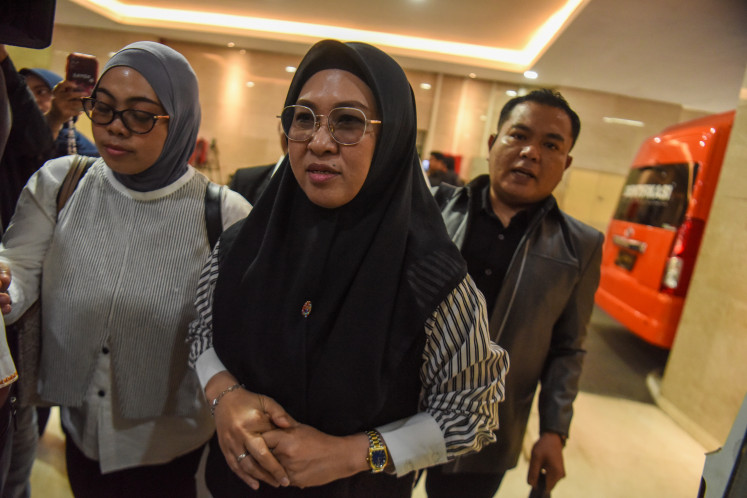
 An officer assists a taxpayer filing their annual tax return via the Directorate General of Taxes' (DGT) new Coretax system at the Meulaboh Tax Office in West Aceh, Aceh, on March 27, 2026. (Antara/Syifa Yulinnas)
E
very nation has defining moments that shape its future. For Indonesia, Aug. 17, 1945, marks the birth of political independence. Less widely known, however, is another milestone that arrived only weeks earlier. On July 14, 1945, during the final stages of drafting Indonesia's Constitution, the Constitution Drafting Committee, BPUPKI, presented a second draft that formally stated: “All taxes for the needs of the state shall be based on law.”
This constitutional principle built upon an earlier proposal by BPUPKI chairman KRT Radjiman Wedyodiningrat, whose name today graces the headquarters of the Directorate General of Taxes (DGT), arguing that tax collection must be governed by law. The provision became the first constitutional recognition of taxation as a bedrock of the future Republic, even before independence was officially proclaimed.
This historical moment carries a powerful message. Indonesia's founding fathers understood that political sovereignty would remain incomplete without fiscal sovereignty. A genuinely sovereign nation requires the ability to finance its own development through its own resources, collected under the rule of law.
This is why, since 2017, Indonesia has commemorated July 14 as Tax Day. It is not merely a celebration of the DGT or the Finance Ministry; it is a reminder that taxation has been embedded in Indonesia's constitutional vision from the very beginning. More than eight decades later, that vision remains intensely relevant.
Every day, Indonesians benefit from public services financed through taxes. Roads connect cities and villages, schools educate future generations, hospitals provide essential healthcare, and social protection programs support vulnerable communities. Public infrastructure and vital government services depend fundamentally on tax revenue. Behind these services are millions of taxpayers whose contributions quietly sustain the nation's development.
Today, however, Indonesia faces an expanding fiscal challenge. Development needs are growing, infrastructure requires sustained investment, and public services demand greater resources. Concurrently, the government is pursuing ambitious priorities: the free nutritious meals program, the strengthening of rural economies through Red and White Cooperatives, enhanced food security, and broader educational access. These are crucial investments in Indonesia’s future. The pressing question is not whether these priorities are worthwhile, but how they can be sustainably financed.

The immediate response is often straightforward: increase tax revenue. But the reality is far more complex.