The Jakarta Post
Please Update your browser
Your browser is out of date, and may not be compatible with our website. A list of the most popular web browsers can be found below.
Just click on the icons to get to the download page.


Popular Reads
Top Results
No results found. Please check your search term and try again
Can't find what you're looking for?
View all search results
Popular Reads
Top Results
No results found. Please check your search term and try again
Can't find what you're looking for?
View all search resultsAnalysis: The corruption risk at the heart of Prabowo's free meals program
Change text size
Gift Premium Articles
to Anyone
Share the best of The Jakarta Post with friends, family, or colleagues. As a subscriber, you can gift 3 to 5 articles each month that anyone can read—no subscription needed!
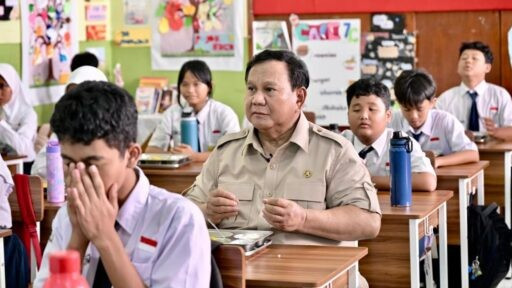 President Prabowo Subianto inspects the implementation of the free nutritious meals program on June 2, 2026, at State Junior High School (SMPN) 111 Jakarta. (Courtesy of/The Palace's Press Bureau (BPMI))
P
resident Prabowo Subianto's free nutritious meal program was conceived as a transformative social policy to improve child nutrition, strengthen human capital and demonstrate the state's ability to deliver tangible benefits to millions of Indonesians. It is also the policy most closely associated with his presidency. More than any other initiative, its success or failure will shape public perceptions of his administration.
Yet the growing wave of corruption scandals engulfing the National Nutrition Agency (BGN), the institution responsible for implementing the program, suggests the problem may run deeper than individual misconduct. Prosecutors have accused former senior BGN officials of using foundations connected to meal-production kitchens to obtain unlawful benefits, and of manipulating procurement through budget markups and other irregularities.
Recent arrests and investigations have transformed what initially appeared to be isolated allegations into a broader governance crisis. The most important question is no longer whether corruption occurred, but whether the program's design itself makes corruption unusually difficult to prevent.
The allegations against former BGN leaders illustrate this vulnerability precisely. Prosecutors allege that foundations operating nutrition fulfillment service units (SPPG) - the kitchens producing meals under the program - were used to generate illicit profits, while procurement was allegedly manipulated through inflated contracts and interference in purchasing decisions.
The significance lies not only in the money involved but in the fact that the alleged misconduct spans multiple levels of the program's operational structure. When irregularities appear simultaneously in kitchen management, foundation oversight, procurement planning and contract execution, it becomes hard to argue the problem is merely a few bad actors.
The deeper concern is that the program's governance architecture appears to blur the distinction between operators and overseers. The government has repeatedly emphasized that the program is subject to strict monitoring by major state institutions, including the Attorney General's Office (AGO), the National Police and the Indonesian Armed Forces (TNI). Yet institutions linked to these same organizations have also become involved in establishing, managing or supporting the kitchens that form the program's backbone.

The police, for example, have publicly participated in expanding free meals program kitchens, with law-enforcement and security institutions playing prominent roles in supporting implementation - even boasting about the quality of the kitchens they run. From a governance perspective, this creates a fundamental conflict of interest.