The Jakarta Post
Please Update your browser
Your browser is out of date, and may not be compatible with our website. A list of the most popular web browsers can be found below.
Just click on the icons to get to the download page.


Popular Reads
Top Results
No results found. Please check your search term and try again
Can't find what you're looking for?
View all search results
Popular Reads
Top Results
No results found. Please check your search term and try again
Can't find what you're looking for?
View all search resultsRisky, reactive diplomacy
A pattern of last-minute reversals raises a troubling question about Indonesia’s foreign policy: whether it is guided by a steady, strategic vision or merely reacting to public pressure.
Change text size
Gift Premium Articles
to Anyone
Share the best of The Jakarta Post with friends, family, or colleagues. As a subscriber, you can gift 3 to 5 articles each month that anyone can read—no subscription needed!
 Set as preferred source
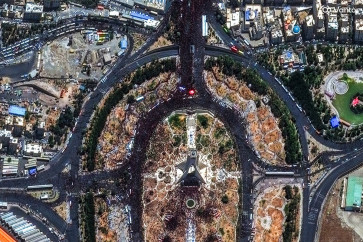
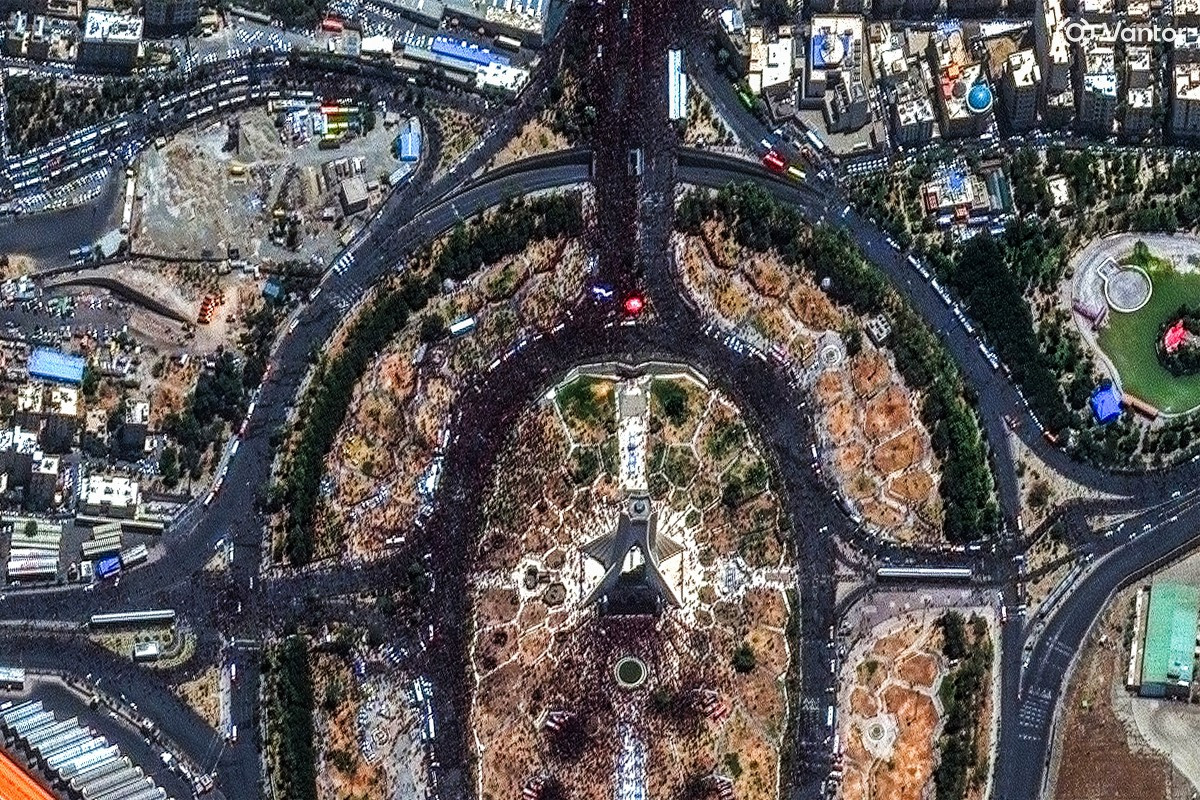 A large crowd of mourners congregate around Azadi Tower in Tehran’s Azadi Square on July 6, 2026, during the funeral procession for slain Iranian supreme leader Ali Khamenei. (AFP/Vantor) ( AFP/Satellite image ©2026 Vantor)
P
resident Prabowo Subianto’s last-minute decision to dispatch Foreign Minister Sugiono and People’s Consultative Assembly (MPR) Speaker Ahmad Muzani to attend the funeral of Iranian supreme leader Ali Khamenei has raised serious questions about the coherence and credibility of Indonesia’s foreign policy.
While the course correction deserves support, that it occurred only after intense public criticism suggests an administration reacting to immediate domestic pressure rather than operating from a settled, strategic calculus. At stake is Indonesia's long-standing reputation as a predictable, principled actor on the global stage.
The original plan was to send the Indonesian ambassador to Iran, with Sugiono explaining that the government was too preoccupied with domestic affairs to send a high-level delegation, contrary to Tehran's explicit request.
However, after the ambassador was reportedly denied access to the state funeral and as criticism mounted at home, President Prabowo abruptly upgraded the representation level by dispatching Sugiono and Muzani, who are both top executives of Prabowo’s Gerindra Party.
That reversal has fueled debate over whether the administration’s foreign policy is becoming increasingly reactive to public pressure rather than guided by a consistent strategy. Since Prabowo took office in October 2024, concern has been growing that Indonesia’s foreign policy is often driven by impulse rather than deliberate planning.
Former deputy foreign minister Dino Patti Djalal has emerged as a prominent critic of the government’s conduct abroad, publicly questioning the Prabowo administration's decisions at least three times since late May.

The latest controversy follows a string of criticisms from Dino, who had questioned Indonesia’s original decision not to send a ministerial-level representative to Tehran. This move, he argued, was hard to square with the country’s long-standing bebas aktif (free and active) foreign policy doctrine, especially given that many other nations considered the occasion significant enough to warrant representation by ministers or heads of government.