The Jakarta Post
Please Update your browser
Your browser is out of date, and may not be compatible with our website. A list of the most popular web browsers can be found below.
Just click on the icons to get to the download page.


Popular Reads
Top Results
No results found. Please check your search term and try again
Can't find what you're looking for?
View all search results
Popular Reads
Top Results
No results found. Please check your search term and try again
Can't find what you're looking for?
View all search resultsSymbolic parade, state violence and contraction of civic space
Behind the grand spectacle of the 80th National Police anniversary, the force faces growing scrutiny over a stark, documented rise in state-sanctioned violence and civic repression. As new legislative frameworks expand police powers while dismantling oversight, the line between public security and political instrumentalization is blurring dangerously.
Change text size
Gift Premium Articles
to Anyone
Share the best of The Jakarta Post with friends, family, or colleagues. As a subscriber, you can gift 3 to 5 articles each month that anyone can read—no subscription needed!
 Set as preferred source
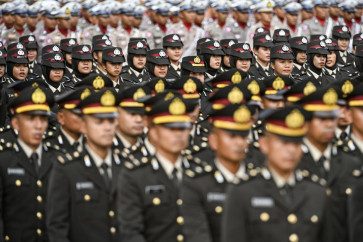
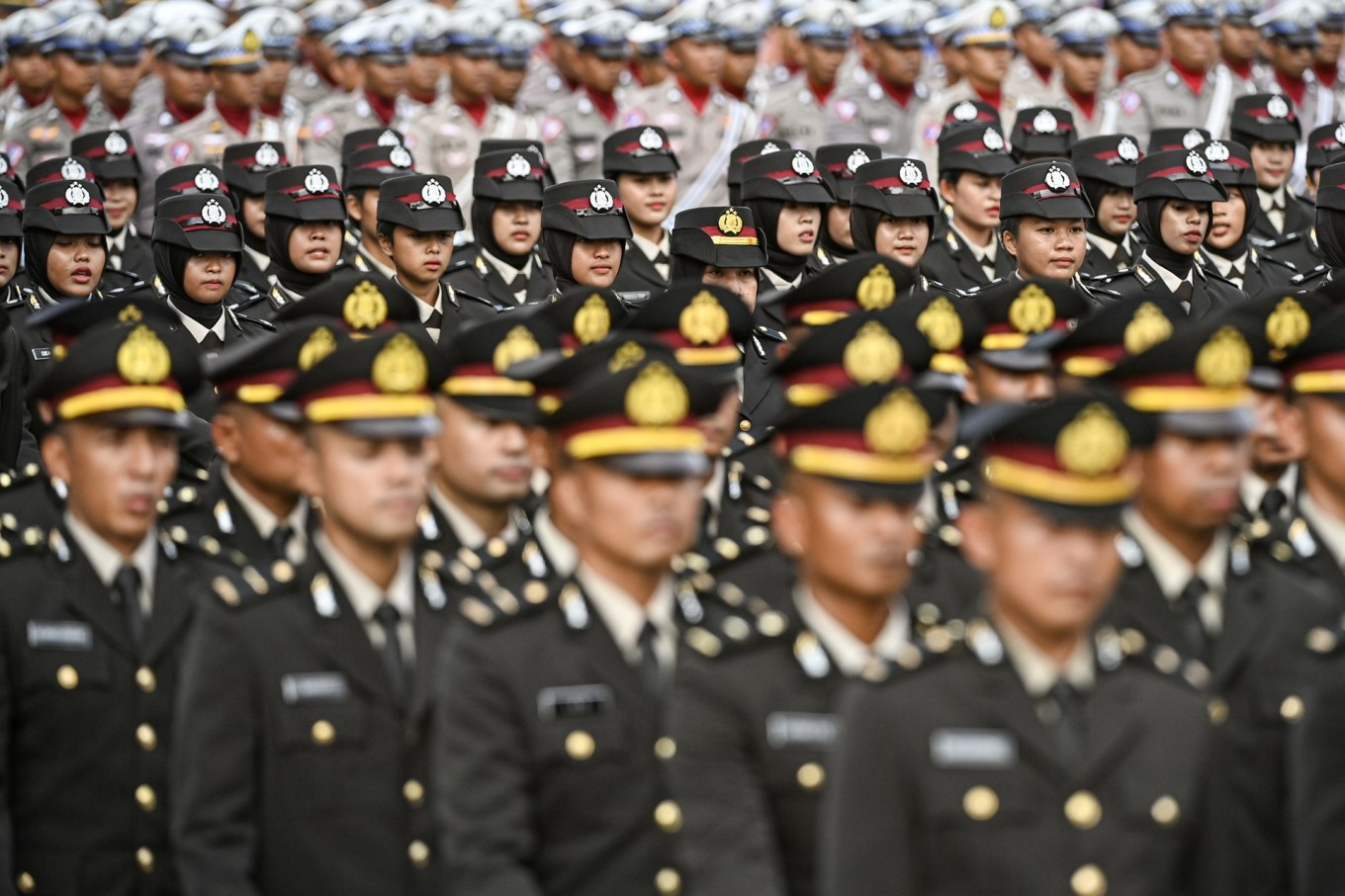 Police officers in full dress uniform take part in a parade on July 1, 2024, during a commemorative event for the 78th National Police anniversary at National Monument Square in Gambir, Central Jakarta. (Antara/Muhammad Adimaja)
T
he National Police (Polri) marked its 80th anniversary on July 1 with a colossal public parade. Yet behind the carefully choreographed spectacle lays a troubling irony: The institution popularly known as Bhayangkara faces unprecedented scrutiny over ongoing violence, torture and heavy-handed tactics inflicted on the very civilians it is mandated to protect.
The data we compiled reveal a stark escalation in incidents of torture over the past two years. Between 2024 and 2025, we documented 66 such incidents with 116 people injured and 23 deaths. In 2025-2026, however, that figure jumped to 83 incidents resulting in 364 injured, though fatalities fell to 14.
This sharp trajectory of violence points to the intensification of repressive law enforcement practices following the large-scale public demonstrations of August 2025.
Based on this documented pattern, the National Police emerge as the primary actor in this structural chain of abuse. Of the 83 cases recorded, 60 involved police personnel, 20 involved members of the Indonesian Military (TNI) and the remainder occurred at correctional facilities and detention centers.
The violence appears systematic rather than incidental. While some actions functioned as immediate, unlawful punishment, 38 cases involved the explicit use of coercion to extract confessions during interrogations. The methods deployed ranged from pervasive physical abuse, such as beatings in 75 cases and kicking in 13, to more severe human rights violations including electric shocks, cigarette burns, strangulation, threats at gunpoint and direct shootings.
The most alarming anomaly in the data is in the profile of the victims. Rather than focusing on criminal elements, the violence overwhelmingly targets noncriminal and civically engaged groups. Civilians caught in generalized enforcement actions accounted for 320 injured and nine deaths.

This pattern is further exacerbated by "horizontal criminalization", where specific community groups are mobilized to target academics. This trend reinforces the appearance of a systematic effort to restrict freedom of thought and suppress intellectual debate among communities that hold political views contrary to the ruling administration.