The Jakarta Post
Please Update your browser
Your browser is out of date, and may not be compatible with our website. A list of the most popular web browsers can be found below.
Just click on the icons to get to the download page.


Popular Reads
Top Results
No results found. Please check your search term and try again
Can't find what you're looking for?
View all search results
Popular Reads
Top Results
No results found. Please check your search term and try again
Can't find what you're looking for?
View all search resultsThe resurgence of civilizational diplomacy
Bound by ancient history and driven by modern realpolitik, the democratic giants of India and Indonesia are leveraging "civilizational diplomacy" to reshape the strategic and economic map of the Indo-Pacific.
Change text size
Gift Premium Articles
to Anyone
Share the best of The Jakarta Post with friends, family, or colleagues. As a subscriber, you can gift 3 to 5 articles each month that anyone can read—no subscription needed!
 Set as preferred source
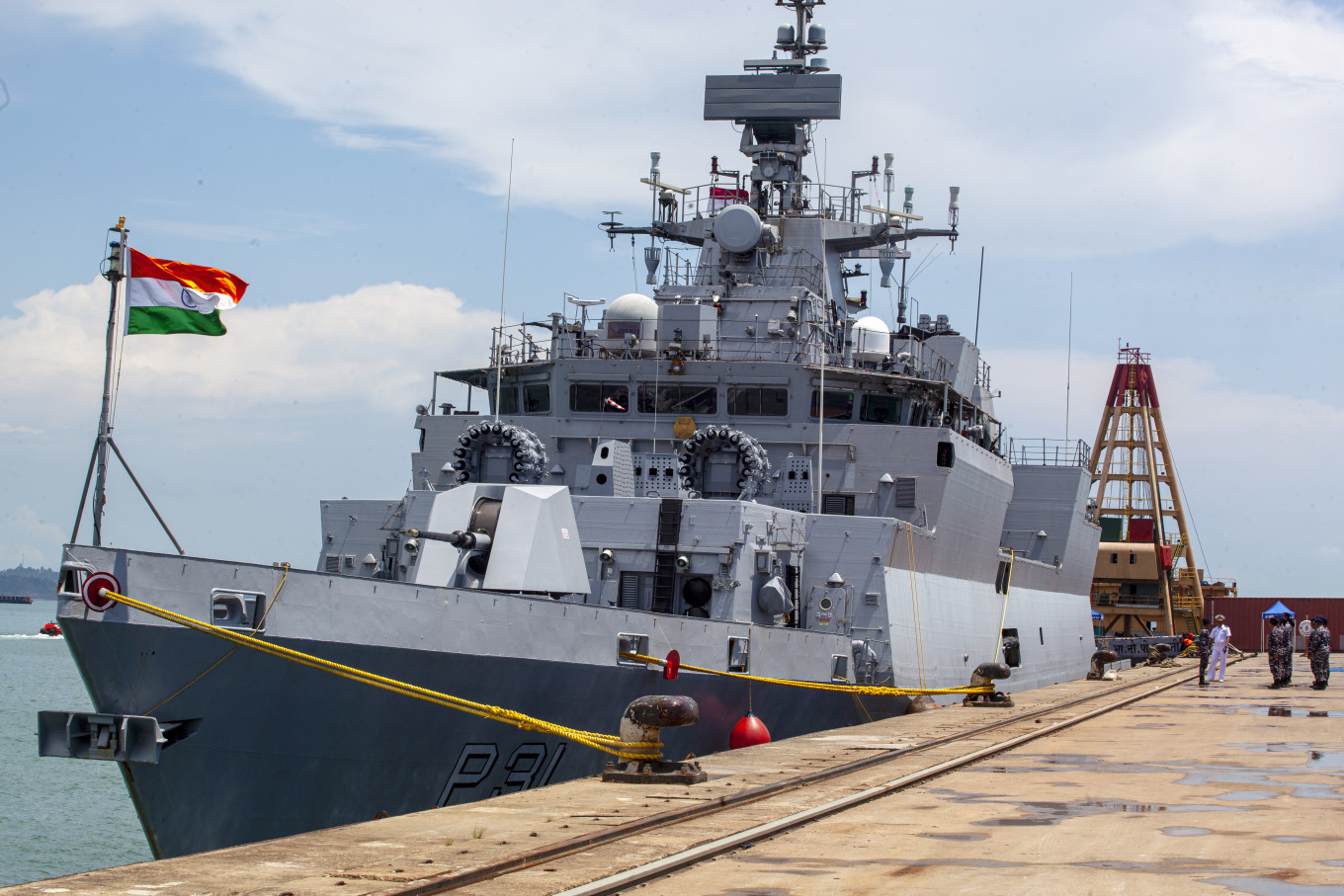 India's INS Kavaratti drops anchor on May 14, 2023, at the Batu Ampar Port Quay in Batam, Riau Islands. The Indian war vessel visited Batam to attend the Samudra Shakti-23 joint training with the Indonesian military. ( Antara/Teguh Prihatna)
W
hen Prime Minister Manmohan Singh and President Susilo Bambang Yudhoyono elevated bilateral ties to a Strategic Partnership in 2005, they were doing more than signing a framework document. They were reaching back across centuries to announce that India and Indonesia are not merely neighbors by geography, but relatives by history.
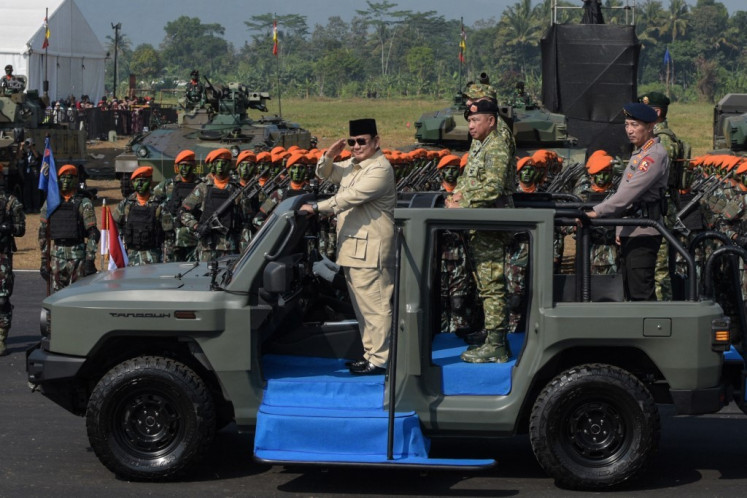
The phrase "civilizational diplomacy" has since resonated deeply in both Jakarta and New Delhi, acquiring fresh momentum following President Prabowo Subianto’s landmark visit for India’s Republic Day in January 2025. By invoking shared cultural roots, this engagement draws not only on physical territory but on historical affinity, popular recognition and contemporary strategic relevance.
The foundations of this relationship are deep. For over two millennia, the Indonesian archipelago and the Indian subcontinent were bound by the monsoon trade system—a seasonal engine of maritime commerce that carried spices, cloth, ideas, scripts and political philosophies across the Bay of Bengal.
The Hindu-Buddhist kingdoms of Srivijaya, Majapahit and Mataram drew heavily from traditions originating on the subcontinent, leaving an indelible imprint; place-names across Java and Sumatra still bear Sanskrit roots, while Bali remains a living museum of this shared heritage. In Indonesia, the Ramayana and Mahabharata are not foreign imports, but integral threads woven into the indigenous cultural fabric.
Yet, historical affinity alone is insufficient. For decades following independence, India’s foreign policy remained tethered to its immediate subcontinental neighborhood and Cold War alignments, while Indonesia’s New Order focused heavily on domestic political consolidation and ASEAN integration. The vibrant "Bandung spirit" of 1955, which had catalyzed the decolonization movement under Sukarno and Nehru, gradually receded amid the grueling practicalities of post-colonial state-building.
The 21st century has shattered this inertia, driven by a powerful convergence of structural pressures. The first is economic. India's post-1991 market reforms sparked a commercial search for deeper engagement with ASEAN's largest economy. Bilateral trade, which stood at a modest US$3.5 billion in 2004, peaked near $38 billion in 2022 before stabilizing around $29 billion.

The economic complementarities are structural and genuine: Indonesia exports the coal, palm oil and nickel required to fuel India’s growth, while India supplies critical pharmaceuticals, machinery and IT services. Today, the most promising frontier lies in the electric vehicle supply chain, marrying Indonesia’s world-leading nickel reserves with India’s massive EV manufacturing ambitions.