The Jakarta Post
Please Update your browser
Your browser is out of date, and may not be compatible with our website. A list of the most popular web browsers can be found below.
Just click on the icons to get to the download page.


Popular Reads
Top Results
No results found. Please check your search term and try again
Can't find what you're looking for?
View all search results
Popular Reads
Top Results
No results found. Please check your search term and try again
Can't find what you're looking for?
View all search resultsThe case for investing in palm oil smallholders
Indonesia has the potential to increase its GDP from CPO exports by Rp 70.3 trillion if independent smallholders skills and knowledge are improved.
Change text size
Gift Premium Articles
to Anyone
Share the best of The Jakarta Post with friends, family, or colleagues. As a subscriber, you can gift 3 to 5 articles each month that anyone can read—no subscription needed!
 Set as preferred source
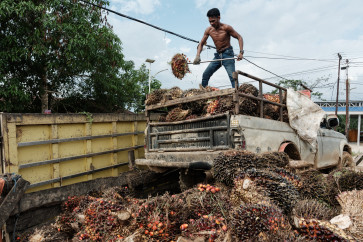
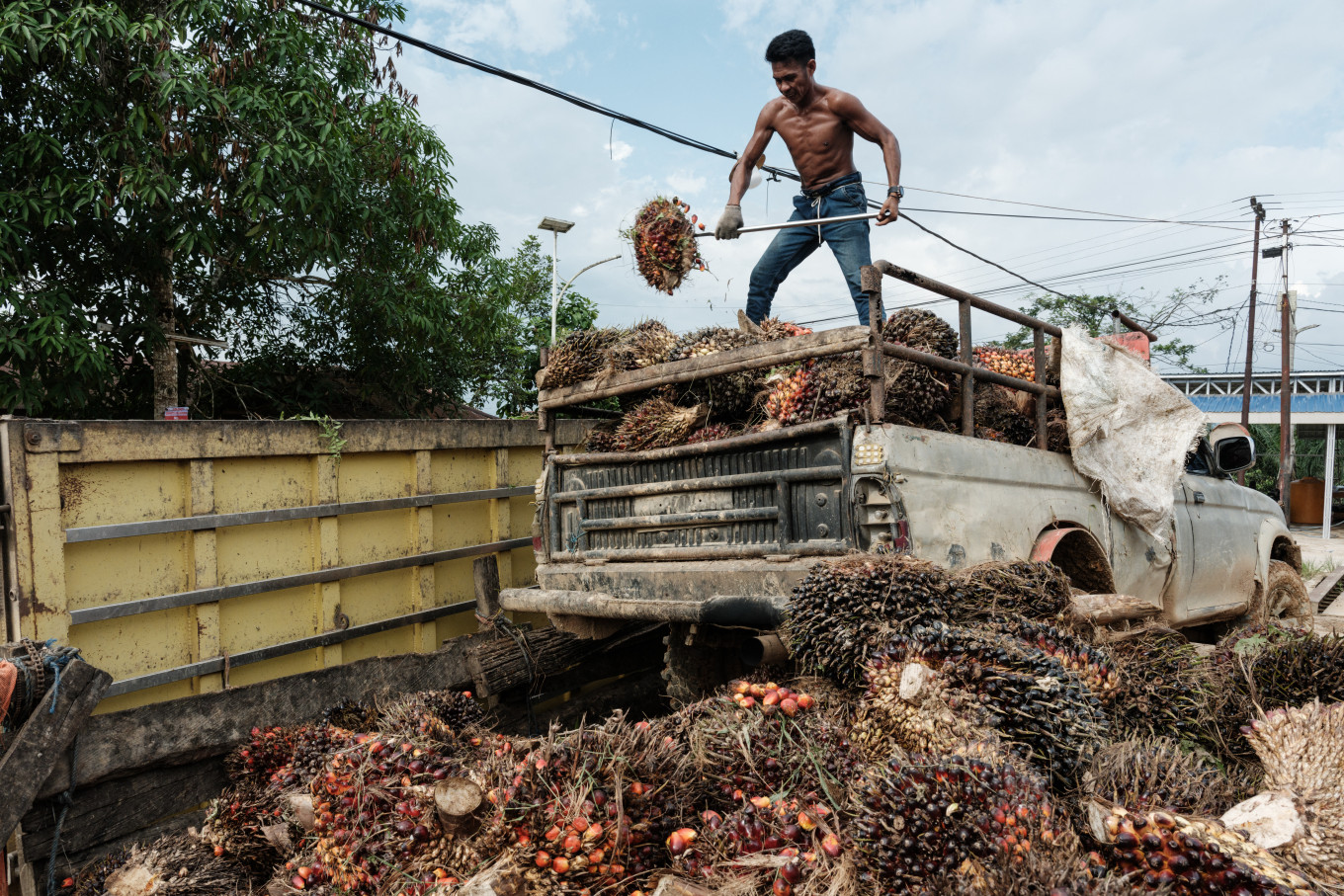 A man unloads palm oil seeds from a pickup truck after bringing them from a plantation to sell on July 10, 2024, at a market in Sepaku, East Kalimantan. (AFP/Yasuyoshi Chiba)
M
ajianto (38), a Dayak farmer in Bangkal village, Seruyan, Central Kalimantan, had to spend Rp 15 million (US$835) to 20 million every six months on maintenance costs for his 1.45-hectare palm oil plantation. He often did not use fertilizer due to its price.
When our non-profit organization Kaleka assisted independent smallholder farmers in Central Kalimantan in 2023, Majianto, with his plantation expanded to 3.83 ha, joined. With Kaleka's help, he participated in the RSPO (Roundtable on Sustainable Palm Oil) certification program. He diligently attended good agriculture practices (GAP) training, including one on organic fertilizer production, as part of the certification process.
Now, he only spends Rp 500,000 to Rp 1 million every six months for maintenance. He also makes his own organic fertilizer. His oil palm harvest has also increased. In 2023, the harvest was still 500-800 kilograms of fresh fruit bunches (FFB) per ha. In 2024, the yield increased to 2.5-3 tonnes of FFB per ha.
After 1.5 years of the certification process, Majianto and 43 independent smallholders, achieved RSPO certification for 120.9 ha of oil palm plantations. Kaleka assisted with all the costs of the certification process.
Between 2017 and 2025, Kaleka helped 5,278 independent smallholders in Central Kalimantan, covering 11,779 ha of plantation, obtain RSPO certification. A total of 3,740 farmers on 7,408 ha of plantation, received ISPO (Indonesian Sustainable Palm Oil) certification.
Research by the Center for Indonesian Policy Studies (CIPS) Indonesia shows that after certification training, independent smallholders are able to increase productivity by 5 to 10 percent.

Agriculture Ministry data shows that 6.77 million ha, or 41.3 percent of the 16.38 million ha of total oil palm land in Indonesia, are managed by independent smallholders. The state manages 1.05 million ha (6.4 percent) and private companies 8.56 million ha (52.3 percent).